
White-legged damselfly
Platycnemis
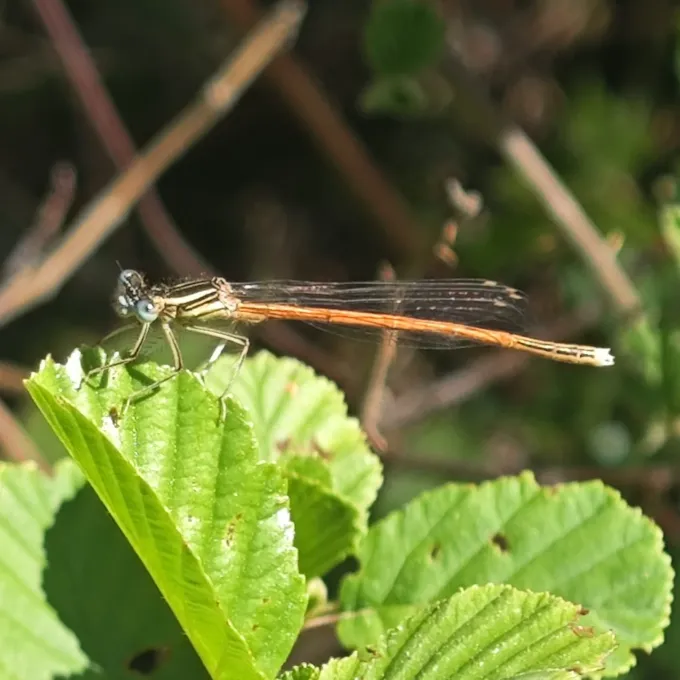
Description
How to identify
The white-legged damselfly (genus Platycnemis) is a group of insects belonging to the order Odonata and the family Platycnemididae. They are easily recognized by their expanded tibiae, which are often used in mating displays.
Adults are slender-bodied insects with pale colors, typically ranging from whitish-blue to yellow. Their wings are clear and narrow, held along the body when at rest.
The aquatic larvae are characterized by three distinct leaf-like gills at the end of their abdomen. They are highly dependent on clean water and aquatic vegetation.
Development involves incomplete metamorphosis. The lifecycle progresses from egg to nymph and finally to the adult stage, without a pupal phase.
These insects are commonly found in proximity to streams, rivers, and ponds, where their nymphs develop in the sediment and among water plants.
What it damages
The white-legged damselfly does not damage agricultural crops. They are exclusively predatory, feeding on other small insects throughout their lifecycle.
In the context of farming, they act as beneficial insects or natural enemies of pests rather than as a threat to yield or plant health.
They contribute to the biological control of populations of nuisance insects like mosquitoes, midges, and small flies that may inhabit farm areas.
Since they do not consume any plant parts, there is no economic threshold for damage or any reason to classify them as pests.
Their presence is a positive indicator of water quality, meaning they contribute to a healthy farm environment rather than detracting from it.
When it appears
The flight period for adults typically occurs during the summer months, usually from June to August, depending on the local climate.
Reproductive activity peaks during these warm months, when adults mate and lay eggs in the stems of submerged aquatic plants.
The nymphal stage is long-lived, often requiring one to two years for complete development in the aquatic environment.
Daily activity is highly dependent on ambient temperature, with most flight occurring during sunny periods when they actively hunt prey.
As autumn approaches, the adult population declines, marking the end of the breeding season for that particular year.
Control measures
No control measures are necessary for the white-legged damselfly because they are beneficial to the ecosystem andpose no risk to cultivation.
Practices that avoid indiscriminate insecticide use are highly encouraged to protect these natural predators from unnecessary harm.
Farmers should focus on preserving riparian zones and natural water edges to maintain the healthy habitats required by damselfly populations.
Integrating biological conservation into farm management helps sustain these natural regulators of smaller insect populations.
Focusing on balanced pest management ensures that beneficial insects like Platycnemis remain active partners in maintaining crop health.
Taxonomy
- Latin name
- Platycnemis
- Family
- Platycnemididae
- EPPO code
- PLAKSP
Discussion
No discussions yet — be the first.