
Green leafroller
Planotortrix octo
Description
How to identify
The green leafroller (Planotortrix octo) is a moth belonging to the family Tortricidae. The adult moth has a wingspan ranging from 15 to 22 mm, with a coloration that serves as perfect camouflage against leaves and bark.
The forewings exhibit shades of olive-green to pale brown, often marked with faint transverse stripes. Females are typically larger than males and possess a slightly more robust body, though both sexes are primarily active during twilight and nighttime hours.
The eggs are deposited in flattened, scale-like clusters, often resembling water droplets or wax spots on the surface of leaves. These clusters are strategically placed to ensure the safety of the larvae upon hatching.
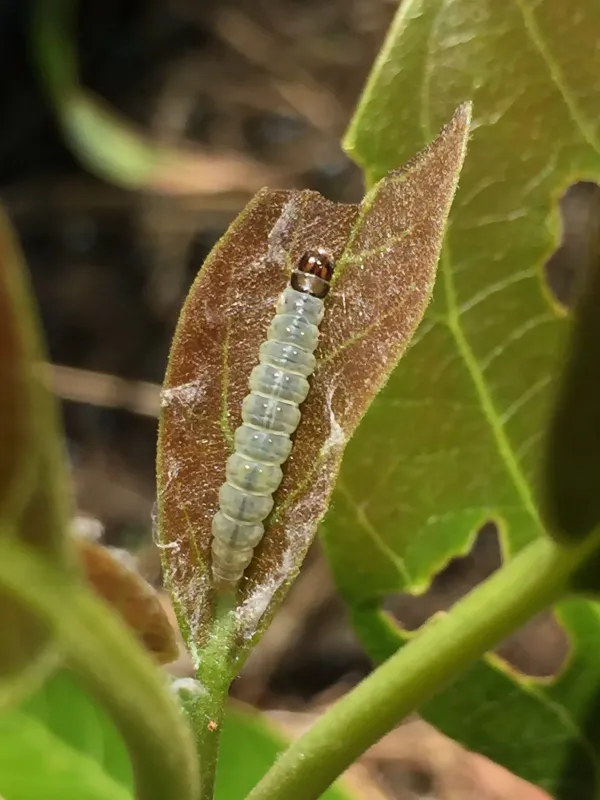
Larvae pass through several developmental stages (instars), transitioning in color from pale green to a darker olive, which allows them to remain hidden while feeding within the plant tissue. They are highly mobile when disturbed.
Pupation occurs in a protective cocoon, usually hidden within rolled leaves or bark crevices. This stage is critical for the survival of the population through periods of unfavorable weather or during the winter months.
What it damages
This species is a significant polyphagous pest, capable of attacking a wide variety of fruit-bearing trees. Its primary hosts include apples, pears, peaches, plums, and various apricot varieties, making it a major concern in commercial orchards.
Larvae cause direct damage by feeding on young buds, leaves, flowers, and developing fruits. This feeding behavior not only destroys vegetative parts but also compromises the tree's overall fruit-bearing capacity.
When larvae tunnel into young fruit, they create entry points for secondary infections such as fungal rots. This leads to the premature dropping of fruit and significant post-harvest losses, as damaged fruits are unmarketable.
Damage to terminal shoots during the spring can stunt the growth of young trees, causing abnormal branching and deformation of the tree architecture. This is particularly problematic in newly planted orchards.
High population densities can cause severe defoliation, which reduces the plant's photosynthetic efficiency. This weakens the trees, making them more susceptible to drought, winter cold, and other environmental stressors.
When it appears
The life cycle of Planotortrix octo is highly dependent on ambient temperatures. Depending on the climatic zone, the pest may complete two or more generations within a single growing season.
The spring generation typically emerges during the initial bud burst of fruit trees. This timing is critical, as the newly emerged larvae immediately begin feeding on the succulent, young growth.
During the warmer summer months, the developmental rate increases significantly. Peak activity often occurs in mid-summer, posing a high risk to fruit development and maturation across various orchard crops.
As temperatures begin to drop in late autumn, the population prepares for overwintering. Larvae of the later generations seek refuge in crevices, protected bark, or leaf litter to survive until the following spring.
Monitoring the flight patterns of adult moths is essential for predicting the timing of larval emergence. Understanding these seasonal nuances allows growers to apply control measures at the most effective stage of the pest's development.
Signs of infestation
The most prominent sign of infestation is the presence of tightly rolled or folded leaves, bound together with silk threads. These structures serve as larval shelters and feeding sites.
Small holes or window-like feeding scars on the leaf surface indicate the presence of young larvae. These feeding signs are often accompanied by tiny frass particles, which are characteristic of tortricid caterpillars.
Fruit damage manifests as small, shallow pits or deep, irregular tunnels bored into the flesh. In some cases, larvae may attach two fruits together with silk and feed at the point of contact, leaving dark scarring.
Webbed nests appearing on the tips of shoots are a clear indicator of a leafroller colony. If left untreated, these nests can spread rapidly across the canopy, leading to a visible decline in foliage quality.
The rapid onset of fungal infections, such as brown rot, appearing on fruit that shows signs of tunneling is a strong indicator of prior leafroller activity. These tunnels provide an ideal environment for pathogen colonization.
Control measures
Effective management of the green leafroller requires an integrated pest management (IPM) approach. Combining preventive agricultural practices with biological and targeted chemical applications is key to success.
Agricultural measures include maintaining orchard hygiene by removing fallen leaves and pruning away heavily infested shoots. Cleaning rough bark during the dormant season can also eliminate overwintering sites.
Biological control methods, such as the use of pheromone traps, are vital for monitoring male flight activity and determining the timing of control interventions. Encouraging natural predators, like parasitic wasps and birds, can also help suppress populations.
Chemical control should be applied based on economic thresholds and the biological stage of the larvae. It is essential to use selective insecticides that minimize harm to beneficial insects while targeting the leafroller effectively.
- Utilize pheromone traps to monitor adult flight.
- Remove and destroy infested plant material regularly.
- Apply biological control agents (e.g., Bacillus thuringiensis).
- Rotate chemical treatments to prevent resistance development.
Taxonomy
- Latin name
- Planotortrix octo
- Order
- Lepidoptera (butterflies)
- Family
- Tortricidae
- EPPO code
- PLTXOC
Discussion
No discussions yet — be the first.