
New Zealand leafroller
Planotortrix excessana
Description
How to identify
The New Zealand leafroller (Planotortrix excessana) is a moth species belonging to the family Tortricidae. It is a common pest native to New Zealand, known for its wide host range and significant agricultural impact.
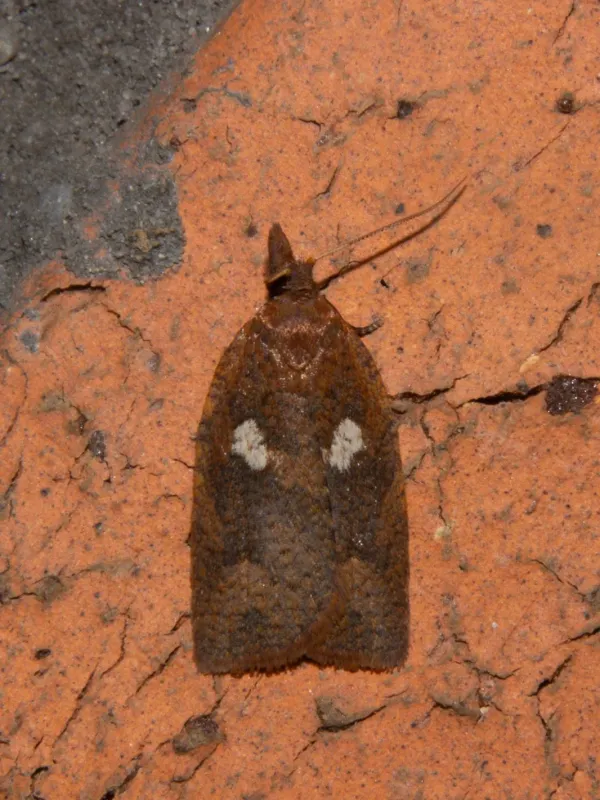
Adult moths are typically small with a brownish coloration, often featuring intricate patterns on their forewings. When at rest, they hold their wings in a distinctive roof-like or bell-shaped position.
The larvae, or caterpillars, change in appearance throughout their growth stages, typically displaying light green to olive tones with a darker head capsule. They are known for their ability to roll or tie leaves together.
Eggs are usually laid in clusters on the upper leaf surface or bark, covered by a protective substance that helps them blend in with the surrounding environment.
Pupation occurs within a silken cocoon hidden inside folded or rolled leaves, which serves as a secure refuge during the transition from larva to adult.
What it damages
Planotortrix excessana is a major polyphagous pest that affects a variety of pome and stone fruit crops, such as apples, pears, and plums, causing substantial losses.
The larvae damage trees by feeding on foliage, which reduces the plant's overall health and photosynthetic capacity. In severe cases, they can cause partial defoliation.
The most severe damage occurs on the fruit. Larvae create shallow feeding cavities beneath the skin, which not only ruins the fruit's appearance but also exposes it to secondary fungal infections.
Young trees in nurseries are particularly vulnerable to larval feeding, which can stunt their growth and lead to deformed branch development.
Due to the feeding patterns, damaged fruit often becomes susceptible to rotting, rendering it unsuitable for commercial sale or long-term cold storage.
When it appears
The life cycle of the New Zealand leafroller is highly adapted to local climatic conditions, often allowing for overlapping generations during the growing season.
The species typically overwinters as larvae. They find shelter in protected areas, such as bark crevices, hidden within folded leaves, or near dormant buds.
As temperatures increase in spring, the larvae resume feeding, targeting emerging buds and young shoots, which can lead to significant structural damage.
Adult flight activity occurs throughout the summer months. Multiple overlapping generations mean that larvae can be present on the trees during all stages of fruit development.
The highest risk of fruit damage occurs in mid-to-late summer, coinciding with the maturation period of many fruit crops, necessitating careful monitoring.
Signs of infestation
The most characteristic sign of infestation is the presence of leaves that have been rolled, folded, or tied together using silken threads spun by the larvae.
Infested fruit displays visible surface scarring, feeding holes, or shallow depressions, often surrounded by frass (larval excrement) and webbed residues.
Damage to the terminal shoots of branches, where leaves are webbed together, often causes the tips to become stunted, wilted, or physically distorted.
The presence of adult moths in the orchard, especially at dusk, serves as a warning that mating and egg-laying are likely taking place nearby.
Empty pupal cases protruding from the silken nests on leaves or bark are clear indicators that the current generation has successfully completed its development.
Control measures
Integrated Pest Management (IPM) is crucial for controlling Planotortrix excessana, relying on a combination of monitoring, cultural, and chemical methods.
Pheromone traps are essential tools for monitoring adult moth populations, allowing growers to time their control interventions for maximum effectiveness.
Cultural practices, such as removing infested plant parts during pruning and clearing fallen debris, help reduce the population of overwintering larvae.
Biological control agents, including Bacillus thuringiensis (Bt) and various parasitic wasps, can be highly effective in managing larval numbers without harming beneficial insects.
- Monitor populations with pheromone traps.
- Prune and destroy infested plant tissue.
- Utilize biological control products like Bt.
- Apply targeted insecticides during critical periods.
- Encourage local beneficial insect populations.
Taxonomy
- Latin name
- Planotortrix excessana
- Order
- Lepidoptera (butterflies)
- Family
- Tortricidae
- EPPO code
- TORTEX
Discussion
No discussions yet — be the first.