
Pine engraver beetle
Pityophthorus scriptor
Description
How to identify
The pine engraver beetle (Pityophthorus scriptor) is a small wood-boring insect belonging to the family Curculionidae, subfamily Scolytinae. These beetles are primary pests that specialize in attacking various pine species.
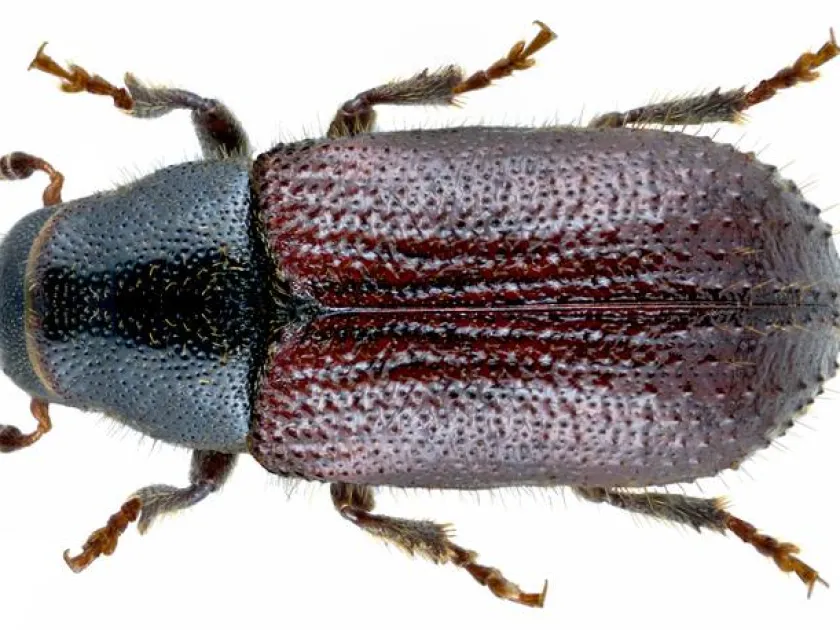
Adult beetles are quite small, measuring approximately 1.5 to 2.0 mm in length. Their bodies are cylindrical and usually dark brown or black in color, adapted for life under tree bark.
The elytra (wing covers) of the beetle have a characteristic depression at the tip, often referred to as a "declivity," which is lined with small teeth, a common feature among bark beetles.
Larvae are legless, cream-colored with a slightly darker head, and are typically found beneath the bark where they construct feeding galleries that disrupt the vascular tissue of the host.
Due to their small size and cryptic habits, they are often overlooked until significant damage to the tree's health becomes visible in the canopy or foliage.
What it damages
This species primarily attacks pines, though it can also be found on other conifers. It shows a strong preference for stressed or weakened trees that are struggling due to drought or environmental factors.
The beetles bore through the bark, creating intricate gallery patterns. These galleries interrupt the flow of nutrients and water, which ultimately leads to the weakening and eventual death of branches or the entire tree.
In forest stands, widespread infestation leads to "red-top" trees, where the foliage turns yellow and then reddish-brown as the tree dies. This damage is particularly severe during prolonged dry spells.
Beyond direct damage, the galleries provide entry points for secondary pathogens, including blue-stain fungi, which further compromise the tree's internal structures and speed up the decline.
Economic losses are significant in commercial pine plantations, requiring costly management practices and timber sanitation to prevent further spread across the forest area.
When it appears
The flight period for adult beetles typically begins in spring when temperatures rise consistently above 15°C. This is the peak time for colonization of new host trees.
The life cycle is temperature-dependent and can be completed within 6 to 8 weeks under favorable conditions. Multiple generations per year are possible in warmer climates.
As autumn approaches, the beetles prepare for overwintering. They usually seek shelter in the thick bark at the base of healthy trees or within the leaf litter on the forest floor.
Climate conditions, specifically mild winters and hot summers, can significantly influence the population dynamics of this beetle, leading to outbreaks if environmental stress is high.
Monitoring the flight window is essential for timing chemical or cultural management interventions to effectively reduce the beetle population before they establish new galleries.
Signs of infestation
One of the most obvious signs of an infestation is the accumulation of "frass" (fine sawdust-like boring dust) on the bark surface or caught in spider webs near the entry holes.
Foliage discoloration, starting with yellowing needles and progressing to browning, indicates that the tree is failing to circulate water properly due to extensive gallery damage.
Small, circular entry holes in the bark are visible upon close inspection. In some cases, resin flow can be observed as the tree attempts to "pitch out" the invading beetles.
Peeling back small sections of the bark reveals the complex, radiating gallery patterns. These galleries are specific to the species and are a key diagnostic feature for professionals.
The presence of woodpeckers or other insectivorous birds on the trunks of pine trees can often indicate a hidden infestation, as they actively hunt for larvae beneath the bark.
Control measures
Sanitation is the most effective control strategy. Removing and destroying infested trees before the next generation of beetles emerges is crucial to containing the spread.
Pheromone traps are widely used for monitoring population levels and can also act as mass-trapping devices to draw beetles away from high-value forest areas.
In landscape or nursery settings, systemic insecticides may be applied to the trunk to prevent infestation. Timing is critical and must coincide with the peak beetle flight activity.
Maintaining tree vigor through proper silvicultural practices, such as thinning to reduce competition for water and nutrients, makes stands less susceptible to attack.
Long-term forest management plans should focus on promoting stand diversity, as complex ecosystems are often more resilient to bark beetle outbreaks than monoculture plantations.
Taxonomy
- Latin name
- Pityophthorus scriptor
- Order
- Coleoptera (beetles)
- Family
- Curculionidae
- EPPO code
- PITOSC
Discussion
No discussions yet — be the first.