
Spruce bark beetle
Pityophthorus pityographus
Description
How to identify
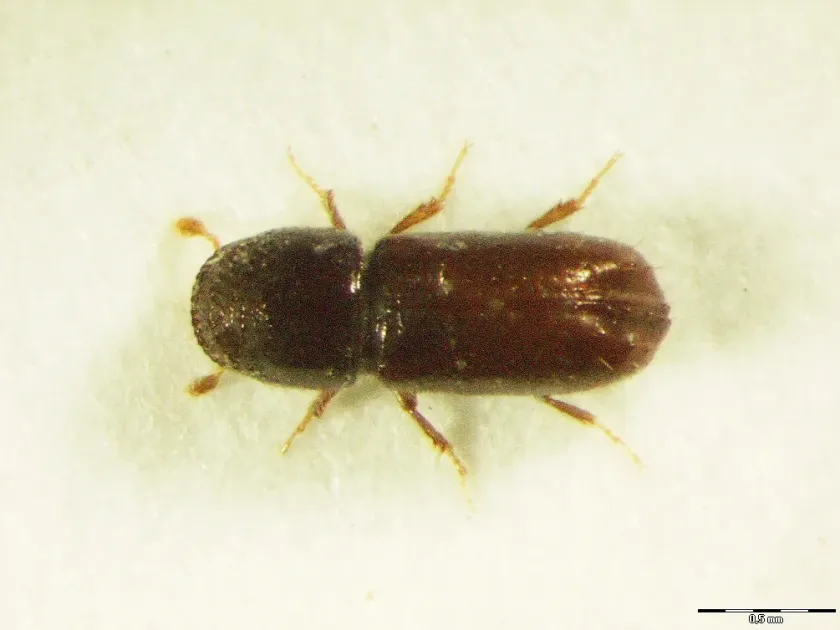
The Spruce bark beetle, known scientifically as Pityophthorus pityographus, is a tiny beetle within the family Curculionidae, subfamily Scolytinae. Adult beetles measure approximately 1.5 to 2.0 mm in length, making them among the smaller species of bark beetles.
They possess a cylindrical, shiny, dark brown to black body covered with fine hairs. A key morphological feature that distinguishes them from other species is the structure of the elytra (wing covers), which have a distinct declivity with small, sharp teeth.
The larval stage consists of small, legless, white grubs with a brown head capsule. They develop beneath the bark, where they consume the phloem tissue, effectively creating a network of galleries that disrupt the tree's vital transport systems.
The lifecycle involves a transition through egg, larva, pupa, and adult stages. Pupation typically occurs within the gallery system under the bark, after which the new adults emerge to find a new host tree.
The species is primarily univoltine or bivoltine depending on the climate, with overwintering occurring mainly as adult beetles tucked away in the thick bark at the base of the trees or in the leaf litter surrounding the host plant.
What it damages
Pityophthorus pityographus specializes in spruce species, particularly Norway spruce (Picea abies). While they prefer spruce, they can occasionally infest other conifers such as fir, pine, or larch when populations are high or environmental stress is present.
This beetle is particularly dangerous to young spruce trees and the thin-barked branches of older, mature trees. It frequently targets trees that are already weakened by drought, air pollution, or root pathogens, though healthy trees can also fall victim during mass outbreaks.
The damage is caused primarily by the feeding activities of the adults and larvae. The galleries created under the bark sever the flow of sap, which eventually causes the foliage to lose its turgor, turn yellow, and eventually drop.
In addition to direct physical damage, these beetles are known vectors for various blue-stain fungi. These fungi colonize the sapwood and further block water conduction, which significantly accelerates the death of the host tree.
High population densities lead to rapid tree mortality within forest stands. When the beetle attacks in large numbers, it can overwhelm the tree's natural resin-based defense mechanisms, rendering the tree incapable of survival.
When it appears
The flight period for this beetle typically begins in late spring, as soon as temperatures exceed 12-15°C. This is when the overwintered adults emerge to locate suitable breeding material to start a new generation.
In warmer climates or favorable years, the beetle can complete two generations in a single season. The development duration is highly sensitive to temperature, with higher heat accelerating the transition from larvae to adults.
The colonization process is sequential. First, the male beetles bore into the bark to establish a central nuptial chamber. Once the chamber is prepared, they emit pheromones to attract females, who then lay eggs in the galleries.
Peak activity often occurs in late spring and mid-summer. Monitoring should be focused during these months to ensure that control measures are applied before the new generation emerges from the bark.
As autumn approaches and temperatures drop, the final generation of beetles prepares for hibernation. They stop their feeding activity and seek protected microhabitats, such as the thick bark on the lower trunk or the soil debris, to survive the winter.
Signs of infestation
One of the most immediate signs of infestation is the presence of "boring dust." This fine, brownish sawdust accumulates at the base of the tree or around the entrance holes on the branches as the beetles drill into the bark.
Careful inspection of the trunk or twigs will reveal tiny, circular entrance holes. On healthy trees, these may be associated with resin flow, which is the tree's attempt to "pitch out" the invading beetles.
Under the bark, the damage pattern is distinctively stellate. A central mating chamber serves as the hub, with multiple galleries radiating outwards, creating a star-like shape that is characteristic of this specific beetle.
Foliage discoloration is a major indicator of severe attack. Initially, the needles may appear slightly off-color or pale, progressing to a bright yellow, and finally a deep red-brown as the tree dies completely.
Bark shedding on the infested branches is a sign that the infestation is mature. As the tree dries out, the bark may peel away, revealing the intricate network of galleries and the larvae or pupae still dwelling within.
Control measures
Sanitation is the most effective management strategy. Removing and destroying infested timber before the beetles complete their lifecycle and emerge is crucial to preventing the spread of the population to neighboring healthy trees.
Forest management practices should prioritize the rapid removal of fresh slash and windthrown timber, as these materials provide ideal conditions for the beetles to breed and multiply in large numbers.
Pheromone traps are highly effective for monitoring local populations. They can be used to track the timing of the adult flight and, in some cases, to reduce the overall beetle pressure in high-risk areas like nurseries.
Applying protective contact insecticides to the stems of young, high-value trees can prevent colonization, especially during the peak flight season when the risk of infestation is at its highest.
Long-term prevention includes maintaining overall stand health. Proper thinning, adequate soil moisture management, and the preservation of diverse forest ecosystems increase the resilience of spruce trees to beetle attacks.
Taxonomy
- Latin name
- Pityophthorus pityographus
- Order
- Coleoptera (beetles)
- Family
- Curculionidae
- EPPO code
- PITOPI
Discussion
No discussions yet — be the first.