
Small spruce bark beetle
Pityophthorus lautus
Description
How to identify
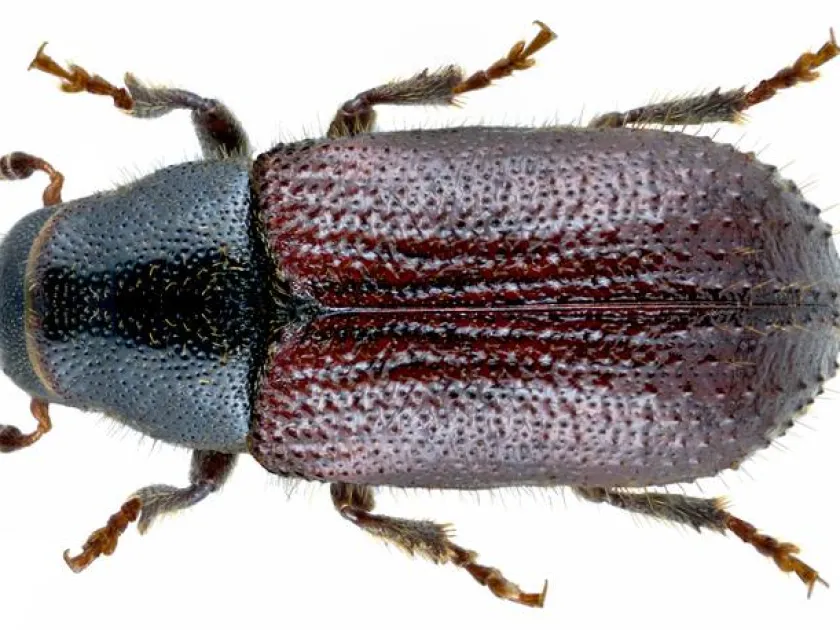
The small spruce bark beetle (Pityophthorus lautus) belongs to the order Coleoptera and the family Curculionidae (subfamily Scolytinae). This insect is quite small, with adult beetles typically measuring between 1.5 and 2.0 mm in length.
Its body is cylindrical and shiny, ranging in color from dark brown to black, which provides excellent camouflage against the bark of host trees.
Taxonomic identification usually involves a detailed examination of the elytral structures and the specific patterns of the gallery systems created under the bark.
The beetle undergoes complete metamorphosis, passing through the stages of egg, larva, pupa, and adult within its life cycle.
The species is primarily associated with weakened or freshly cut coniferous trees, which serve as its main substrate for reproduction and development.
What it damages
Spruce species (Picea) are the primary hosts for this beetle, although it can occasionally colonize other conifer varieties in the surrounding forest.
The pest typically targets the branches and the upper crown, often bypassing the lower trunk regions during the initial stages of infestation.
By boring into the phloem and cambium layers, the beetles disrupt the tree's vascular system, hindering the transport of water and nutrients.
The damage caused by the beetle is compounded by the transmission of wood-decay fungi, which significantly accelerates the decline of the tree health.
Severe infestations can lead to top-kill or the complete death of the host tree, particularly if environmental stressors are present.
When it appears
Adult activity begins in mid-to-late spring, triggered by rising temperatures and the onset of sap flow in the trees.
The main flight period for overwintered adults typically occurs between April and June, depending on local climate conditions.
Depending on the latitude and weather, the species can complete one or two generations within a single growing season.
Beetle activity often peaks during drought periods, as heat and water stress make conifers more susceptible to successful colonization.
The winter months are spent in the adult stage, usually sheltered within galleries under the bark or in the protective leaf litter near the tree base.
Signs of infestation
The most reliable indicators of infestation are small, circular entry holes found on the bark of twigs and branches.
Frass, which resembles fine brown or reddish wood dust, accumulating near these entry points is a clear sign of active tunneling.
Foliar symptoms include premature yellowing or browning of the needles in the upper crown, reflecting the disruption of the vascular supply.
Inspection under the bark reveals the complex gallery patterns, which are essential for identifying the specific beetle species involved.
Resinosis, or excessive resin flow from the bark, is a common defensive response from the tree, often seen as streaks or droplets near the entry holes.
Control measures
Good forest hygiene, including the removal of dead or dying trees and slash, is the most effective cultural practice for limiting beetle populations.
Pheromone traps are frequently used by forestry professionals to monitor population spikes and to mass-trap adults during flight periods.
Maintaining tree vigor through proper irrigation and soil management remains a critical long-term strategy for preventing infestations.
Chemical control via contact insecticides can be effective during the flight phase but must be timed precisely to coincide with beetle emergence.
- Pruning and destroying heavily infested branches to reduce local pest pressure.
- Enhancing tree resilience with appropriate fertilization and stress reduction.
- Monitoring vulnerable stands, especially after storms or during prolonged droughts.
Taxonomy
- Latin name
- Pityophthorus lautus
- Order
- Coleoptera (beetles)
- Family
- Curculionidae
- EPPO code
- PITOLA
Discussion
No discussions yet — be the first.