
Carmeli pine bark beetle
Pityophthorus carmeli
Description
How to identify
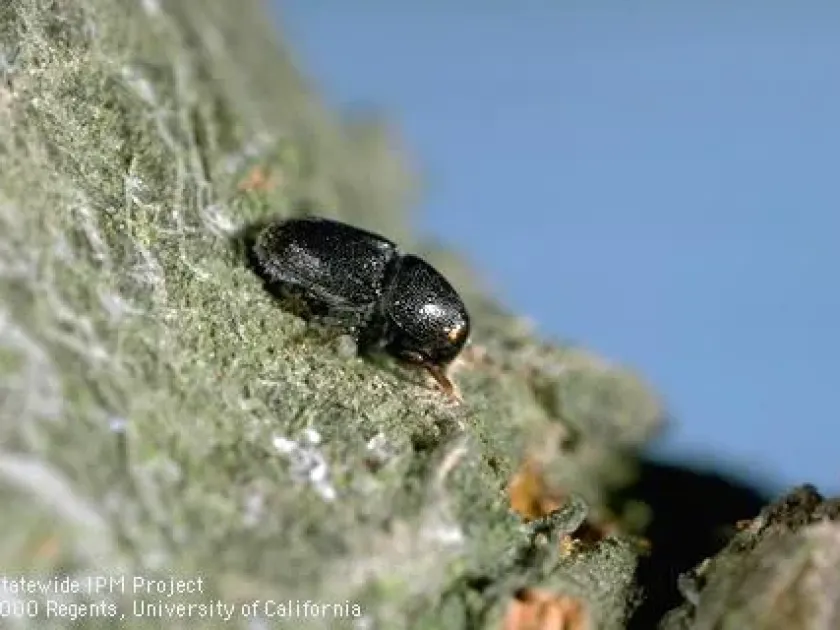
The Carmeli pine bark beetle (scientific name Pityophthorus carmeli) is a small wood-boring insect belonging to the family Curculionidae, subfamily Scolytinae. Adult beetles typically measure around 2 mm in length, making them difficult to detect without careful inspection.
The body of the beetle is cylindrical and dark brown to black in color. Its structure is adapted for tunneling beneath the bark of thin branches, which is characteristic of the Pityophthorus genus.
Taxonomically, it falls under the tribe Pityophthorini. These insects are highly specialized, often selecting specific sections of pine trees with thinner bark where the moisture and nutrient content of the phloem are optimal for larval development.
The lifecycle of this beetle is highly synchronized with the host tree's physiology. Optimal environmental conditions allow for rapid reproduction, leading to localized outbreaks that can quickly damage young conifer plantations.
Detailed identification of Pityophthorus carmeli often involves examining the maternal galleries and the morphological characteristics of male specimens, as many bark beetles share a similar external appearance.
What it damages
This beetle primarily infests trees within the Pinus genus. While commonly found in Mediterranean areas, it poses a significant threat to various pine species, especially those already stressed by environmental factors.
The beetle targets both young trees and the smaller, thinner branches of mature specimens. By boring through the bark into the cambium layer, the beetle disrupts the flow of water and nutrients, eventually causing the death of the infested section.
Damage is not limited to the physical destruction of vascular tissue. The beetles often act as vectors for various fungal pathogens, which further weaken the tree and accelerate the decline of the infested branches or the entire tree.
Mass infestations can result in significant mortality within forest stands. Without intervention, an outbreak can spread to neighboring healthy trees, resulting in widespread loss of timber and ecological value.
Trees that are weakened by drought, soil compaction, or nutrient deficiencies are significantly more susceptible to successful colonization. Thus, tree health management is a key factor in limiting the beetle's impact.
Signs of infestation
The presence of the Carmeli pine bark beetle is usually first indicated by the appearance of tiny entry holes on the bark surface. Small beads of hardened resin around these holes are a classic sign of the tree's attempt to defend itself.
As the infestation progresses, needles on the affected branches begin to fade, turning yellow and eventually brown. This discoloration is a direct result of the vascular system being severed by the beetle's galleries.
Upon removing a section of the bark, one can observe intricate gallery patterns constructed by the larvae. These galleries are distinct and provide evidence of the beetle's activity level and population density.
- Small entry holes (approx. 1 mm) on branches or stems.
- Accumulation of fine, sawdust-like bore dust (frass).
- Premature yellowing or browning of needles on specific limbs.
- Dieback of branch tips or localized branch death.
- Clear resin droplets on the bark surface at entry points.
Regular visual monitoring is essential for early detection. Detecting the pest at the onset of the flight season provides the best opportunity to mitigate further damage through quick action.
Control measures
The primary method of control is sanitation, which involves identifying, cutting, and destroying infested branches or trees. It is crucial to process or burn the infested material before the new generation of adults emerges.
Pheromone-baited traps are effective tools for monitoring adult activity and can help suppress population levels in small areas during the peak flight period.
Chemical control involving systemic insecticides may be applied to high-value trees or ornamental conifers to protect them from infestation during periods of high beetle pressure.
Preventative cultural practices, such as maintaining optimal soil moisture and avoiding mechanical wounding, are the most effective ways to bolster tree resistance against bark beetle attacks.
Promoting the presence of natural predators, such as clerid beetles and parasitic wasps, helps maintain ecological balance and limits the likelihood of mass beetle outbreaks in stable forest environments.
Taxonomy
- Latin name
- Pityophthorus carmeli
- Order
- Coleoptera (beetles)
- Family
- Curculionidae
- EPPO code
- PITOCA
Discussion
No discussions yet — be the first.