
Pityophthorus bark beetle
Pityophthorus
Description
How to identify
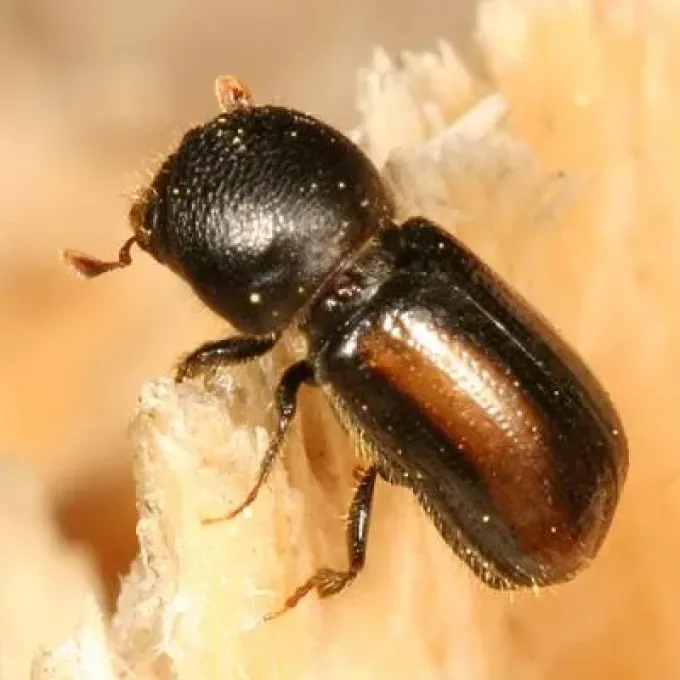
The Pityophthorus genus includes small bark beetles belonging to the family Curculionidae, subfamily Scolytinae. These beetles typically measure 1 to 3 mm in length and possess an elongated, cylindrical body that is usually dark brown or black in color.
They are characterized by a specific morphological feature: the apex of the elytra (wing covers) has a concave depression, often accompanied by small tubercles. This structure allows them to push wood dust, or "frass," out of their galleries while boring into the host tree.
The taxonomy of Pityophthorus is highly diverse, with numerous species adapted to specific host trees, mainly conifers such as pines and spruces. Identification at the species level often requires microscopic examination of the genitalia and specific surface features of the pronotum.
Larvae are legless, white to yellowish grubs with a distinct brown head capsule. They develop within the inner bark, feeding on the phloem and cambium layers. Their hidden lifestyle makes early detection of an infestation challenging for foresters.
Adults are active during the growing season. They emerge to seek out stressed or weakened hosts, guided by volatile organic compounds released by trees under pressure. Winter is typically spent as adults in the bark or forest floor litter.
What it damages
Pityophthorus species primarily attack coniferous trees, particularly species within the Pinus and Picea genera. While they favor trees weakened by drought, disease, or mechanical damage, healthy trees can also be colonized during population outbreaks.
The damage is mainly inflicted on small branches and young twigs, causing them to wither and die. As the beetles bore through the conductive tissues, they disrupt the transport of water and nutrients, leading to crown decline.
Beyond mechanical damage, these beetles are known vectors for various pathogenic fungi, including those causing vascular wilt or blue stain disease. The introduction of pathogens significantly accelerates the death of the colonized branches.
In forest nurseries and young plantations, the impact of these beetles can be devastating, resulting in stunted growth or widespread mortality. This necessitates constant vigilance to protect the future of the timber stock.
Increased susceptibility to secondary infestations is a common consequence of bark beetle activity. Once a tree is weakened by Pityophthorus, it becomes a magnet for larger and more aggressive wood-boring pests, potentially leading to total tree failure.
Signs of infestation
The most visible sign of infestation is the presence of tiny entry holes in the bark of twigs. Resin flow, or "pitching," often surrounds these holes as the tree attempts to repel the beetle by trapping it in resin.
Brown frass, resembling sawdust, accumulates at the base of the branches or in the branch axils. This is a clear indicator that a beetle population is actively excavating galleries beneath the bark surface.
Yellowing, thinning, and premature needle drop are classic symptoms of crown decline. As branches die off, the tree loses its characteristic shape and may appear thin or bare in the upper canopy.
When the bark is peeled back, complex patterns of maternal and larval galleries are revealed. These patterns are species-specific and provide valuable clues for specialists diagnosing the cause of the tree's poor health.
The appearance of small, circular exit holes indicates that the new generation of beetles has completed its development and emerged. This marks the transition to a new phase of the life cycle and potential spread to adjacent trees.
Control measures
Sanitation cutting remains the primary control strategy. Removing and properly disposing of infested branches and trees before the new generation of adults emerges is the most effective way to manage population levels.
Integrated pest management (IPM) involves using pheromone traps to monitor adult flight periods. Accurate timing based on trap catches allows for targeted and more efficient intervention before damage reaches critical levels.
Chemical control, while usually reserved for high-value ornamentals or nursery settings, involves the application of systemic insecticides. These treatments are timed to coincide with the beetles' movement phase to maximize efficacy.
Maintaining tree vigor through proper irrigation and balanced fertilization is a fundamental preventative measure. Healthy, well-nourished trees have a superior ability to produce resin and defend against beetle entry.
Encouraging the presence of natural enemies, including predatory clerid beetles and woodpeckers, helps keep bark beetle populations in check. A balanced forest ecosystem is the most sustainable approach to long-term pest management.
Taxonomy
- Latin name
- Pityophthorus
- Order
- Coleoptera (beetles)
- Family
- Curculionidae
- EPPO code
- PITOSP
Discussion
No discussions yet — be the first.