
Fir engraver
Pityokteines sparsus
Description
How to identify
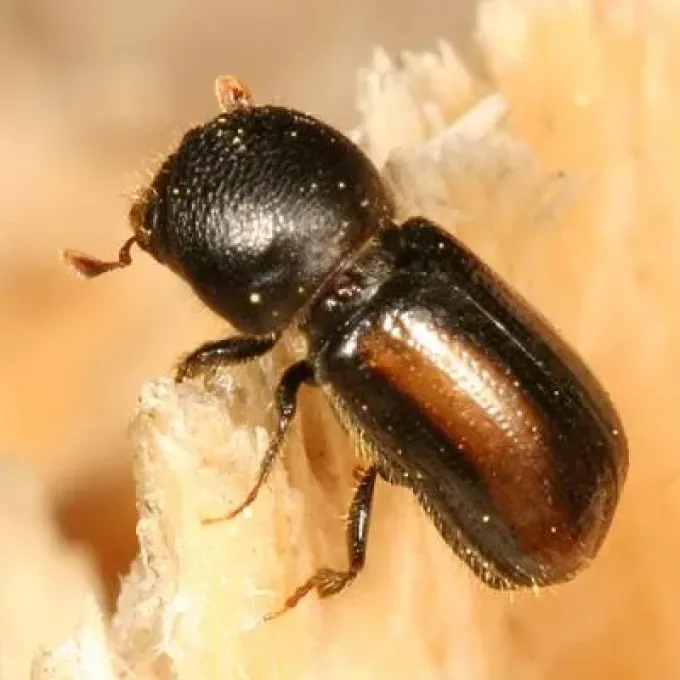
The fir engraver (Pityokteines sparsus) is a small bark beetle belonging to the Curculionidae family, specifically the Scolytinae subfamily, known for attacking fir species.
Adult beetles are relatively small, typically measuring between 2 and 2.5 mm in length, with a cylindrical shape designed for boring into wood.
The body is dark brown or black, often covered with fine hairs, which is a characteristic feature of this species in the bark beetle group.
Larvae are legless, white, and possess a well-developed, chitinized head capsule, allowing them to tunnel effectively through the cambium layer.
Their morphological adaptations allow them to thrive in the complex environment beneath the bark of various coniferous hosts.
What it damages
This pest primarily infests fir trees, focusing its activity on the inner bark and cambium layer, which are vital for nutrient transport.
While healthy trees have natural defenses such as resin flow, the fir engraver is highly successful at attacking trees already weakened by drought, disease, or injury.
Feeding by both adults and larvae disrupts the flow of water and nutrients, which eventually leads to the death of the tree or individual branches.
Severe infestations can result in massive mortality within forest stands, causing significant ecological and economic impact for forestry management.
Furthermore, these beetles act as vectors for various fungal pathogens that further degrade the health of the host tree.
When it appears
The activity of the fir engraver typically begins in the spring when rising temperatures stimulate the adult beetles to emerge and seek new host trees.
The lifecycle consists of several stages, including egg, larva, pupa, and adult, with the development occurring largely under the bark.
During the warmer months, adults excavate nuptial chambers and galleries to lay eggs, which marks the start of a new generation.
Generation time varies based on geographical location and climate, with some regions seeing one generation per year, while others may see more.
Winter is generally passed in the larval or adult stage, often protected within the bark of the host tree or in the forest litter.
Signs of infestation
One of the earliest and most reliable signs of infestation is the presence of frass, which looks like reddish-brown boring dust, found in bark crevices.
The foliage of infected trees often turns from green to yellow and eventually red as the tree's health declines due to gallery formation.
Careful inspection of the trunk will reveal small, round entrance holes drilled by the beetles, often accompanied by resin flow in trees with active defenses.
Removing a section of the bark reveals characteristic gallery patterns in the cambium, which are highly specific to this species of engraver.
- Small circular exit holes on the bark surface.
- Gradual thinning and yellowing of the tree's crown.
- Accumulation of fine wood dust at the base of the trunk.
Control measures
Sanitation is the most critical management tool, involving the removal and destruction of infested trees before the next generation of beetles can emerge.
Pheromone traps are frequently used in monitoring programs to detect early population spikes and to estimate the potential for future outbreaks.
Improving overall tree vigor through proper site selection and management practices can help trees resist minor beetle attacks.
Chemical treatments, such as insecticide sprays on the bark, are sometimes applied to high-value ornamental trees to protect them from infestation.
Maintaining a healthy forest ecosystem, including the protection of natural predators like woodpeckers, helps keep beetle populations below damaging levels.
Taxonomy
- Latin name
- Pityokteines sparsus
- Order
- Coleoptera (beetles)
- Family
- Curculionidae
- EPPO code
- PITKSA
Discussion
No discussions yet — be the first.