
Pityogenes bark beetle
Pityogenes
Description
How to identify
Pityogenes is a genus of bark beetles that are small, ranging from 2 to 3.5 mm in length, and belong to the Scolytinae subfamily.
These beetles are typically dark brown or black, characterized by their cylindrical bodies which are perfectly adapted for living under the bark of trees.
The males of the species possess distinct teeth on the apical slope of their elytra, which serve as a diagnostic feature for taxonomists and researchers.
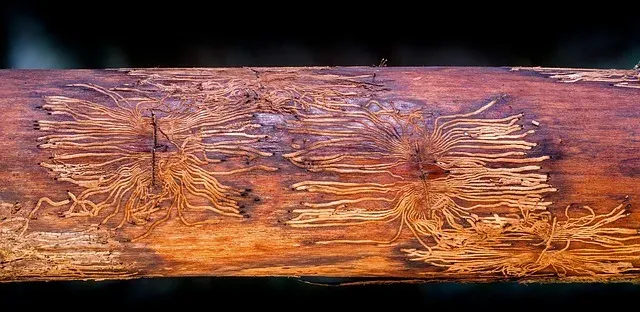
The larvae are small, legless, cream-colored grubs that live and feed in the phloem tissue, creating galleries that disrupt the tree's vascular system.
They are highly social or polygamous, with one male usually inhabiting a nuptial chamber visited by several females, each creating their own tunnel.
What it damages
These beetles primarily target various species of conifers, with Norway spruce being the most frequent host, although they can attack other species as well.
By tunneling into the bark, the beetles destroy the cambium layer, which is responsible for transporting nutrients and water throughout the tree.
Heavy infestations lead to the rapid decline and death of the tree, as the interruption of the flow of sap makes recovery impossible.
While they often prefer stressed or fallen trees, in outbreak conditions, they can readily attack and kill healthy, mature spruce stands.
The economic impact on forestry is significant, as timber quality degrades rapidly and the value of wood products decreases upon infestation.
When it appears
The flight period for Pityogenes adults generally begins in early spring, as soon as temperatures rise, signaling the start of the reproductive season.
Depending on local climate conditions, the species can complete two or even three generations within a single growing season, leading to population explosions.
Springtime marks the most intense activity for nuptial chamber construction and mating, followed by the development stages of larvae and pupae during the warmer months.
By late summer or autumn, the final generation prepares for hibernation, moving down to the bark at the base of the trunk or into the forest litter.
Thermal conditions play a crucial role, with hot and dry summers often acting as a catalyst for larger population outbreaks.
Signs of infestation
The most visible sign of an attack is the presence of fine, sawdust-like frass accumulating on the bark surface or near the base of the tree.
Small, round entry holes are visible on the bark, although they can sometimes be hidden by resin or pieces of bark flake.
Crown symptoms, such as needle yellowing and discoloration, typically appear once the infestation has reached an advanced stage.
Removal of the bark will reveal the characteristic star-shaped or radial gallery patterns that are diagnostic for this specific genus.
Increased woodpecker activity on individual trees often indicates a localized infestation that requires immediate inspection.
Control measures
Sanitation felling is the most critical management strategy, involving the rapid removal and processing of infested trees before the next generation emerges.
The use of trap trees, which are felled and left to attract the beetles, can be an effective way to collect and destroy the pest population.
Pheromone traps are widely used in forest monitoring to track beetle flight patterns and suppress the number of adult beetles in the area.
Maintaining healthy forest stands through appropriate thinning and silvicultural practices improves tree vigor, making them more resistant to attacks.
If dealing with isolated ornamental trees, systemic insecticide treatments or protective bark sprays can be considered as a last-resort measure.
Taxonomy
- Latin name
- Pityogenes
- Order
- Coleoptera (beetles)
- Family
- Curculionidae
- EPPO code
- PITYSP
Discussion
No discussions yet — be the first.