
European pine vole
Pitymys subterraneus
Description
How to identify
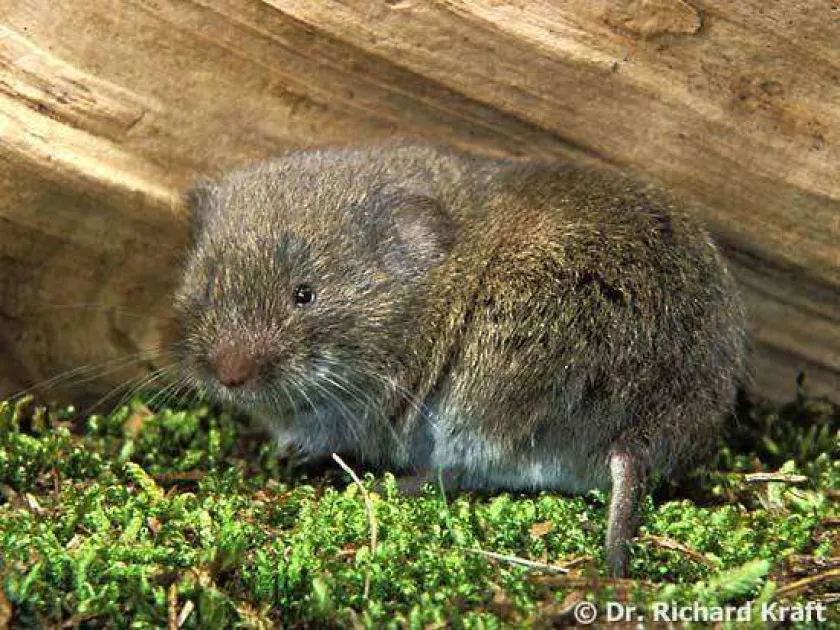
The European pine vole (Pitymys subterraneus) is a small rodent belonging to the Cricetidae family. It is typically 8–10 cm long with dense, brown-gray fur that provides excellent camouflage in soil environments.
This species is uniquely adapted for a fossorial life, meaning it spends almost all of its time underground. It features small eyes and ears, and a relatively short tail, which are specialized traits for navigating complex tunnel systems.
Their reproduction rate is high, with females capable of producing several litters throughout the growing season. This high biotic potential allows them to establish significant populations in gardens and nurseries where food is abundant.
Unlike many other vole species, Pitymys subterraneus rarely ventures into open spaces, preferring the protection of its subterranean galleries. They remain active year-round, continuing their activities even under thick snow cover during winter.
Biological success of this pest is driven by their ability to thrive in various soil types, particularly in loose, humus-rich earth. They utilize their specialized teeth to excavate tunnels that can span several meters in length.
What it damages
The primary damage caused by the European pine vole involves the destruction of plant roots and subterranean organs. They frequently consume the roots of young trees, shrubs, and ornamental plants, often leading to total plant death.
Vegetable crops, particularly root crops like carrots, potatoes, and sugar beets, are highly susceptible. The voles excavate the interior of these vegetables, leaving them hollow and rendering them useless for harvest.
Beyond direct consumption, the act of tunneling creates voids around the root system. This lack of soil contact deprives the plant of necessary moisture and nutrient uptake, causing wilting and stunted development.
In forest nurseries and orchards, this vole can cause significant economic losses by girdling the bark of young saplings near the root collar. This damage often goes unnoticed until the plant starts to show visible signs of decline.
Furthermore, their tunnel networks can disrupt irrigation systems and cause soil surface instability. The combination of root feeding and soil displacement makes them a serious threat to intensive agricultural operations.
Signs of infestation
The most reliable sign of an infestation is the presence of small, circular holes (approximately 3–5 cm in diameter) leading into the ground. These are the entry points to their underground tunnel system.
If a tree or shrub suddenly dies or can be easily pulled out of the ground, it is likely that the root system has been destroyed by voles. Examining the base of the plant often reveals gnawed roots or missing bark.
A "hollow" feeling when walking over garden beds can indicate the presence of tunnels beneath the surface. Sometimes, you may find small piles of displaced soil, though they are usually less prominent than those of moles.
During the winter, look for signs of bark stripping at the base of young tree trunks. Voles often exit their tunnels to feed on the tender bark when the ground is frozen or covered in deep snow.
Freshly gnawed root vegetables found near burrow entrances are a definitive indicator. Additionally, the presence of feces near burrow openings during the summer months confirms active occupation of the site.
Control measures
Effective management begins with strict garden hygiene. Keeping the grass short and removing piles of debris or thick mulch around tree trunks removes potential shelter for the voles.
Physical barriers are highly effective for young trees. Wrapping the base of saplings with fine-mesh wire or plastic guards prevents rodents from reaching the bark and root collar during the critical early years.
Promoting natural predators is a sustainable approach. Installing nesting boxes for owls and perches for hawks can significantly reduce vole populations on larger plots by encouraging avian hunters.
Chemical control via rodenticide baits placed directly into burrows is a common professional method. However, these must be applied carefully, ensuring they are inaccessible to non-target species like pets or beneficial wildlife.
Vibration-based or ultrasonic deterrents can be used to discourage voles from colonizing an area. For best results, rotate between different physical and biological methods to prevent the pests from adapting to your control strategy.
Taxonomy
- Latin name
- Pitymys subterraneus
- Order
- Rodents
- Family
- Muridae
- EPPO code
- PITMSU
Discussion
No discussions yet — be the first.