
Pine vole
Pitymys pinetorum
Description
How to identify
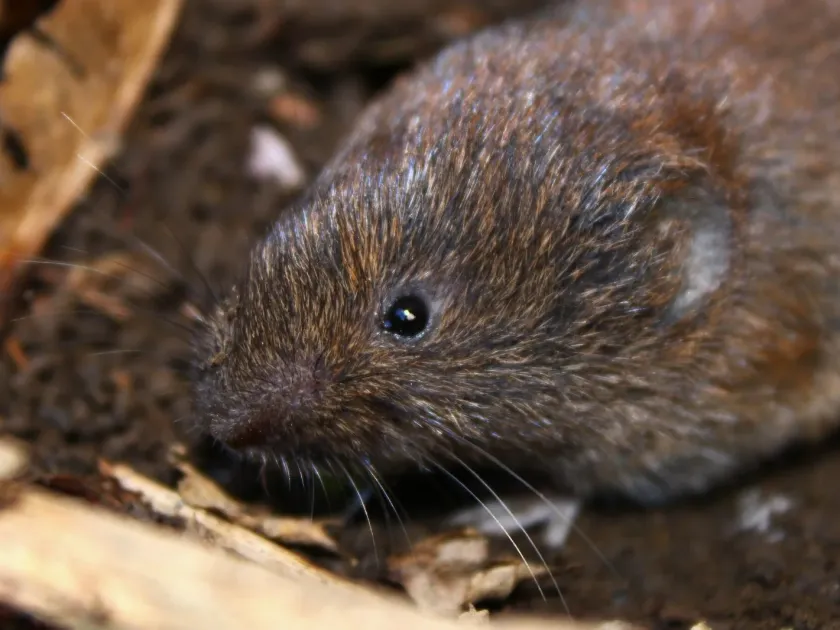
The pine vole (Pitymys pinetorum), also known as the woodland vole, is a small rodent belonging to the Cricetidae family. It is characterized by its compact body, short tail, and tiny ears that are partially hidden by its dense fur.
These rodents typically have reddish-brown or chestnut-colored coats, which provide excellent camouflage in leaf litter and forest debris. An adult individual generally measures between 8 and 10 centimeters in length.
Pine voles spend most of their lives in extensive underground tunnel systems. They prefer loose, well-drained soils, where they move easily beneath the surface, rarely venturing out into the open during the day.
The biology of the species is defined by high reproductive rates. During a favorable season, a single female can produce multiple litters, leading to rapid population growth that can quickly overwhelm a garden or nursery.
Because they are fossorial (burrowing) by nature, they are often overlooked by growers until significant damage to plants has already occurred. Their nocturnal and secretive habits make them particularly difficult to monitor.
What it damages
The primary damage caused by pine voles involves their feeding habits, which target the roots and root collars of various plants. They are significant pests of orchard trees, nursery stock, and ornamental shrubs.
By gnawing on the bark of root systems and the base of tree trunks, they disrupt nutrient flow, which often leads to the decline or death of the tree. Young trees with tender bark are especially vulnerable to their feeding.
While they may cause damage year-round, feeding on roots becomes more intense during fall and winter months when other food sources are scarce, causing them to rely heavily on tree bark.
Damage is often hidden beneath the soil surface or mulch layer. Symptoms such as yellowing leaves or wilting are often seen only after the root system has been severely compromised, leaving little chance for recovery.
Beyond fruit trees, pine voles are known to destroy bulbs, tubers, and the root systems of various flowers, posing a continuous threat to both vegetable gardens and managed landscape areas.
Signs of infestation
The most reliable sign of a pine vole infestation is the presence of small, rounded entrance holes in the ground, usually about 3 to 4 centimeters in diameter, leading to their burrow systems.
Gardeners may observe slightly raised ridges of soil on the lawn or in garden beds, which indicate the presence of shallow, active tunnels constructed just beneath the surface of the ground.
Closer inspection of the tree base often reveals stripped or girdled bark if the soil is carefully cleared away. Gnaw marks from rodent teeth on the roots are a definitive indicator of their presence.
During winter, activity can be tracked by observing snow tunnels or soil disturbances around the base of trees, where voles seek protection and food in the form of inner bark.
The sudden collapse of soft soil underfoot while walking through the orchard is another sign that a complex network of tunnels exists underneath, which has compromised the structural integrity of the earth.
Control measures
Managing pine vole populations requires an integrated approach that focuses on habitat modification, mechanical exclusion, and, when necessary, targeted control measures.
Cultural practices are essential; maintaining clean orchard floors by removing excessive mulch, leaf litter, and tall weeds around tree bases reduces the cover that voles depend on for protection.
Exclusion is the most effective way to protect young trees. Installing hardware cloth or wire mesh cylinders around the base of the trunk, buried at least 15–20 centimeters deep, prevents access to the bark.
For severe infestations, toxic baits (rodenticides) may be used; however, they must be applied according to local regulations to prevent non-target poisoning of wildlife and domestic pets.
- Regular tillage or cultivation of soil to collapse and destroy tunnel networks.
- Encouraging natural predators such as owls, hawks, and snakes to inhabit the area.
- Applying ultrasonic repellent devices to discourage nesting and foraging.
Taxonomy
- Latin name
- Pitymys pinetorum
- Order
- Rodents
- Family
- Muridae
- EPPO code
- PITMPI
Discussion
No discussions yet — be the first.