
Round weevil
Pissodes rotundatus
Description
How to identify
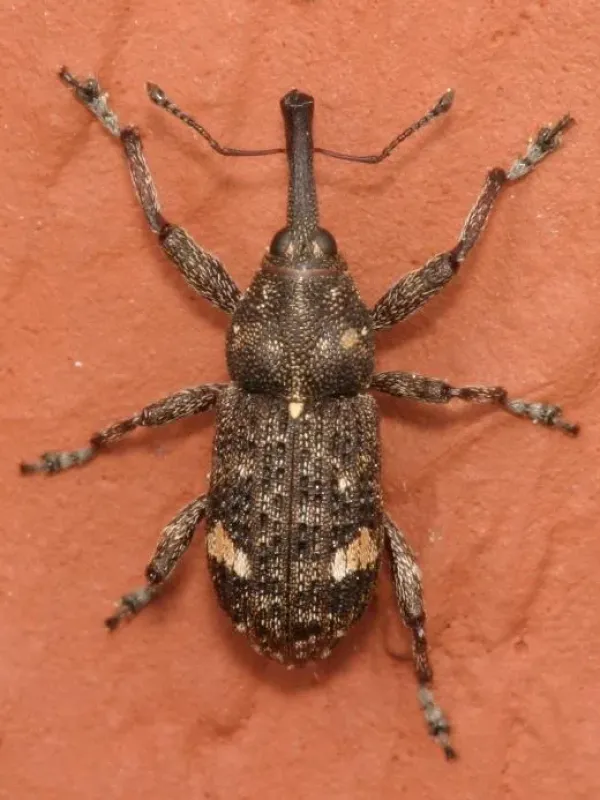
The round weevil (Latin: Pissodes rotundatus) is a species of beetle belonging to the Curculionidae family. It is characterized by a compact, rounded body shape and a distinctively elongated rostrum, common to most weevils.
The adult beetle typically exhibits a dark brown or reddish-brown coloration, often accompanied by faint, irregular markings that serve as effective camouflage against the bark of coniferous trees.
The larvae are legless, fleshy, and white in color with a well-developed head capsule. They are exclusively subcortical feeders, spending their entire larval stage beneath the bark of the host tree.
The lifecycle of this pest is closely tied to the physiological state of the host, as adults often select weakened trees with reduced resin production for oviposition.
Classification of this species is based on specific morphological traits, including the structure of the pronotum and elytra, distinguishing it from other closely related pine weevil species.
What it damages
This pest primarily attacks coniferous species, with a particular preference for the Scots pine. It targets both young plantations and mature trees that are under environmental stress, such as drought or mechanical damage.
The larvae feed on the phloem and cambium layers, carving out meandering galleries under the bark. This process disrupts the tree's transport of nutrients and water, eventually leading to the death of the host.
Feeding activities create entry wounds that serve as infection points for various fungal pathogens, which can rapidly accelerate the decline of the infested tree.
High infestation rates can lead to significant economic loss in forestry due to reduced wood quality and the necessity of premature salvage logging in affected areas.
Secondary infestation by other wood-boring insects often follows the damage caused by the round weevil, making the prognosis for affected trees very poor once symptoms become visible.
When it appears
The emergence of overwintering adult beetles generally occurs in the spring, typically from April to May, as temperatures rise sufficiently to trigger activity.
During the spring period, adults engage in maturation feeding on the bark of shoots and trunks before they begin the process of mating and egg-laying in the bark crevices.
Larval development proceeds throughout the summer months, with the larvae progressively enlarging their galleries as they mature. Pupation occurs in specialized chambers created under the bark.
New generation adults emerge in late summer or early autumn. These beetles remain active for a short period to feed before seeking suitable hibernation sites in the leaf litter or near the base of the trees.
Climatic variations can cause shifts in these phenological events; therefore, monitoring programs must adapt based on yearly weather patterns and localized environmental conditions.
Signs of infestation
The most prominent sign of an infestation is the formation of resinous funnels on the tree bark, created by the beetles as they drill into the stem for feeding or egg-laying.
The accumulation of frass, or fine wood powder, at the base of the tree or within bark cracks indicates that larvae are actively feeding and excavating galleries beneath the surface.
Small, circular exit holes on the bark are visible once the adult beetles have completed their pupation and emerged, serving as a clear indicator of past infestation.
Progressive needle yellowing and canopy thinning, often starting from the crown downward, indicate that the tree's internal circulation system is failing due to larval damage.
- Resin beads on the trunk bark.
- Frass accumulation near the base of the tree.
- Circular emergence holes on the stem surface.
- Yellowing or fading of the tree canopy.
Control measures
The primary control strategy involves systematic forest hygiene, including the prompt removal and disposal of infested trees before the new generation of beetles can emerge.
The use of trap trees is a standard forestry practice to aggregate pest populations; these trees are then destroyed at the appropriate time to eliminate the larvae.
Biological control methods focus on protecting and enhancing populations of natural predators, such as woodpeckers, ants, and predatory beetles that keep pest numbers in check.
Chemical intervention is considered a last resort and is usually restricted to high-value areas, such as nurseries, where individual tree protection is economically justified.
Long-term management relies on silvicultural practices that maintain the health and vigor of the forest stand, making it less susceptible to colonization by wood-boring pests.
Taxonomy
- Latin name
- Pissodes rotundatus
- Order
- Coleoptera (beetles)
- Family
- Curculionidae
- EPPO code
- PISORO
Discussion
No discussions yet — be the first.