
Murray's weevil
Pissodes murrayanae
Description
How to identify
Murray's weevil (Pissodes murrayanae) is a beetle species from the order Coleoptera and the family Curculionidae. Adult weevils are small, characterized by a distinct elongated rostrum, which is a hallmark of the Pissodes genus.
The body of the adult is oval-shaped, typically colored in shades of brown or reddish-brown, often featuring lighter spots on the elytra. The adult length ranges from 5 to 8 millimeters, allowing it to hide effectively within the bark crevices of host trees.
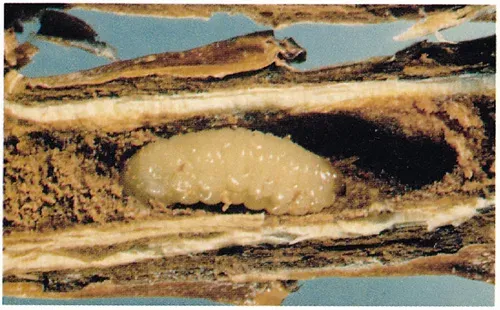
The larvae are typically legless, white to cream-colored, with a well-developed, dark, sclerotized head capsule. They spend their entire developmental phase feeding beneath the bark until they pupate in specialized chambers.
Systematically, this species belongs to a group of wood-boring weevils that infest coniferous trees. Identifying the species in the field can be challenging due to its morphological similarity to other Pissodes species, often requiring detailed anatomical analysis.
A key morphological feature is the structure and scale distribution on the elytra. Unlike some closely related species, Murray's weevil has a strong preference for specific pine hosts, which serves as a valuable indicator for identification within forest ecosystems.
What it damages
The primary hosts for Murray's weevil are various pine species, most notably lodgepole pine (Pinus contorta). The pest prefers young to middle-aged stands, where the bark thickness is optimal for larval development.
Damage occurs primarily in the trunk and branches. Larvae tunnel through the phloem and cambium layers, disrupting the flow of essential nutrients and water throughout the host tree.
Mass infestations often lead to a significant decline in tree health. The larval feeding activities compromise the vascular system, making the tree highly susceptible to secondary attacks by other pests like bark beetles and wood borers.
Economic losses are particularly high in nurseries and young plantations, where the weevil can cause widespread seedling mortality. In mature forests, the pest reduces annual growth increments and degrades the overall quality of commercial timber.
Furthermore, larval entry points and damaged bark create favorable conditions for various fungal pathogens. The synergistic effect of insect feeding and fungal infection often leads to rapid tree decline and eventual mortality.
When it appears
Adult activity of Murray's weevil typically begins in early spring, once temperatures consistently remain above freezing. After overwintering, adults emerge to feed on fresh shoots and bark tissues.
Mating and oviposition primarily occur from late spring through early summer. Females utilize their rostrum to create feeding and egg-laying punctures in the bark, ensuring the larvae have direct access to nutrient-rich inner tissues upon hatching.
Larval development proceeds throughout the summer months. This is the period when damage becomes most visible, characterized by localized bark necrosis and premature yellowing of the foliage on infested branches.
Pupation occurs in specialized cells excavated in the sapwood or just under the bark. The emergence of the new adult generation usually takes place in late summer or early autumn.
Overwintering occurs primarily in the adult stage. Weevils seek shelter in the forest floor, bark crevices, or the soil near the base of the trees to survive the colder months, re-emerging when conditions improve.
Signs of infestation
The earliest visual indication of infestation is the presence of resinous "pitch tubes" or bleeding on the trunk bark, which is the tree's natural defense mechanism attempting to drown out the invading larvae.
Close inspection of the bark reveals small, circular exit holes made by emerging adults. Additionally, small feeding scars on the surface of the bark are often visible, caused by adults during their maturation feeding phase.
Progressive yellowing or browning of individual branches or the tree crown is a critical indicator of heavy infestation. This suggests that the larval galleries have effectively girdled the stem, stopping the flow of sap to the foliage.
Under the bark, one can find galleries packed with frass (insect excrement and wood particles). Peeling back a portion of the bark reveals these meandering tunnels, which are diagnostic of a Pissodes infestation.
Overall tree vigor declines, characterized by reduced needle density and stunted growth. Infested trees often stand out in a plantation due to their sparse crowns and poor general health compared to surrounding healthy trees.
Control measures
The primary management strategy involves silvicultural practices, such as the timely removal of dead, dying, or heavily infested trees. This sanitation logging significantly reduces the pest population and prevents further spread.
In nurseries, prophylactic insecticide treatments using systemic chemicals are highly effective. These treatments protect young seedlings during their most vulnerable developmental stages from colonization.
Pheromone traps are used for monitoring population levels. This data is crucial for determining the timing and necessity of intervention strategies before an outbreak reaches epidemic proportions.
Biological control methods involve the conservation and augmentation of natural enemies, such as parasitic wasps and predatory beetles that target larval or egg stages. Maintaining ecosystem diversity is essential for natural population regulation.
In cases of severe infestation, registered chemical control options may be applied. However, these must be implemented in accordance with environmental safety regulations and timed carefully to coincide with the most vulnerable phases of the insect's life cycle.
Taxonomy
- Latin name
- Pissodes murrayanae
- Order
- Coleoptera (beetles)
- Family
- Curculionidae
- EPPO code
- PISOMU
Discussion
No discussions yet — be the first.