
Small spruce weevil
Pissodes harcyniae
Description
How to identify
The small spruce weevil (Pissodes harcyniae) is a beetle belonging to the Curculionidae family, widely recognized as a significant pest in European spruce forests.
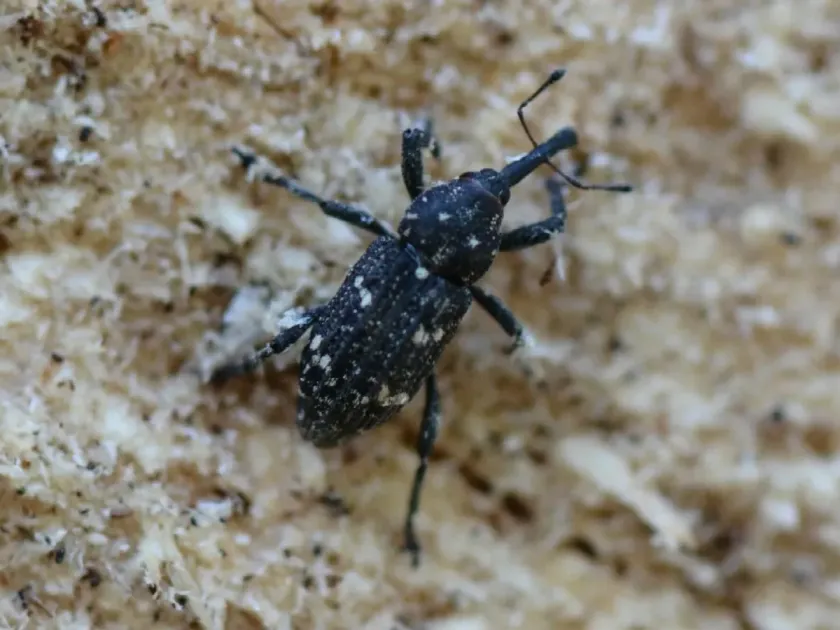
Adult beetles are typically 5 to 7 mm long, characterized by a dark brown or black coloration and small scales that form faint bands on their elytra.
The larvae are legless, C-shaped, and creamy-white with a distinct brownish head, designed specifically for burrowing within the bark of host trees.
The pupal stage occurs in small chambers constructed by the larvae just beneath the bark, where the insect remains until it reaches its adult form.
These insects are highly adaptable and often prefer stressed or damaged trees, though they can successfully attack healthy specimens during population outbreaks.
What it damages
The primary hosts of this weevil are spruce trees, where both adults and larvae cause significant physiological damage to the cambium layer.
Adults feed on the bark, leaving small feeding punctures, while larvae construct extensive galleries beneath the bark, disrupting the flow of sap.
This disruption causes the tree to weaken, often resulting in the browning and eventual death of the affected parts or the entire tree if the girdling is complete.
Secondary infections from pathogens, facilitated by the weevil's activity, often speed up the decline and mortality of the host tree.
Severe infestations lead to significant timber loss and reduced stand quality, especially in forest areas prone to environmental stress.
When it appears
Adult beetles emerge in early spring, once temperatures become favorable, and begin their search for suitable host trees for feeding and oviposition.
The life cycle is typically completed within one year, although developmental stages can overlap depending on local climate conditions and elevation.
Eggs are laid inside small cavities excavated by the female in the bark, usually in the lower or mid-section of the spruce stem.
Larval development takes place during the summer months, with the larvae feeding actively until they reach maturity and prepare for pupation.
Before winter, the new generation of adults typically emerges or settles in protected areas to overwinter until the next season begins.
Signs of infestation
A key indicator of an infestation is the presence of numerous small feeding holes on the tree's bark, often accompanied by resin flow.
Fine wood dust, known as frass, accumulates at the base of the trunk or within bark crevices, indicating active larval burrowing beneath the bark.
The needles of the affected tree may turn yellow and eventually fall off as the tree loses its ability to transport nutrients efficiently from the roots.
Peeling back sections of the bark reveals complex, winding galleries that show the extent of the damage caused by the larvae during their growth phase.
Crown thinning is another common symptom, which becomes increasingly noticeable as the infestation progresses and the tree's overall vigor declines.
Control measures
Sanitation cutting and the immediate removal of infested trees are the most effective ways to prevent the spread of this pest throughout the forest.
Pheromone traps are used to monitor beetle activity and can help in determining the best timing for targeted forest management interventions.
In cases of high infestation, localized insecticide applications may be used to reduce the beetle population during the peak emergence period.
Promoting a healthy, diverse forest environment encourages natural predators, such as woodpeckers and parasitic insects, to keep the weevil population in check.
Strategic silvicultural practices, such as thinning to reduce stand competition and improve tree health, significantly increase the resilience of spruce stands.
Taxonomy
- Latin name
- Pissodes harcyniae
- Order
- Coleoptera (beetles)
- Family
- Curculionidae
- EPPO code
- PISOHA
Discussion
No discussions yet — be the first.