
Spruce weevil
Pissodes dubius
Description
How to identify
The spruce weevil (Pissodes dubius) is a member of the Curculionidae family, commonly known as snout beetles. These insects are significant pests that primarily affect various species of spruce and fir trees.
Adult beetles are relatively small, measuring about 5 to 7 mm in length. Their bodies are elongated and typically range in color from dark brown to black, often featuring faint patterns of lighter scales on their wing covers.
The larvae are legless and have a pale, whitish body with a distinct yellowish-brown head. They are specialized to live and feed exclusively within the inner bark and cambium layers of their host trees.
Pupation occurs within the bark or the outer sapwood, where the larvae construct small, oval-shaped chambers known as pupal cells. This stage of development remains hidden from external predators.
The life cycle of this beetle is intrinsically linked to the health status of its host, as it thrives best on trees that have been previously weakened by environmental stressors or structural damage.
What it damages
Pissodes dubius targets mainly spruce trees (Picea) and occasionally firs. It is particularly drawn to trees that are stressed, injured, or experiencing slow growth, turning them into centers of infestation.
Feeding by adult beetles involves creating small, shallow pits in the bark of twigs and branches. While these injuries may seem minor, they disrupt the outer protective layer of the tree.
The most severe damage is caused by the larvae, which bore through the inner bark. By feeding on the cambium and phloem, they disrupt the translocation of water and nutrients, effectively girdling portions of the tree.
Significant infestations lead to reduced tree vigor, crown dieback, and in many instances, the eventual death of the affected tree. The loss of nutritional flow also makes the tree highly susceptible to secondary attacks.
In nursery settings, even a moderate presence of this pest can lead to the loss of saplings and significant economic hardship for growers who rely on healthy stock for reforestation or ornamental purposes.
When it appears
Adult activity typically begins in the spring when temperatures rise sufficiently to allow the beetles to emerge from their overwintering sites in the forest floor or beneath the bark of older trees.
Spring and early summer represent the primary peak for adult movement and egg-laying. During this time, female beetles locate suitable hosts and deposit eggs into small punctures made in the bark.
The larval development phase usually spans the summer months, taking advantage of the warm weather to feed actively and grow before reaching the pupal stage as the season progresses.
The duration of the life cycle can vary based on the specific climate of the region; in some cases, the insect completes one generation per year, while favorable conditions may facilitate faster development.
Winter survival is achieved by both adults and late-stage larvae, which seek protected environments such as the base of trees or deep within the bark crevices to survive the freezing temperatures.
Signs of infestation
One of the earliest indicators of infestation is resin flow (pitching) on the bark surface. Small drops of sap oozing from feeding punctures indicate the tree is attempting to repel the beetles.
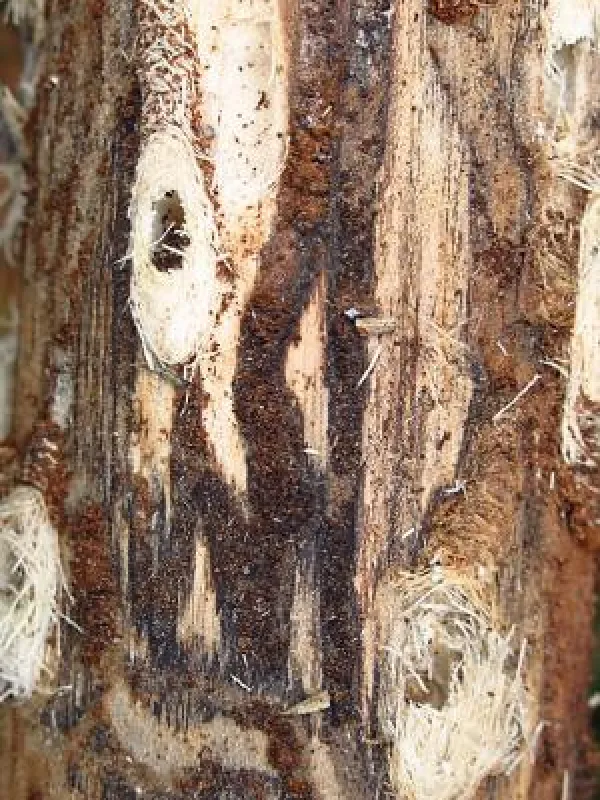
Upon closer inspection of the bark, one might find galleries packed with frass (larval excrement and wood shavings). These galleries are a definitive sign that larvae are actively feeding beneath the surface.
Foliage discoloration is another warning sign. As the tree's internal plumbing is compromised, needles may fade to a yellow or brownish color, signaling that the tree is no longer receiving adequate resources.
Crown thinning and the wilting of terminal shoots are clear indicators of a major infestation. When these symptoms appear, it often means the pest population is large and the tree's health is severely declining.
Small, circular exit holes on the surface of the bark serve as evidence that the insect has successfully completed its development and that a new generation of adult beetles has emerged to continue the cycle.
Control measures
Sanitation felling is the most effective management practice. By identifying and removing infested trees before the adult beetles emerge, foresters can significantly curb the population growth of the pest.
Proactive tree care, such as ensuring adequate watering during droughts and proper fertilization, helps keep trees vigorous. Healthy trees are much better at producing resin to defend against beetle attacks.
Chemical control using systemic insecticides can be applied during the period of adult beetle activity. This method targets the adults before they can lay eggs, effectively protecting the trees during high-risk seasons.
Monitoring using pheromone traps is highly recommended in sensitive forest areas. These traps provide crucial data on the population density of the beetle, enabling timely decisions regarding the need for intervention.
Biological control methods, including the encouragement of natural predators or the use of fungal pathogens, offer an environmentally sound alternative for long-term integrated pest management in forests.
Taxonomy
- Latin name
- Pissodes dubius
- Order
- Coleoptera (beetles)
- Family
- Curculionidae
- EPPO code
- PISODU
Discussion
No discussions yet — be the first.