
Cheese fly
Piophila
Description
How to identify
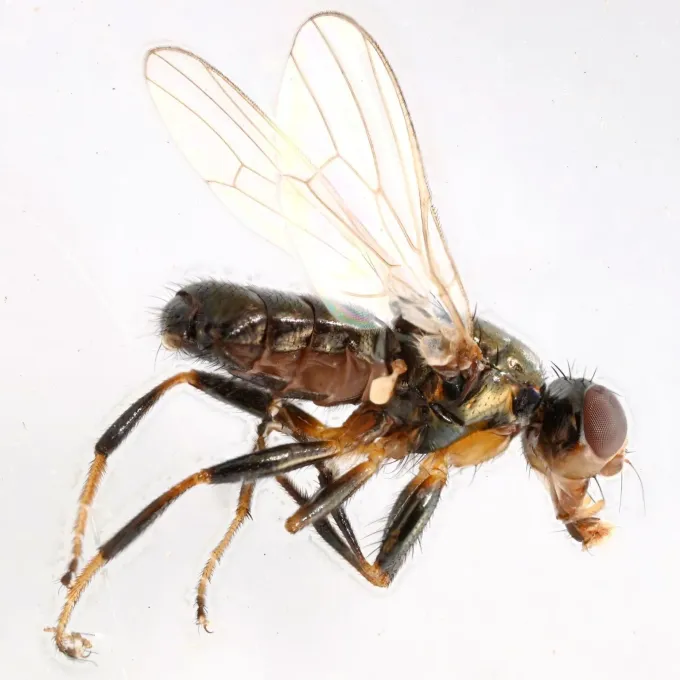
The cheese fly (Piophila casei) belongs to the family Piophilidae within the order Diptera. Adult flies are small, typically ranging from 4 to 5 millimeters in length, and are easily recognized by their shiny black body with a slight metallic luster.
The wings are clear with a faint yellowish tinge. The legs are generally yellow or brownish. Their head is relatively large with prominent reddish-brown eyes, which serves as a key identifying characteristic for this particular species.
The larvae, often referred to as "cheese skippers," are white or yellowish, legless, and cylindrical in shape, growing up to 8–10 millimeters long. Their most distinct trait is the ability to leap several inches by arching their bodies and suddenly snapping back, hence the common name.
The life cycle undergoes complete metamorphosis, consisting of the egg, larval, puparial, and adult stages. Females are highly prolific, capable of laying up to 500 eggs, often tucked into the crevices of suitable food sources to ensure the survival of the offspring.
Development speed is highly dependent on temperature. In indoor environments with controlled temperatures, the cheese fly can complete its life cycle rapidly, allowing for multiple generations to develop throughout the year if not effectively managed.
##damage##The cheese fly is primarily known as a significant pest of stored high-protein products such as cheese, cured meats, and dried fish. Its presence causes severe economic losses by rendering food products unfit for human consumption.
Larvae burrow into the food, creating tunnels and feeding on the tissues. This process destroys the texture and quality of the product, while their excrement and digestive enzymes cause rapid decomposition and spoilage of the foodstuff.
In addition to physical damage, the larvae introduce microorganisms into the food, which can lead to bacterial rot and mold growth. Once a product is infested, it is nearly impossible to salvage, usually requiring the disposal of the entire batch to meet sanitary standards.
Adult flies also act as vectors for various bacteria, carrying pathogens on their feet as they move across warehouse surfaces. This poses a broader hygiene risk to food storage facilities beyond just the primary damage to the infested products.
The presence of cheese flies is considered a major sanitary failure in the food industry. Even a small number of insects can lead to regulatory issues and the loss of reputation for businesses involved in food processing and storage.
When it appears
In heated indoor environments, the cheese fly can maintain active reproduction all year round. This makes them a persistent threat to warehouses, food plants, and homes that do not implement strict temperature control.
In outdoor environments, adult fly activity typically begins when temperatures rise above 15°C (59°F). Summer months are peak periods for reproduction, with populations increasing significantly as temperatures rise within the optimal range of 20°C to 25°C.
As temperatures drop in autumn, the flies seek shelter in buildings, warehouses, or storage rooms. They survive the winter primarily in the puparial stage, waiting for warmer conditions to trigger the emergence of the next generation of adults.
Monitoring for the presence of these flies is essential throughout the warmer months. Identifying the first signs of activity in early spring is crucial for preventing the establishment of large populations during the summer.
Proper seasonal management involves closing off entry points before the cold weather sets in, as this is when the flies are most actively searching for overwintering sites, often moving from outdoor organic waste sources into food storage areas.
Signs of infestation
The most unmistakable sign of infestation is the presence of leaping larvae on or within food products. A network of small holes or tunnels on the surface of the food is a clear indication that larvae are feeding inside.
The observation of adult flies near windows, light sources, or around stacked inventory confirms their presence in the facility. They are attracted to odors from ripening cheese or curing meats and will congregate in these areas.
Infested products may exhibit visible patches of moisture, discoloration, or a softening of the texture, which are symptoms of the breakdown of the product by larval digestive enzymes. A foul, pungent odor often accompanies advanced infestations.
Finding puparia—dark brown, barrel-shaped casings—in the seams of packaging, corners of shelving, or cracks in the floor provides evidence that a generation has completed its development and is ready to start a new cycle.
Personnel should be vigilant for any deviations from the standard smell or appearance of the products. Prompt investigation of any suspicious signs is the best defense against a widespread infestation.
Control measures
Sanitation is the cornerstone of cheese fly control. Regularly cleaning and removing all food debris, organic waste, and dust from storage areas prevents the flies from finding suitable sites to lay their eggs.
Ensuring that all food products are kept in tightly sealed, airtight, or vacuum-sealed packaging is a highly effective barrier. This prevents flies from accessing the products in the first place.
Professional pest management, including scheduled insecticide treatments in empty storage areas, can effectively manage fly populations. It is vital to ensure that no food is present during chemical applications.
Installing fine-mesh screens on all windows and ventilation openings prevents the migration of flies into buildings. UV-light traps are also useful for monitoring fly activity and reducing the number of adults in the facility.
- Maintain storage temperatures below 10°C to inhibit larval growth.
- Use ultraviolet fly killers to capture and monitor adult populations.
- Ensure rigorous inspection of incoming raw materials for signs of infestation.
- Immediately discard any product showing signs of larval burrowing.
Taxonomy
- Latin name
- Piophila
- Order
- Diptera (flies)
- Family
- Piophilidae
- EPPO code
- PIOPSP
Discussion
No discussions yet — be the first.