
Pea crab
Pinnotheres
Description
How to identify
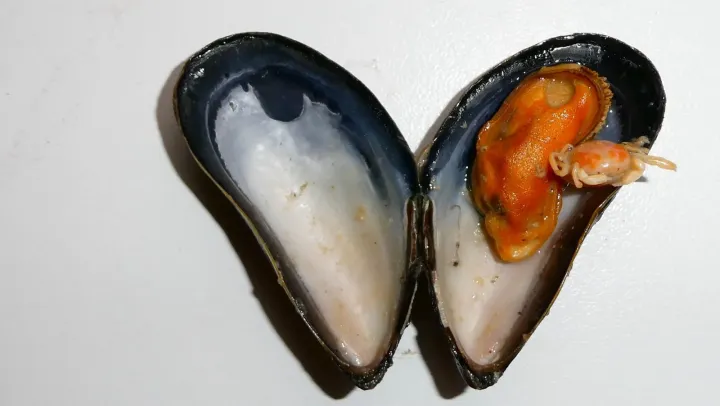
The pea crab (lat. Pinnotheres) belongs to the family Pinnotheridae, order Decapoda. These are small crabs, rarely exceeding 10-15 millimeters in size.
Females of this species have a soft, semi-transparent carapace, which is an adaptation to their specific lifestyle inside the shells of mollusks.
Males possess a harder carapace and are capable of swimming freely in the water column to find mates, unlike the sedentary females.
This organism is considered a commensal rather than a classic parasite, although its presence may cause physiological stress to its host.
In an agronomic context, it is crucial to understand that this species is exclusively a marine inhabitant and does not affect terrestrial agricultural crops.
What it damages
It is vital to clarify: the pea crab is not a pest of agricultural crops, such as field peas or other legumes.
The common name is misleading: the crab is named "pea crab" due to its small size and round shape resembling a pea, not due to its diet.
The primary impact of this crab is limited exclusively to marine bivalve mollusks, such as oysters, mussels, and scallops.
In aquaculture, the presence of Pinnotheres may reduce the market weight of shellfish, as the crab feeds on the plankton filtered by the host.
In agriculture focused on crop production, this object poses no threat and requires no control measures.
When it appears
The life cycle of the pea crab is closely tied to the seasonal activity of marine mollusks, where they spend most of their lives.
Reproduction occurs in the water column, where females release larvae after a period of active growth within the host's shell cavity.
Peak larval activity is observed during warmer months, when water temperatures facilitate the rapid development of juveniles.
Seasonal temperature fluctuations affect the crab's metabolism and its ability to remain hosted.
For agronomists, data on seasonality is irrelevant as there is no interaction with crops whatsoever.
Signs of infestation
A sign of the crab's presence in a marine environment is reduced fitness of the mollusk despite an outwardly intact shell.
When the mollusk shell is opened, the crab is found within the mantle cavity, living off the nutrient-rich water currents created by the host.
Physical damage to the mollusk's tissues by the crab is minimal, although thinning and deformation of the host's internal organs may occur.
In fields with peas or other crops, no signs of this crab's presence are possible due to its biological specificity.
Any damage to legume crops should be attributed to insect pests, such as the pea weevil, and not to this species of crustacean.
Control measures
Since the pea crab does not affect plants, no specific plant protection methods (insecticides or agrotechnical practices) are developed for it.
In commercial mariculture, control of the pea crab involves strict monitoring of mollusk health and hygiene in production facilities.
Using selective breeding and removing adult crabs from mollusk batches are the primary management measures.
To protect pea crops, it is recommended to focus on classic pests: aphids, weevils, and bruchids.
An agronomist must clearly distinguish terminology: Pinnotheres is a marine biological object unrelated to phytosanitary risks in crop production.
Taxonomy
- Latin name
- Pinnotheres
- Family
- Pinnotheridae
- EPPO code
- PINTSP
Discussion
No discussions yet — be the first.