
Weevil
Pimelocerus perforatus
Description
How to identify
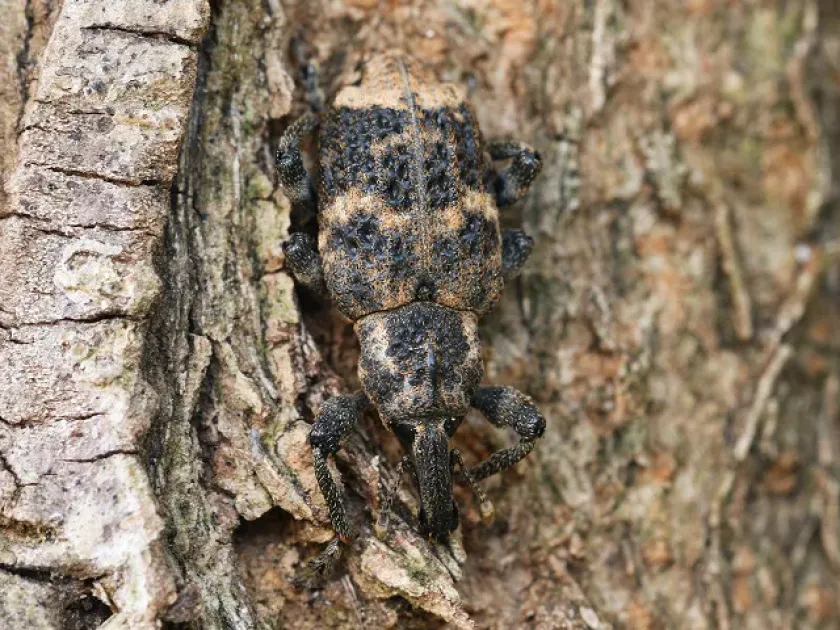
The weevil Pimelocerus perforatus belongs to the order Coleoptera and the family Rhynchitidae. This small insect is characterized by an elongated rostrum, which allows it to bore into plant tissues effectively.
Adults possess a robust chitinous exoskeleton, often displaying a metallic sheen. The beetle's body is compact, featuring distinct elbowed antennae, which serve as a primary diagnostic trait for identifying this species in the field.
Larvae are typically C-shaped, creamy-white in color, and legless. They develop cryptically within plant tissues, completing their metamorphosis stages before pupating either in the soil or within the damaged plant organ.
Agronomists use morphometric analysis of adults to identify the species, focusing on the punctation of the elytra and the shape of the pronotum. The mating behavior of the beetles also assists in distinguishing them from related weevil species.
The insect's life cycle is closely linked to the phenology of its host plants. Monitoring during the early spring is critical, as this is when overwintering adults emerge to seek suitable sites for egg-laying.
What it damages
The primary hosts of this pest include various species of broad-leaved trees, particularly those in the Rosaceae family. The pest can cause noticeable damage to young orchards, hindering vegetative growth.
Adults damage buds, young leaves, and inflorescences by chewing holes in them. This disrupts photosynthesis and reduces the overall vigor of the trees, making them susceptible to secondary infections.
The most significant damage is caused by larvae that feed internally within shoots or fruits. Their tunneling activity leads to premature fruit drop and the deformation of young, developing branches.
In cases of heavy infestation, the weevil can significantly reduce crop yields. Severe damage to young saplings may lead to their death during the winter due to poor hardening off before the dormancy period.
Damaged tissues often become entry points for fungal and bacterial pathogens, which further exacerbates the phytosanitary condition of the orchard and requires comprehensive treatment measures.
When it appears
Adult emergence from overwintering sites, typically the topsoil or leaf litter, occurs when mean daily temperatures rise consistently to 10–12 degrees Celsius.
The period of peak activity coincides with the bud break and flowering phase of trees. This is when the pest is most visible and active, as it feeds to accumulate energy for reproduction.
Females begin laying eggs in late spring, selecting the most phenologically suitable plant organs. This process continues for several weeks depending on regional weather patterns.
Larval development spans the main summer months. Depending on the temperature regime, the generation is usually univoltine, with adults returning to the soil to overwinter by late summer.
In autumn, adults retreat to the soil or crevices in bark. A warm, dry autumn can extend their period of activity, increasing the risk of damage to late-maturing plant varieties.
Signs of infestation
The first visual signs of the pest are characteristic punctures on young leaves and buds. When threatened, the beetles often drop to the ground and feign death, which is a common defensive behavior.
- Small holes in buds and leaves.
- Premature yellowing and fruit drop.
- Presence of tunnels inside young shoots or fruits.
- Curling or deformation of leaf blades.
- Traces of excrement on damaged plant parts.
Inspecting shoots reveals puncture sites where females have deposited eggs. This is frequently accompanied by sap or gum exudation at the site of mechanical tissue injury.
The branch-shaking method is effective for detecting the presence of the population in the canopy. It allows for quick assessment of infestation levels within the orchard.
Gradual wilting of terminal shoots in mid-summer may indicate the presence of larvae developing internally, which necessitates immediate pruning and disposal of affected branches.
Control measures
Agronomic control methods include regular autumn cultivation of the soil around the base of trees. This disrupts overwintering sites, exposing larvae and adults to low temperatures and natural predators.
Collecting and disposing of fallen leaves and mummified fruits is an essential practice to reduce the pest population for the following season.
In cases of high population density, chemical insecticides with systemic or contact-stomach action are used. Applications should ideally be performed before flowering to protect pollinators.
Biological control options, such as the use of entomopathogenic fungi or nematodes, offer an eco-friendly way to target larvae in the soil without chemical stress on the environment.
Installing sticky bands on tree trunks can limit the migration of beetles and reduce the intensity of crown colonization. Consistent monitoring remains the cornerstone of a successful pest management program.
Taxonomy
- Latin name
- Pimelocerus perforatus
- Order
- Coleoptera (beetles)
- Family
- Curculionidae
- EPPO code
- HYLOPE
Discussion
No discussions yet — be the first.