
Pimelocerus weevil
Pimelocerus
Description
How to identify
The Pimelocerus weevil belongs to the large family Curculionidae (order Coleoptera). These insects are recognized by their elongated snouts, known as a rostrum, which they use to feed on and lay eggs within plant tissues.
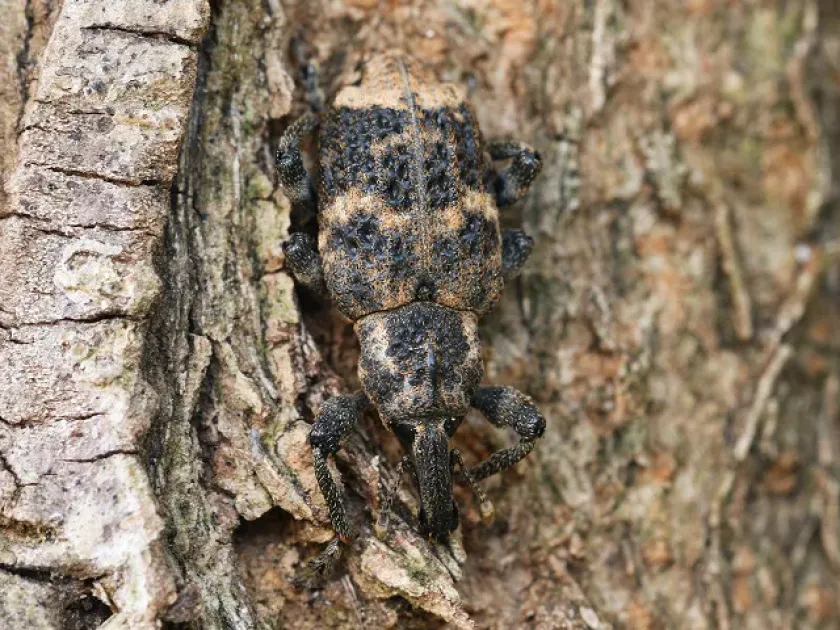
Adult beetles are typically medium-sized with a dark, often mottled or brownish-black coloration, allowing them to blend into the bark of their host trees perfectly. Their bodies are protected by a hard exoskeleton.
The life cycle undergoes complete metamorphosis, consisting of egg, larva, pupa, and adult stages. The larvae are characteristically C-shaped, legless, and white or yellowish, often hidden deep within the wood or bark.
They typically overwinter as adults in protected areas such as tree bark crevices or leaf litter at the base of the tree. When temperatures rise in the spring, the beetles emerge to resume their activity and mating cycle.
Pimelocerus species are highly adaptive and are capable of surviving varying environmental conditions, making them a consistent challenge for orchardists and forest managers throughout the season.
What it damages
These pests primarily target deciduous trees and several fruit-bearing species. Damage is caused by both adults, which feed on buds and foliage, and larvae, which bore into the vascular tissues of the tree.
Adult feeding results in unsightly holes in the leaves and buds, which weakens the tree's ability to produce energy through photosynthesis. This foliage loss can stunt growth in young trees significantly.
Larval feeding is more destructive, as they create galleries beneath the bark. These tunnels disrupt the cambium layer, effectively cutting off the tree's nutrient and water supply, which can lead to branch dieback.
Severe infestations create entry points for pathogens, including various fungal and bacterial infections. Once a tree is weakened by the weevils, it becomes increasingly susceptible to other diseases that can kill the plant.
The economic impact involves decreased crop yields, poor fruit quality, and the potential loss of entire branches or trees, necessitating long-term recovery and investment in replacement plantings.
Control measures
Effective management of Pimelocerus weevils requires an integrated approach that focuses on maintaining tree health and utilizing mechanical and chemical control methods when necessary.
Sanitation is the first line of defense. Regularly pruning and destroying infested branches prevents the larvae from completing their life cycle and reduces the local population density for the following season.
Mechanical control through sticky bands or burlap traps around the tree trunk can capture adult beetles as they move up and down the tree, preventing them from laying eggs in the crown.
Chemical control should be applied strategically, targeting the adult stage before egg-laying begins. Systemic insecticides are often preferred as they provide protection to the internal tissues where larvae might be feeding.
- Cultural Practices: Ensure trees are well-watered and fertilized to improve natural resistance to pests.
- Biological Control: Protect native predators and parasitic wasps that feed on weevil eggs and larvae.
- Monitoring: Conduct regular inspections of bark and buds, especially during early spring, to detect early signs of infestation.
Taxonomy
- Latin name
- Pimelocerus
- Order
- Coleoptera (beetles)
- Family
- Curculionidae
- EPPO code
- DYSRSP
Discussion
No discussions yet — be the first.