
Phytobius
Phytobius
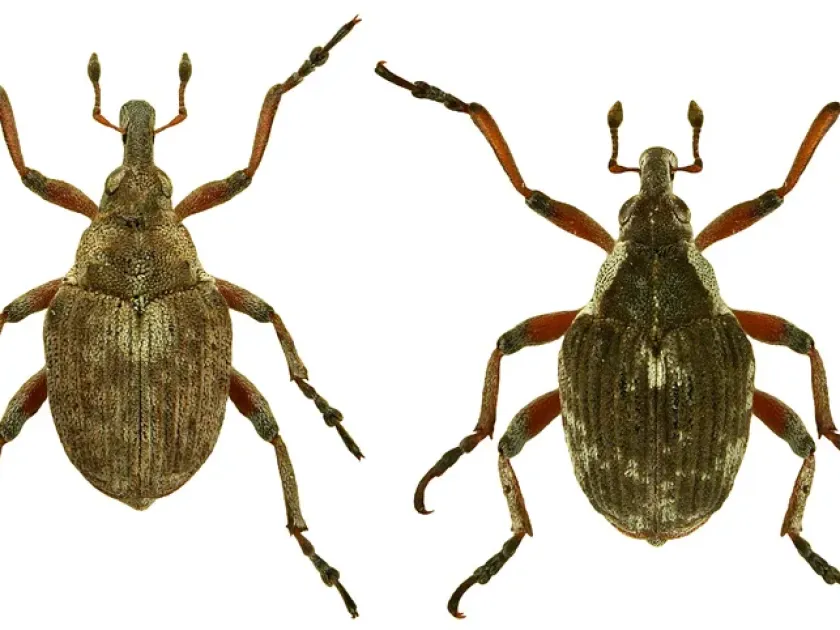
Description
How to identify
Phytobius is a genus of weevils belonging to the Curculionidae family within the order Coleoptera, known for their specific feeding habits on crops.
These beetles are small in size, usually measuring about 2 to 3 millimeters, and possess a robust body often covered with fine scales or hairs for camouflage.
The defining feature of this pest is its elongated snout (rostrum), which is used to penetrate plant tissues for feeding and oviposition.
The larvae are typically legless, white to cream-colored, and spend their life cycle feeding internally within plant stems or roots.
Adults exhibit agility, often using their ability to jump or fly to escape from threats or move between host plants in a field.
What it damages
Phytobius causes significant economic damage to various crops, with a particular affinity for buckwheat and related botanical species.
Adult beetles feed on leaves, creating distinct holes and ragged edges, which directly reduces the plant's photosynthetic capacity.
Larvae contribute to the damage by mining into stems, disrupting the vascular system and hindering the transport of essential nutrients and water.
This internal damage can lead to the wilting and stunted growth of plants, making them more susceptible to environmental stressors and secondary diseases.
In cases of high infestation, the loss of plant vigor results in reduced seed set and substantial yield reduction for the farmer.
When it appears
The life cycle of Phytobius is heavily influenced by seasonal temperatures, which determine the timing of emergence from hibernation.
Hibernation occurs during the winter months, with adults sheltering under crop residues or deep within the soil profile to survive freezing conditions.
As spring temperatures rise, the beetles emerge to seek out young, tender growth, marking the beginning of the primary infestation period.
The reproductive phase usually begins in late spring, matching the phenology of the host plants to ensure food availability for the emerging larvae.
Multiple generations may occur in a single growing season depending on local climate conditions, requiring ongoing vigilance throughout the crop cycle.
Signs of infestation
The earliest signs of Phytobius activity are small, round perforations visible on the leaves of young crops during the early stages of development.
Close inspection of stems may reveal necrotic lesions or small puncture marks where the female weevil has deposited eggs.
Uneven crop height and localized patches of yellowing vegetation are common indicators of larval infestation within the plant tissues.
- Small holes scattered across leaf surfaces.
- Stunted plant growth or premature wilting in specific areas of the field.
- Presence of small adult weevils when shaking plants or sweeping with a net.
Advanced signs include the total loss of vigor in individual plants, leading to gaps in the crop stand and diminished reproductive output.
Control measures
Integrated Pest Management (IPM) is the most effective approach to control Phytobius, focusing on cultural and chemical prevention strategies.
Crop rotation is crucial, as it forces the pest to find a new host, significantly reducing the pressure on the primary crop during the next season.
Deep autumn plowing of the soil helps destroy overwintering sites, exposing larvae and adults to unfavorable weather conditions and predators.
Maintaining clean fields by eliminating host weeds, especially those related to the buckwheat family, removes secondary food sources.
If economic thresholds are exceeded, the targeted application of systemic or contact insecticides is recommended to protect the crop during critical growth phases.
Taxonomy
- Latin name
- Phytobius
- Order
- Coleoptera (beetles)
- Family
- Curculionidae
- EPPO code
- PHTBSP
Discussion
No discussions yet — be the first.