
Stem nightshade weevil
Phyrdenus divergens
Description
How to identify
The stem nightshade weevil Phyrdenus divergens is a coleopteran insect belonging to the Curculionidae family. It is specialized in attacking members of the Solanaceae plant family.
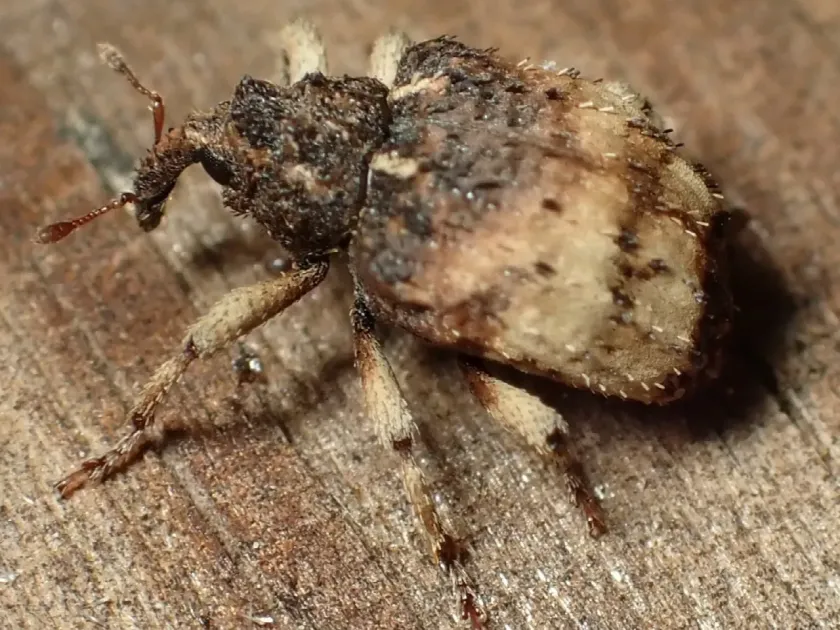
Adult weevils are characterized by their elongated rostrum and cryptic coloration, which helps them remain hidden on plant debris or stems during the day.
The larvae are small, legless, cream-colored grubs that inhabit the internal tissues of host plants, specifically targeting the succulent parts of the stem.
The life cycle of this pest is synchronized with the development of its host plants, ensuring that the larvae have sufficient nutritional resources to complete their maturation.
Due to their internal feeding habit, identification often requires dissection of the plant stems, as surface signs may be minimal in the early stages.
What it damages
The pest primarily affects important agricultural crops such as tomatoes, potatoes, eggplants, and peppers, causing structural damage to the host.
By boring into the stem, larvae disrupt the plant's vascular system, preventing the effective transport of water and nutrients to the upper foliage.
In addition to physiological damage, the physical tunneling activity of the larvae weakens the stem, making the plant highly susceptible to breakage by wind or heavy foliage weight.
Adult weevils supplement the damage by feeding on young leaves and stems, which creates entry points for secondary bacterial and fungal pathogens.
Heavy infestation levels can lead to significant yield reductions, stunted growth, and in severe cases, the total death of the crop.
Signs of infestation
The most prominent sign of infestation is sudden wilting of the plant canopy, which does not recover after watering or rainfall.
Look for small, circular entrance holes on the stem, often surrounded by frass or fine sawdust-like material discarded by the boring larvae.
Dissecting a suspect stem will reveal internal longitudinal tunnels filled with excrement and larvae, confirming the presence of the pest.
Leaves may show yellowing or desiccation starting from the top, indicating that the vascular pathways at the base of the plant have been severed.
Deformed or swollen areas on the stem surface are common indicators of larval galleries hidden just beneath the outer epidermis.
Control measures
Management of Phyrdenus divergens relies heavily on integrated pest management (IPM) practices to minimize chemical use while maximizing control.
Cultural practices, such as the removal and destruction of crop residues immediately after harvest, are critical to eliminate overwintering sites.
Application of systemic insecticides should be timed during the adult emergence phase or before larvae successfully penetrate the deep stem tissues.
Maintaining clean field borders by controlling wild solanaceous weeds helps reduce the population pressure on commercial crops.
- Crop rotation with non-solanaceous species.
- Deep tillage to bury pupae and wintering adults.
- Using pheromone traps for early detection of adult migration.
Taxonomy
- Latin name
- Phyrdenus divergens
- Order
- Coleoptera (beetles)
- Family
- Curculionidae
- EPPO code
- PHRDDI
Discussion
No discussions yet — be the first.