
Leaf warblers
Phylloscopus
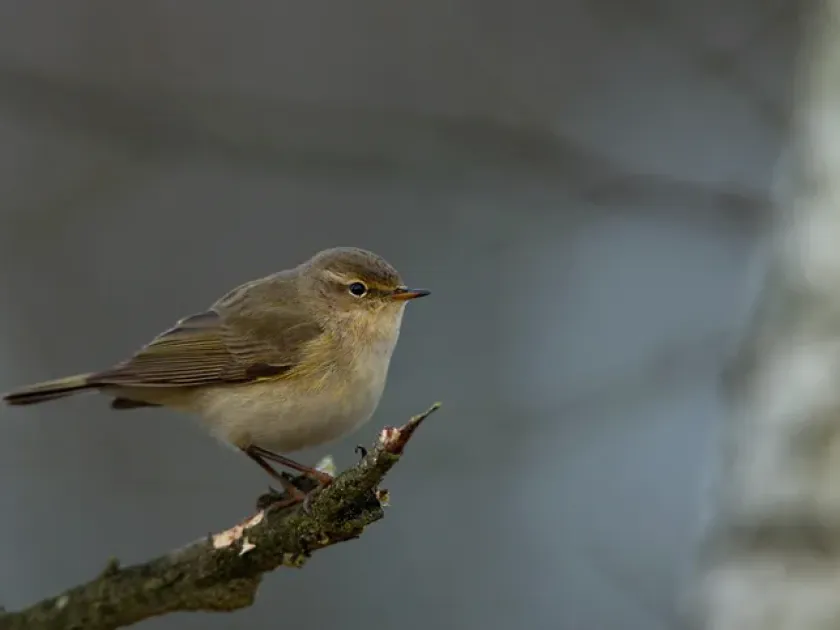
Description
How to identify
Leaf warblers (Phylloscopus) are a genus of small insectivorous songbirds belonging to the Phylloscopidae family. They are characterized by their modest olive-green or brownish plumage, which acts as effective camouflage in the canopy.
These birds are known for their frantic, restless behavior. They are constantly on the move, flitting between branches and leaves to forage for small insects, making them difficult to spot without careful observation.
A distinctive feature is their thin, pointed bill, designed to reach insects in tight spaces like leaf folds or bark crevices. They are generally shy and avoid close human contact, which often masks their presence in the garden.
Identification is largely based on their vocalizations, as their physical appearance is highly uniform across many species in the genus. Their songs consist of short, repetitive trills that vary depending on the specific type of warbler.
While they are primarily forest birds, they frequently venture into gardens and orchards during migration or when insect populations are low, making them a common sight in cultivated areas.
What it damages
Although leaf warblers are beneficial for controlling insect pests throughout the season, they can cause significant damage to crops, particularly grapes, berries, and stone fruits, during the ripening stage.
The damage occurs when birds peck holes in the skin of ripening fruit. This is particularly problematic for grapes and berries, where the succulent interior is exposed after the initial breach of the skin.
Punctured fruit provides an entry point for fungal spores and pathogens, leading to rot and rapid degradation of the entire cluster or crop. This secondary damage often outweighs the primary damage caused by the birds themselves.
Early in the spring, warblers may feed on the swelling buds of fruit trees. This behavior can reduce the overall yield potential of the tree, especially when the damage occurs early in the vegetative cycle.
In vineyards, their presence can attract other pests, such as wasps and hornets, which continue to feed on the exposed juices, exacerbating the destruction of the harvest and complicating pest management efforts.
When it appears
The season of activity for leaf warblers in gardens begins in early spring, as they return to their breeding grounds. During this time, they may target dormant or swelling buds on trees and shrubs.
The peak period of damage coincides with the maturation of fruit, typically occurring in mid-to-late summer. During this time, the high sugar content of fruits makes them a more attractive food source than insects.
As summer draws to a close and birds prepare for migration, they may form small groups, increasing their presence in orchards where late-season fruit remains available on the branches.
Bird activity is highly dependent on the availability of their natural food source; if insect numbers decline, the warblers are more likely to turn to garden produce for their caloric needs.
Understanding these seasonal patterns allows farmers and gardeners to implement protective measures at the right time, effectively shielding their crops during the most vulnerable periods.
Signs of infestation
The primary sign of leaf warbler activity is the appearance of small, distinct puncture marks or "pecks" on the surface of grapes or soft fruits. These small holes are often the first sign of an ongoing bird problem.
Visible traces of fruit juice on stems or wires in the vineyard indicate that birds have been feeding. You may also observe an increased concentration of insects like wasps around these damaged areas.
Frequent movement of small, nondescript birds within the canopy or trellis system during early morning hours is a strong indicator that the garden is being used as a foraging site.
Finding small feathers near the damaged plants or discovering fruit that has been partially consumed and discarded are reliable indicators that confirm the presence of these birds.
Premature fruit drop, where damaged produce falls before full maturity, serves as another clear signal that proactive bird control measures are required to minimize future losses.
Control measures
The most reliable method for crop protection is the use of bird netting. Properly installed nets physically prevent birds from accessing the fruit while allowing light and air to reach the plants.
Bioacoustic deterrents, which broadcast predator calls or bird distress signals, are effective for protecting larger areas from small birds, including leaf warblers, without harming them.
Visual deterrents, such as reflective tapes, old CDs, or bird-of-prey silhouettes, can provide temporary relief, though birds may eventually become habituated to these methods if not rotated frequently.
Good agricultural practices are essential, including the prompt harvesting of fruit as soon as it reaches maturity to eliminate the incentive for birds to congregate in your garden.
- Install protective netting.
- Use bioacoustic deterrent systems.
- Place reflective visual deterrents.
- Harvest crops immediately upon ripening.
- Remove fallen or damaged fruit from the ground.
Taxonomy
- Latin name
- Phylloscopus
- Family
- Phylloscopidae
- EPPO code
- PLOSSP
Discussion
No discussions yet — be the first.