
Green leaf weevil
Phyllobius pyri
Description
How to identify
The green leaf weevil, scientifically known as Phyllobius pyri, belongs to the family Curculionidae. It is a common beetle species recognized by its distinct appearance and potential to cause localized damage in orchards and gardens.
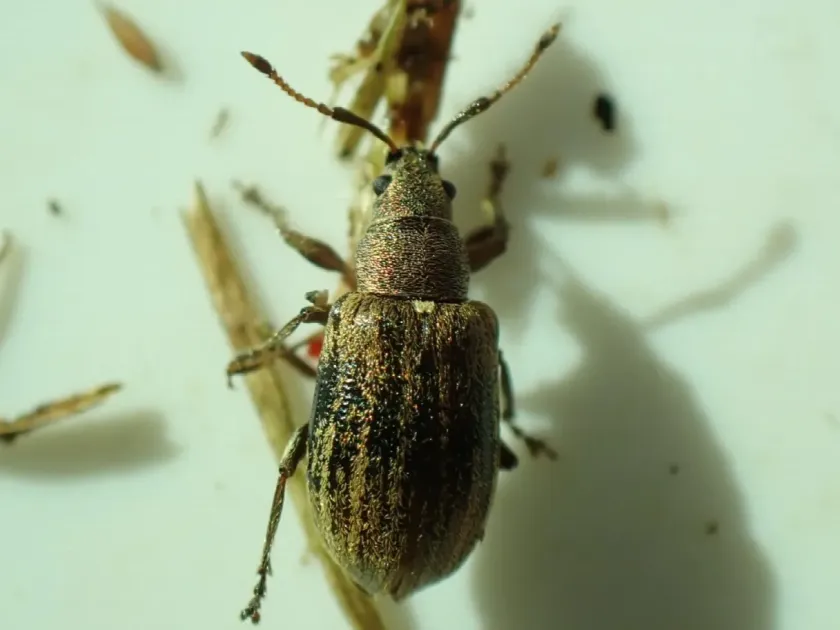
Adult weevils typically measure between 5 and 7 mm. They are characterized by a metallic green or golden-green appearance caused by dense, overlapping scales covering their bodies. Their rostrum (snout) is relatively short and broad.
The larval stage is spent underground, where the larvae feed primarily on plant roots. They are white, legless grubs with a distinct brown head capsule, making them difficult to spot without digging into the soil.
Adults are known for their strong flying capabilities, which enable them to colonize new trees efficiently. They are highly active during warm, sunny weather, preferring to feed during daylight hours.
The life cycle is generally completed in one year. Hibernation occurs as larvae deep in the soil, followed by pupation in spring. Once the adult emerges, it immediately starts feeding to gain energy for reproduction.
What it damages
The green leaf weevil acts as a polyphagous pest, affecting a wide variety of fruit trees. Apples, pears, cherries, and plums are the most frequently attacked, especially during the bud-burst stage.
In addition to orchard crops, these weevils often feed on berry bushes such as raspberries and currants. Ornamental trees and shrubs are also susceptible to infestations, making this pest a concern for many landscapes.
During years of high population density, these insects can migrate from neighboring forests or hedgerows, severely damaging foliage on trees like birch and hazel. This border-effect often leads to localized outbreaks.
The primary damage is caused by the adults, which chew leaf margins. Continuous feeding reduces the plant's overall photosynthetic capacity, potentially impacting fruit size and sugar content.
Young trees are particularly vulnerable. Heavy defoliation can cause significant stress, hindering the development of new growth and increasing the plant's susceptibility to secondary diseases and environmental stress.
When it appears
The appearance of adults correlates closely with the emergence of spring foliage. When buds begin to burst, the weevils emerge from the soil to feed on the tender young leaves.
Peak activity is usually observed in May and early June. During this time, the beetles are highly mobile, feeding throughout the day and mating to ensure the survival of the next generation.
As summer progresses, the number of adult weevils typically declines. Their primary role of reproduction is fulfilled, and the focus of the life cycle shifts back to the soil-dwelling larval stage.
By autumn, the larvae have grown significantly and prepare to overwinter by burrowing deeper into the soil. This dormancy period is essential for their survival through cold temperatures.
For gardeners, understanding this timing is crucial. Early spring is the most effective time for monitoring, as timely action can prevent the initial population from establishing firmly in the canopy.
Signs of infestation
The most prominent sign of a green leaf weevil infestation is the characteristic "notching" along the edges of leaves. This pattern distinguishes their feeding from caterpillars, which often consume the entire leaf surface.
In cases of severe infestation, the leaves appear jagged, with only the midribs and major veins remaining. This reduces the aesthetic value of ornamental plants and the vigor of fruit-bearing trees.
Adult weevils are easily disturbed and often drop from branches when approached. This "death-feigning" behavior is a common defensive reaction that makes them harder to spot during casual inspections.
If you suspect an infestation, gently shaking a branch over a white cloth early in the morning will often dislodge the beetles, providing clear evidence of their presence and population size.
- Notched, serrated leaf margins.
- Heavy defoliation on specific branches.
- Presence of metallic green beetles on foliage.
- Stunted shoot growth in young trees.
- Sudden insect drop when the canopy is touched.
Control measures
Cultural control through soil cultivation in autumn and spring can significantly disrupt the larval life cycle. Disturbing the soil exposes larvae to predators and unfavorable environmental conditions.
Manual collection remains a highly effective method for smaller gardens. By placing a sheet under the tree and shaking the branches in the early morning, gardeners can mechanically remove large numbers of adults.
Chemical control should be considered only when the population exceeds the economic threshold. If insecticides are necessary, they should be applied before the trees bloom to protect pollinators.
Encouraging biodiversity in the garden helps maintain natural control. Birds, predatory insects, and ground-dwelling spiders often predate on both larvae and adults, keeping populations in check.
Good orchard hygiene is essential. Clearing weeds around the base of trees limits alternative host plants and reduces overwintering sites, making the environment less favorable for the weevils.
Taxonomy
- Latin name
- Phyllobius pyri
- Order
- Coleoptera (beetles)
- Family
- Curculionidae
- EPPO code
- PLLBPI
Discussion
No discussions yet — be the first.