
Phyllobius calcaratus
Phyllobius calcaratus
Description
How to identify
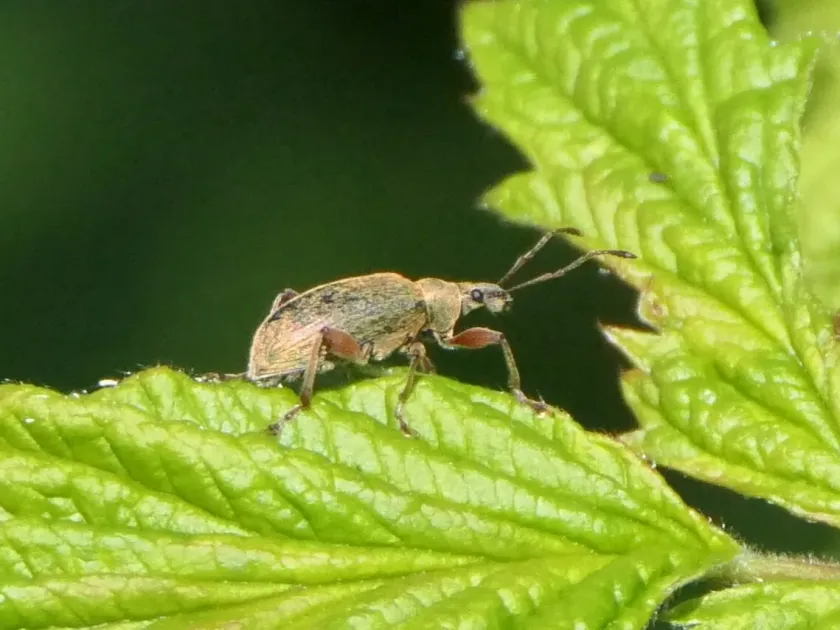
Phyllobius calcaratus is a species of broad-nosed weevil belonging to the Curculionidae family, order Coleoptera. Adult beetles typically measure between 7 and 10 mm in length.
The body is covered with dense, metallic-looking scales, which often shimmer in shades ranging from green and bronze to copper, providing effective camouflage.
A defining anatomical feature of this species is the presence of prominent teeth on the femora (thighs) of all legs, which distinguishes them from related species.
The rostrum (snout) is relatively short and wide, consistent with its classification among the broad-nosed weevils that feed on foliage.
The larvae are typically legless, white-colored, and C-shaped, living underground and feeding on the delicate roots of various plants.
What it damages
This beetle is a polyphagous pest, meaning it attacks a wide variety of woody plants, shrubs, and sometimes small fruits in orchard environments.
Common hosts include deciduous trees like birch, alder, and linden, as well as fruit trees such as apple, pear, and plum varieties.
When populations are high, they may also damage berry bushes, including strawberries and raspberries, causing significant stress to the plants.
The larvae contribute to plant damage by feeding on root systems, which can weaken the overall health and drought tolerance of the affected plant.
Adult feeding causes cosmetic and physiological damage to the foliage, which can stunt tree growth and reduce overall yield if left unmanaged.
When it appears
Adults emerge from the soil in early spring, typically correlating with the warming temperatures and the onset of leaf bud burst.
The peak feeding and reproductive period occurs throughout May and June, when adults are most visible and active on foliage.
Females lay eggs in the soil, and the larvae develop during the summer and autumn months, feeding primarily on root hair and small rootlets.
The species overwinters in the soil as larvae, remaining dormant throughout the cold winter months until spring conditions trigger pupation.
The lifecycle is tightly synchronized with the host plant phenology, ensuring that adults have access to fresh foliage as soon as they emerge.
Signs of infestation
The most recognizable sign of infestation is the semicircular "notching" along the margins of the leaves, created by the adults' mandibles.
Severe infestations can lead to heavy defoliation, where the leaves appear tattered or skeletonized, with only the major veins remaining intact.
Plants may show signs of general decline, including stunted shoot growth, chlorosis, or reduced fruit production due to poor photosynthetic efficiency.
In the early morning, adults can be found resting on the underside of leaves or can be dislodged by gently shaking the branches over a sheet.
- Semicircular notches on leaf margins
- Tattered or "lacy" foliage appearance
- Visible metallic-green beetles on leaves
- Reduced vigor in young saplings
Control measures
Cultural control involves cultivating or tilling the soil around the base of trees in the autumn to disturb and kill the overwintering larvae.
Physical removal is feasible in small gardens by shaking the trees over a light-colored cloth or tray during the early morning when beetles are lethargic.
Chemical control should be utilized when threshold levels are exceeded, focusing on systemic or contact insecticides applied during the pre-blooming phase.
Monitoring the foliage for the first signs of notching is critical to determine the timing for targeted insecticide applications.
Promoting a healthy ecosystem that supports natural predators, such as birds and predatory insects, can help maintain lower pest population densities over time.
Taxonomy
- Latin name
- Phyllobius calcaratus
- Order
- Coleoptera (beetles)
- Family
- Curculionidae
- EPPO code
- PLLBCA
Discussion
No discussions yet — be the first.