
Phycita poteriella
Phycita poteriella
Description
How to identify
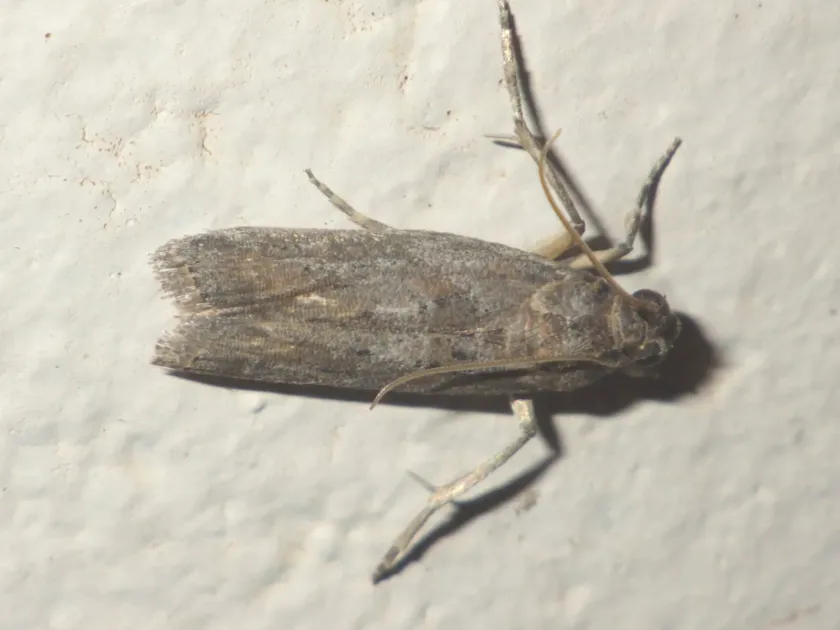
Phycita poteriella is a species of snout moth belonging to the family Pyralidae. These moths are relatively small and often go unnoticed due to their cryptic coloration, which blends seamlessly with tree bark.
The adult moth features brownish-grey forewings with intricate patterns and lines. This coloration provides excellent camouflage against tree branches and trunks during their resting periods.
The larval stage consists of caterpillars that exhibit the typical characteristics of the Pyralidae family. They have a cylindrical body with a well-defined head and prolegs, adapted for feeding on foliage.
As members of the order Lepidoptera, they undergo complete metamorphosis. The life cycle consists of egg, larva, pupa, and adult stages, each being highly dependent on environmental conditions.
Correct identification of the species is essential for effective pest management. Agronomists often use specific taxonomic keys to distinguish Phycita poteriella from other related moth species in the field.
What it damages
The primary hosts for this pest include various woody plants, particularly fruit trees and some ornamental shrubs. The larvae are responsible for the damage by consuming leaves and buds.
Feeding behavior involves skeletalizing leaves, which drastically reduces the plant's ability to perform photosynthesis. This impairs the overall vigor and growth of the infected tree.
Larvae can also bore into shoots and buds. This leads to stunted growth, distorted branches, and in severe cases, the complete loss of the terminal growth point of the shoot.
The damage caused by larvae often creates entry points for secondary pathogens. This increases the risk of trees developing fungal or bacterial infections that further weaken the plant.
In commercial orchards, damage caused by Phycita poteriella can result in yield losses and diminished fruit quality if not controlled early in the vegetative season.
When it appears
The seasonal activity of Phycita poteriella starts in the spring as temperatures rise. Adult moths emerge and begin their flight period, typically lasting through late spring and early summer.
The exact timing of emergence is highly sensitive to local climatic conditions. Warmer springs usually lead to earlier larval outbreaks, which can coincide with the critical growth stages of fruit trees.
Larvae are most active during the peak of the growing season. They feed voraciously on new foliage and tender shoots, undergoing several instars before they reach maturity.
Overwintering occurs at the larval or pupal stage. These life stages seek shelter in bark crevices, leaf litter, or other protected areas on the host plant to survive freezing temperatures.
As winter gives way to spring, the larvae resume activity or complete their development into adults, ready to start the new cycle of infestation in the orchard.
Signs of infestation
The most common sign of infestation is the presence of webbed leaves, where larvae use silk to bind foliage together for protection. These webs are easily visible upon close inspection.
- Clusters of webbed or folded leaves at the end of shoots.
- Frass (larval excrement) accumulation near feeding sites.
- Damaged buds that fail to open or show signs of being hollowed out.
- Deformed or stunted shoot tips due to larval boring.
- Sightings of grey-brown moths resting on trunks during dusk.
Leaf curling is a strong indicator of the presence of larvae. If the webbed structures are opened, one can often find the caterpillar resting inside or evidence of recent feeding.
Checking for pupation sites, such as cocoons tucked into bark cracks, can confirm the presence of an established population. This is crucial for planning the next stage of pest control.
Control measures
Cultural control measures include the removal of dead or infested branches and cleaning tree trunks. Reducing the amount of shelter for overwintering larvae is a key preventive strategy.
Chemical control involves the application of appropriate insecticides when young larvae are active. Timing the spray is critical to ensure maximum contact and efficacy against the pest.
Biological control using Bacillus thuringiensis (Bt) is a highly effective and eco-friendly method for managing Phycita poteriella without harming beneficial insects.
Integrated Pest Management (IPM) should incorporate pheromone monitoring to track flight periods. This minimizes unnecessary pesticide usage by focusing treatments only when needed.
By encouraging natural predators, such as parasitic wasps and predatory beetles, growers can maintain the pest population below the economic injury level, ensuring healthy crop yields.
Taxonomy
- Latin name
- Phycita poteriella
- Order
- Lepidoptera (butterflies)
- Family
- Pyralidae
- EPPO code
- PHYIPO
Discussion
No discussions yet — be the first.