
Phlyctinus
Phlyctinus
Description
How to identify
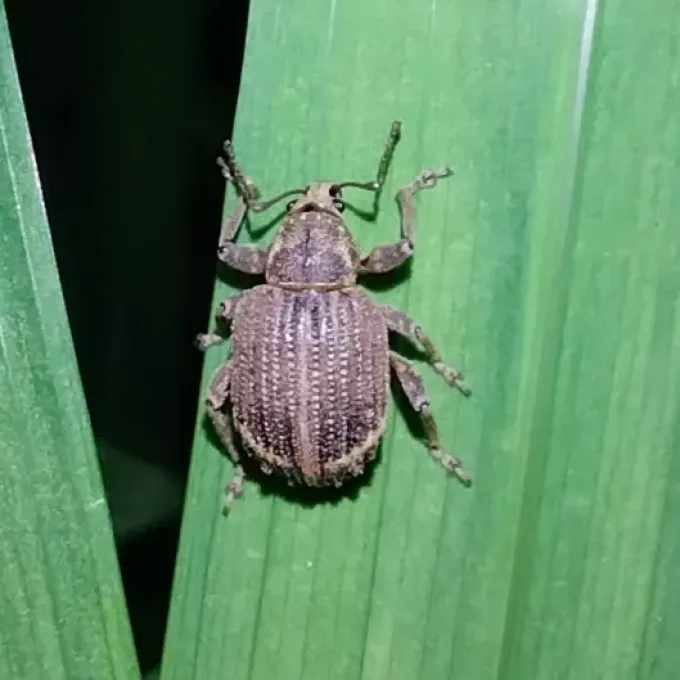
Phlyctinus (Phlyctinus callosus), commonly known as the vine snout beetle, belongs to the Curculionidae family of the Coleoptera order.
These beetles are roughly 7 to 8 mm long, typically showing a greyish-brown coloration that allows them to blend in with bark and soil textures.
They are characterized by a distinct V-shaped mark on their wing covers, which is a key identification feature for agricultural monitoring.
The larvae are legless, white grubs with a brown head capsule, specialized for living underground and feeding on the root systems of host plants.
Adult beetles are nocturnal, making them elusive during the day when they hide in mulch, crevices, or at the base of the plant stem.
What it damages
Phlyctinus is a significant polyphagous pest affecting grapevines, deciduous fruit trees, and various ornamental and vegetable crops.
Adults cause aesthetic and economic damage by feeding on young foliage, buds, and mature fruit, often leaving deep, unsightly cavities.
Larval feeding on roots significantly impacts plant vigor, often resulting in stunted growth, yellowing foliage, and reduced overall plant resilience.
The root damage often creates entry points for soil-borne pathogens, such as fungal rots, which can exacerbate the decline of the infested plants.
In high-density fruit orchards, infestations can lead to substantial yield losses due to both direct damage to the fruit and reduced tree health.
When it appears
The lifecycle is highly influenced by seasonal temperatures, with adult activity typically peaking during the warmer spring and summer months.
Emergence from the soil usually coincides with the start of the plant growing season, providing adults with a steady supply of fresh, succulent leaves.
As temperatures decrease in the autumn, adults move into the soil or under debris to overwinter, surviving until the next growing season.
In regions with milder climates, the pest may maintain activity for a longer duration, potentially leading to overlapping generations in the field.
Weather patterns, particularly moisture levels in the soil, are critical for the survival of the larval stages and the overall success of the pest population.
Signs of infestation
The most common sign of infestation includes ragged, notched leaf edges caused by adult feeding, typically visible after nocturnal activity.
Fruit damage manifests as deep gouges or pits, which are often accompanied by darkening or secondary rot infections around the affected areas.
Plants struggling with larval root damage may appear water-stressed, even with adequate irrigation, due to their inability to effectively take up water.
- Nocturnal observation of beetles on leaves using a flashlight.
- Presence of white, C-shaped grubs in the upper soil layers near roots.
- Visible tissue loss on young buds during the early spring development phase.
Regular monitoring of fruit for cosmetic damage is a primary indicator of whether current pest management practices are effectively suppressing the population.
Control measures
Effective management relies on integrated pest management (IPM) strategies, including physical barriers like sticky bands on trunks to block adult access.
Cultivation practices such as regular soil tillage around the base of the plants help to disrupt the soil-dwelling larval stages and reduce population density.
Chemical control should be timed with the period of peak nocturnal activity, utilizing contact insecticides applied to the foliage or tree canopy.
Soil-applied systemic treatments can be effective against larvae, although application should be carefully managed to avoid environmental non-target impacts.
Biological controls, such as the application of entomopathogenic nematodes or fungi, can provide a sustainable way to target larvae within the soil profile.
Taxonomy
- Latin name
- Phlyctinus
- Order
- Coleoptera (beetles)
- Family
- Curculionidae
- EPPO code
- PHLYSP
Discussion
No discussions yet — be the first.