
Olive bark beetle
Phloeotribus scarabaeoides
Description
How to identify
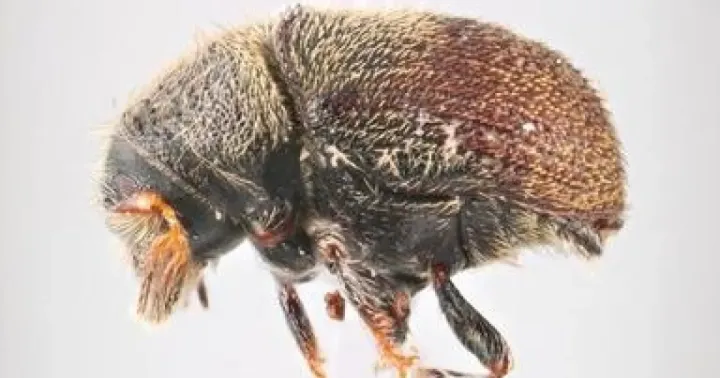
The olive bark beetle is a small insect belonging to the family Curculionidae, subfamily Scolytinae. Adult beetles measure between 2 and 2.5 mm in length, displaying a dark brown to black coloration.
The elytra surface is densely covered with short hairs and marked with longitudinal rows of pits. A key diagnostic feature is that the head is almost completely hidden by the pronotum when viewed from above.
Larvae are legless, with a pale white or yellowish body and a distinct brown head. They live exclusively under the bark, where they tunnel through the cambium layer of the host tree.
Pupation occurs within specialized chambers excavated by the larvae at the end of their gallery systems. The transformation from larva to adult happens entirely within these concealed galleries.
Both males and females are active, though they exhibit distinct behavioral patterns when selecting entry points for feeding and brood establishment on olive branches.
What it damages
The primary host for this pest is the European olive tree (Olea europaea). Adults feed on young shoots, boring galleries at the base of leaves and fruit stalks, which causes significant damage.
This feeding activity leads to premature fruit drop and the wilting of small branches. If the infestation is severe, it can result in the partial dieback of twigs and reduced overall tree vigor.
Larvae feed within the bark and phloem of weakened or pruned branches. This disrupts the tree's vascular system, hindering the transport of essential nutrients and moisture throughout the limb.
The entry holes made by beetles serve as infection points for various wood-decaying fungi and pathogens, which further exacerbate the health decline of the tree.
Olive bark beetle damage is most prevalent in neglected orchards where pruning wood is left on the ground, creating breeding hotspots for future generations of the pest.
When it appears
The life cycle of the olive bark beetle is closely linked to climatic conditions. In the Mediterranean region, the insect can complete up to three generations annually.
Spring activity begins as temperatures rise, usually in the early months of the growing season. Adults emerge from overwintering sites to feed on young shoots before mating.
The peak activity period often occurs in late spring and summer, during which time the beetles actively seek out suitable wood for laying eggs to produce subsequent generations.
As autumn approaches, the adults prepare for overwintering. They often utilize bark crevices or wood galleries, where they remain dormant during the colder months.
Understanding the seasonal emergence patterns is crucial for timing agricultural practices to prevent the buildup of beetle populations within the orchard.
Signs of infestation
The first external sign of an infestation is the presence of small, circular entry holes on the bark of twigs, often associated with sap or gum bleeding from the wounds.
Leaves on infested shoots begin to wither and turn yellow, eventually drying out and falling off. This is a direct consequence of the vascular damage caused by the beetle's feeding.
Premature fruit drop is a common symptom; often, many olives fall before reaching maturity due to the beetle's destruction of the fruit stalk connection.
If the bark is peeled back, one can observe intricate gallery systems carved into the wood. The presence of fine wood dust, or "frass," is a reliable indicator of active larval feeding.
Long-term infestations lead to a thinning crown and the dieback of larger branches, resulting in a stunted appearance of the olive tree over several growing seasons.
Control measures
The most important control measure is strict orchard sanitation. Pruning residue should be removed from the orchard immediately and burned to kill larvae developing in the wood.
Never store pruned olive branches near the orchard, as these serve as an ideal breeding ground that will inevitably lead to re-infestation of healthy trees.
Chemical control focuses on applying insecticides during the beetle's flight periods to reduce the population before they are able to bore into the bark of living trees.
Maintaining optimal tree health through proper fertilization and irrigation reduces the susceptibility of the olive grove to colonization by this opportunistic pest.
Integrated Pest Management (IPM) using pheromone traps allows growers to track beetle density, ensuring that control interventions are applied only when necessary.
Taxonomy
- Latin name
- Phloeotribus scarabaeoides
- Order
- Coleoptera (beetles)
- Family
- Curculionidae
- EPPO code
- PHLBOL
Discussion
No discussions yet — be the first.