
Olive bark beetle
Phloeotribus
Description
How to identify
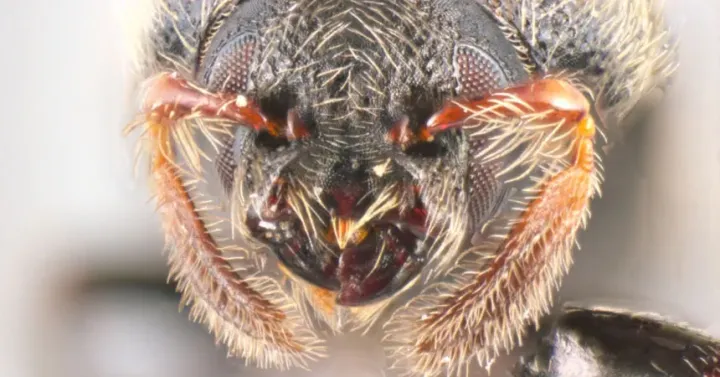
The olive bark beetle (Phloeotribus scarabaeoides) belongs to the Curculionidae family, subfamily Scolytinae. It is a small beetle with a cylindrical shape, measuring between 2.0 and 2.5 mm in length.
The beetle's body color ranges from dark brown to almost black. The surface of the elytra is covered with dense, short hairs, giving it a matte appearance, and the pronotum features characteristic bumps.
The larvae are legless, white with a brown head, and have a characteristic curved body shape. They develop directly under the bark of the tree, excavating complex maternal and larval galleries.
Adult beetles are highly mobile during the breeding season. The life cycle is closely tied to the condition of the wood, with the insect preferring weakened or recently pruned branches.
This pest has a high reproductive rate, allowing it to quickly increase population numbers in olive plantations under favorable weather conditions.
What it damages
The primary host plant for Phloeotribus scarabaeoides is the European olive tree. The pest causes significant damage to both young saplings and mature, fruit-bearing trees.
Adult beetles prefer to feed at the base of leaf petioles and in the crotches of young shoots. This leads to mechanical damage that disrupts the nutrient supply to the plant tissues.
Larvae, developing under the bark, chew through the vascular bundles of the tree. This often causes mass wilting of branches and a reduction in the overall productivity of the olive orchard.
Damaged shoots become extremely brittle and often break under wind pressure or their own weight, which hinders proper canopy formation.
In cases of severe infestation, general tree decline is observed, including leaf loss and the death of individual scaffold branches, which negatively impacts yields.
When it appears
The activity of the olive bark beetle begins in early spring when air temperatures consistently rise above 12–15 degrees Celsius.
Depending on the climatic conditions of the olive-growing region, the pest can produce two or three generations per year.
The highest intensity of adult flight occurs during periods of spring and summer warming, when beetles actively search for new sites to lay their eggs.
Insects typically overwinter as adult beetles within galleries in the wood, or less frequently as larvae or pupae, waiting for favorable temperatures.
The autumn period is characterized by the completion of the final generation's development and the pest's preparation for diapause within the protected plant tissues.
Signs of infestation
The first visual sign of the pest's presence is the appearance of multiple small holes on the bark of branches, resembling needle pricks.
Gumming or sap exudation is often observed around the damage sites, which is the olive tree's defensive response to mechanical impact.
A characteristic sign is the premature yellowing and dropping of leaves from the damaged shoots, which often hang on the tree, creating a wilting effect.
Upon inspection of the shoots, one can notice characteristic depressions at the base of the petioles, which look like small scars or dark spots.
If the bark is removed from a damaged branch, a clearly defined system of galleries can be found, with a central maternal tunnel from which numerous larval galleries branch off.
Control measures
Effective agronomic management involves the timely pruning and removal of damaged, dead, or weakened branches, which serve as reservoirs for the pest.
It is important not to leave pruned branches in the orchard, as they become an ideal environment for the beetle's reproduction. All wood debris should be burned or shredded immediately.
The use of pheromone traps allows for monitoring the population of adult beetles during peak activity periods and taking immediate action.
In cases of high infestation, the application of authorized systemic insecticides is permitted, targeting the beetles before they bore into the wood.
Maintaining high standards of agronomy, including balanced irrigation and fertilization, is essential to improve the natural resistance of the trees against pest attacks.
Taxonomy
- Latin name
- Phloeotribus
- Order
- Coleoptera (beetles)
- Family
- Curculionidae
- EPPO code
- PHLBSP
Discussion
No discussions yet — be the first.