
Cypress bark beetle
Phloeosinus tacubayae
Description
How to identify
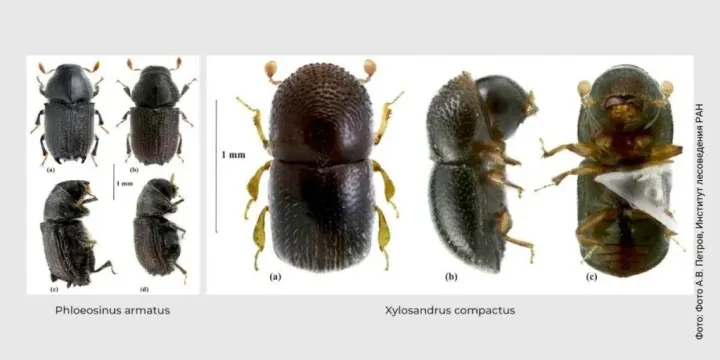
The Cypress bark beetle (Phloeosinus tacubayae) is a small wood-boring insect belonging to the Curculionidae family (subfamily Scolytinae). Adults are typically 2–3 mm long and possess a dark brown to black cylindrical body.
The insect's head is partially hidden by its pronotum, a morphological adaptation common among bark beetles. Their bodies are covered in fine hairs, enabling them to move effectively through the galleries they construct under the bark of host trees.
Larvae are legless, white, and C-shaped, living primarily within the phloem layer. They tunnel through the tree's vital tissue, cutting off nutrient circulation and causing the branch or entire tree to wither.
The species undergoes a complete metamorphosis: egg, larva, pupa, and adult. They are highly efficient at finding stressed or weakened host plants by detecting volatile terpenes released by the stressed trees.
In warmer climates, these beetles can produce multiple generations per year, making them a significant threat to ornamental coniferous landscapes if not managed proactively.
What it damages
This pest primarily targets the Cupressaceae family, including Cypress (Cupressus), Thuja, and Juniper (Juniperus) species. They prefer trees suffering from drought, mechanical injuries, or root competition.
Healthy trees usually possess high resin pressure, which serves as a natural defense, trapping and killing the beetles when they attempt to bore into the wood. Stressed trees, however, have reduced defenses.
Damage occurs in two ways: adult feeding on young twigs, which causes them to die back, and larval tunneling under the bark of larger branches or trunks, which can girdle and kill the tree.
Heavy infestations result in a rapid decline of the plant. If the population density is high enough, even relatively healthy trees may be attacked and eventually succumb to the combined pressure.
Economic and aesthetic loss is high, as affected trees often require expensive removal and disposal to prevent the beetles from spreading to other nearby specimens in the garden.
When it appears
Adult beetles typically emerge in early spring as temperatures rise, signaling the start of their active flying and mating period. This is the time when they begin searching for suitable host trees.
The peak activity and breeding period generally occurs during late spring and summer. During this time, they engage in intense feeding and gallery construction to lay their eggs.
As autumn approaches, activity decreases; however, in mild climates, the insects may continue their life cycle or remain active in sheltered parts of the tree, such as the bark crevices.
Winter is typically spent in the larval or adult stage, protected within the host tree tissue. This makes chemical control difficult during the winter months when the pests are dormant.
Monitoring for flight periods using pheromone traps is essential for timing insecticide applications, ensuring maximum protection for the trees during the periods of highest vulnerability.
Signs of infestation
The earliest symptom is the yellowing or browning of foliage on individual branches. This often indicates that the beetle has damaged the twig base or infested the main trunk.
Frass (brown, powdery sawdust) is a telltale sign of infestation. It can be found accumulating on the bark surface, in bark cracks, or at the base of the tree where the beetles have entered.
Small, round entry holes are visible on the bark of infested trees. Resin flow (gummosis) is often present around these entrance sites as the tree attempts to push the pests out.
Dying tips or whole branches are major indicators. If the main stem is heavily infested, the tree will show signs of canopy thinning and eventual death of the entire crown.
- Yellowing or browning of needles on specific branches.
- Accumulation of fine, brown sawdust (frass) on the trunk.
- Small entry holes puncturing the bark.
- Resin bleeding at the attack sites.
- Wilting of terminal shoots and branch tips.
Control measures
Cultural management is the first line of defense. Proper irrigation, fertilization, and general tree care keep the trees vigorous and better able to resist beetle attacks.
Sanitation is critical. All heavily infested branches or entire trees must be pruned or removed immediately and destroyed, preferably by burning or chipping, to eliminate beetle breeding sites.
Systemic insecticides can be applied as a preventive measure for high-value trees during the beetle's flight season. Consult local agricultural guidelines for approved products and timing.
Biological controls, including natural predators or entomopathogenic fungi, are emerging as environmentally friendly alternatives, though their effectiveness depends on the scale of the infestation.
Regular monitoring of the garden allows for early detection of the pest, which is the most effective way to prevent widespread damage and maintain the health of the conifers.
Taxonomy
- Latin name
- Phloeosinus tacubayae
- Order
- Coleoptera (beetles)
- Family
- Curculionidae
- EPPO code
- PHLSTA
Discussion
No discussions yet — be the first.