
Cypress bark beetle
Phloeosinus perlatus
Description
How to identify
The cypress bark beetle (Phloeosinus perlatus) is a small wood-boring insect belonging to the Curculionidae family and the Scolytinae subfamily. They are notorious pests of cypress, juniper, and thuja species.
Adult beetles are tiny, measuring between 2 and 3 millimeters in length. Their bodies are cylindrical and colored in dark brown or black, often appearing matte due to fine hairs.
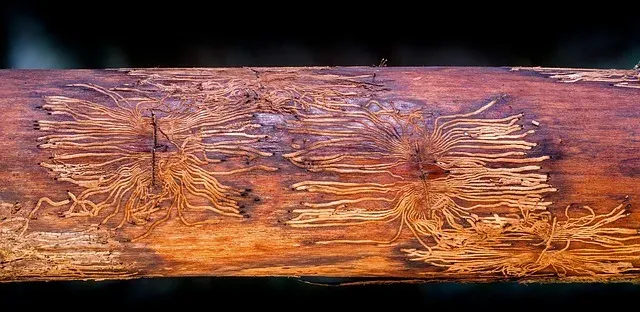
The elytra (wing covers) of the beetle are characteristic, featuring small teeth and ridges that aid in clearing out debris from the tunnels they excavate under the tree bark.
Larvae are white, legless, and have a distinct yellowish head. They live and feed beneath the bark, where they create complex gallery systems that interrupt the flow of nutrients.
Because of their size and hidden life cycle, they are often difficult to detect until significant damage to the host tree has already occurred.
What it damages
This beetle primarily targets trees within the Cupressaceae family. In ornamental landscapes, cypress and juniper trees are the most susceptible hosts.
The beetles preferentially attack trees that are already stressed due to drought, poor soil quality, improper pruning, or mechanical injury, making them secondary pests.
Beyond live trees, the pest can thrive in fallen logs, logging debris, or recently pruned branches, which often act as breeding grounds for new generations.
In infested trees, the beetle tunnels disrupt the cambium layer, preventing water and nutrients from reaching the upper parts of the tree, which leads to branch dieback.
Severe infestations can kill a tree entirely within one or two seasons, especially if the tree's natural defense mechanisms are already compromised by environmental factors.
When it appears
The lifecycle typically begins in early spring, once temperatures rise consistently, prompting adults to emerge from their overwintering sites.
Adult beetles engage in feeding activity on young twigs during spring, creating characteristic entry holes before moving to the main trunk to lay eggs.
The reproductive phase is most intense between late spring and early summer, when environmental conditions are optimal for larval development.
In warmer climates, these beetles can produce multiple generations per year, leading to a continuous threat throughout the growing season.
As autumn temperatures drop, adult beetles seek shelter in deep bark crevices or within their tunnels to survive the winter months.
Signs of infestation
The most visible sign of an infestation is the presence of small, circular exit or entry holes on the bark of the trunk or larger branches.
Fine, sawdust-like material, known as "frass," accumulates at the base of the tree or in bark crevices, signaling the active feeding of larvae inside.
Branches may begin to show signs of yellowing or browning, eventually dying off as the beetle tunnels cut off the nutrient supply to the canopy.
Peeling back a small section of bark on a symptomatic branch often reveals the intricate network of galleries carved into the wood surface.
In cases of heavy infestation, the tree's overall vigor declines significantly, resulting in needle drop and a sparse, unhealthy appearance.
Control measures
Proactive tree care is the most effective defense. Ensure trees are properly watered, fertilized, and pruned to maintain optimal health and resilience.
Sanitation is critical: remove and destroy all infested branches and dead wood from the landscape to reduce available breeding sites.
Avoid leaving fresh pruning waste near healthy trees, as the scent of volatile compounds can attract the beetles to the site.
- Apply systemic insecticides during the spring flight period to protect the trunk and canopy from beetle entry.
- Use pheromone-baited traps to monitor population levels and capture emerging adults before they start laying eggs.
- In highly valuable landscapes, consider trunk injections of appropriate insecticides performed by licensed professionals.
Effective management requires a combination of good cultural practices and timely chemical intervention to suppress the beetle population.
Taxonomy
- Latin name
- Phloeosinus perlatus
- Order
- Coleoptera (beetles)
- Family
- Curculionidae
- EPPO code
- PHLSPE
Discussion
No discussions yet — be the first.