
Cedar bark beetle
Phloeosinus cedri
Description
How to identify
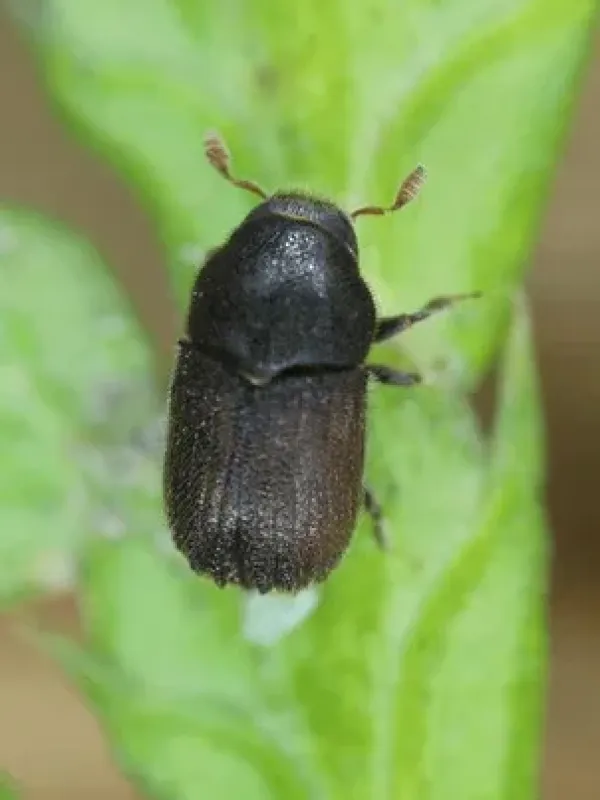
The Cedar bark beetle (Phloeosinus cedri) is a small wood-boring insect belonging to the Curculionidae family, subfamily Scolytinae. Adult beetles typically measure between 2 and 3 millimeters in length.
They possess a cylindrical body shape and are usually colored in dark brown or black. The elytra are characterized by fine punctate striae and short, sparse hairs.
Larvae are apodous (legless), creamy white, and typically curled into a C-shape. They develop exclusively within the inner bark and cambium layers of the host tree.
Identification is mainly based on the presence of small, round entry holes on the bark and the distinct, radiating maternal galleries found underneath the bark surface.
The beetle thrives in weakened or stressed trees, which provide the ideal chemical cues for adults to initiate colonization and egg-laying.
What it damages
This pest primarily affects trees within the Cupressaceae family, including true cedars (Cedrus), cypresses (Cupressus), and junipers (Juniperus).
Adult beetles inflict damage by performing maturation feeding, where they bore into young shoots, causing them to wither, brown, and eventually break off.
Larval feeding is significantly more destructive, as the larvae excavate tunnels beneath the bark, effectively girdling the tree and interrupting nutrient transport.
Under heavy infestation, the cumulative effect of larval activity leads to rapid tree decline, foliage desiccation, and the potential death of the host plant.
In addition to direct damage, the entry holes create pathways for secondary pathogens, such as fungi, which further degrade the structural integrity of the wood.
When it appears
The life cycle begins in early spring when temperatures consistently rise, triggering the emergence of overwintering adults from the bark.
Depending on the climatic zone, the beetle may complete one or two generations per year, with activity peaking during the warmest summer months.
Beetles are most active during sunny, warm weather, which facilitates the mating process and the search for suitable hosts for oviposition.
As autumn approaches, the rate of development slows down, and the larvae enter a resting stage under the bark to survive the winter season.
Environmental factors, particularly drought stress in host trees, play a crucial role in the timing and severity of beetle attacks throughout the season.
Signs of infestation
The first external sign of an infestation is the presence of fine, sawdust-like bore dust (frass) visible in bark crevices or at the base of the tree.
Crown symptoms include the yellowing and wilting of terminal shoots, which often snap due to the weakened state caused by adult feeding tunnels.
A general change in foliage color across the entire tree, shifting from deep green to reddish-brown, indicates that the tree's vascular system has been compromised.
Careful inspection of the bark reveals numerous tiny, circular emergence or entry holes, sometimes accompanied by localized resin bleeding.
Removing a section of the bark in affected areas will expose the intricate pattern of larval galleries, providing definitive proof of the beetle's presence.
Control measures
Sanitary management is the primary control method, involving the immediate removal and destruction of heavily infested trees to reduce the population density.
Promoting tree vigor through adequate irrigation, fertilization, and site maintenance is essential for preventing successful beetle colonization.
Chemical control using systemic insecticides applied as sprays can be effective if timed accurately during the peak flight period of adult beetles.
Pheromone traps are highly recommended for monitoring beetle activity and can also be used for mass trapping to reduce the local population level.
- Monitor tree health regularly for entry holes
- Prune and destroy infested branches immediately
- Apply specialized insecticides during flight periods
- Maintain optimal tree vitality through irrigation
Taxonomy
- Latin name
- Phloeosinus cedri
- Order
- Coleoptera (beetles)
- Family
- Curculionidae
- EPPO code
- PHLSCE
Discussion
No discussions yet — be the first.