
Juniper bark beetle
Phloeosinus canadensis
Description
How to identify
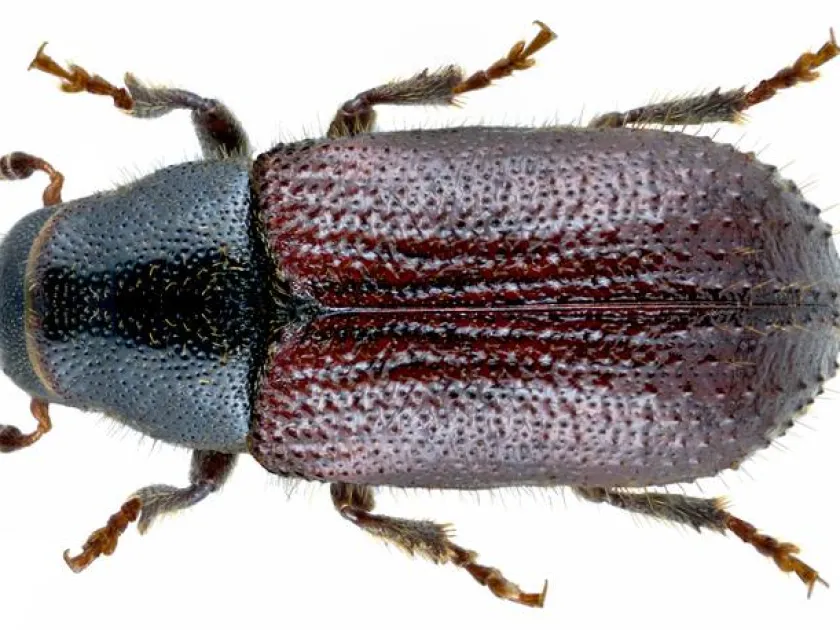
The Juniper bark beetle (Phloeosinus canadensis) is a small wood-boring insect belonging to the Curculionidae family, specifically the Scolytinae subfamily. Adult beetles are typically 2–3 mm long with a cylindrical, dark brown or black body.
The larvae are legless and white with a dark head capsule, residing primarily beneath the bark where they excavate complex galleries that disrupt the host plant's vital functions.
This species is closely associated with Cupressaceae family members, such as Thuja (arborvitae) and Juniperus. It is known for its preference for stressed or recently transplanted host trees.
Their life cycle consists of egg, larva, pupa, and adult stages. The adult stage is responsible for the most noticeable damage during their maturation feeding phase.
They are resilient to environmental stressors, often overwintering inside the wood of host plants, which makes effective management challenging during dormant seasons.
What it damages
Primary hosts for this beetle include arborvitae, junipers, and cypresses, making it a significant pest in residential landscaping and ornamental nursery production.
The beetles cause damage through two main activities: adult feeding at the base of small twigs and larval tunneling beneath the bark on stems and branches.
Twig feeding causes "flagging," where the terminal ends of branches turn brown and die, significantly reducing the aesthetic value of the ornamental tree.
Larval galleries can girdle branches or even the main trunk, cutting off the flow of water and nutrients, which may lead to the death of the entire plant if the infestation is severe.
Furthermore, the tunnels created by the beetles provide entry points for secondary pathogens, such as fungi, which can exacerbate the decline of the host tree.
When it appears
Adult activity typically begins in the spring when temperatures rise, signaling the start of the primary flight and mating period for the beetles.
Feeding damage is most commonly observed from late spring through mid-summer as adults emerge and seek out suitable host material for colonization.
Larval development occurs throughout the summer months, during which time they continuously expand their galleries beneath the bark layer.
By late autumn, the new generation of adults usually moves into overwintering sites, often boring into the wood of the host plant to protect themselves from winter conditions.
Monitoring should be most intense during the initial warming period of the year to catch the first generation of emerging adults before they infest new branches.
Signs of infestation
Initial signs of infestation often include small, circular entrance holes on the bark, sometimes accompanied by sap flow as the tree attempts to push out the invader.
- Flagging of small twigs and branches (browning of tips).
- Frass (sawdust-like debris) accumulation on the bark or at the base of the tree.
- Increased dieback of foliage, starting from the tips of the branches.
- Visible gallery patterns under the bark when inspected in severely damaged sections.
- Branches that snap easily due to structural weakness caused by beetle boring.
Control measures
Cultural management is the first line of defense: ensuring proper irrigation, soil drainage, and fertilization helps trees maintain the vigor needed to resist attacks.
Sanitation is critical; all dead or infested branches should be pruned and destroyed immediately to prevent the spread of the beetle to healthy parts of the garden.
Chemical control involving systemic insecticides can be applied as a preventive measure during the peak flight periods to target adults before they bore into the plant.
Avoid excessive tree stress, such as improper planting depth or extreme competition with weeds, as these factors make conifers highly susceptible to colonization.
In highly infested landscapes, remove and destroy heavily damaged plants entirely to eliminate the reservoir of beetles that could threaten adjacent healthy specimens.
Taxonomy
- Latin name
- Phloeosinus canadensis
- Order
- Coleoptera (beetles)
- Family
- Curculionidae
- EPPO code
- PHLSCA
Discussion
No discussions yet — be the first.