
Cypress bark beetle
Phloeosinus camphoratus
Description
How to identify
The cypress bark beetle (Phloeosinus camphoratus) is a small wood-boring insect belonging to the Curculionidae family, subfamily Scolytinae. These beetles are primarily identified by their cylindrical, dark-brown bodies, measuring about 2-3 mm in length.
These insects are highly specialized, focusing their life cycle on the inner bark (phloem) of coniferous trees, particularly those within the Cupressaceae family. The adults create complex entrance holes and tunnels to lay eggs.
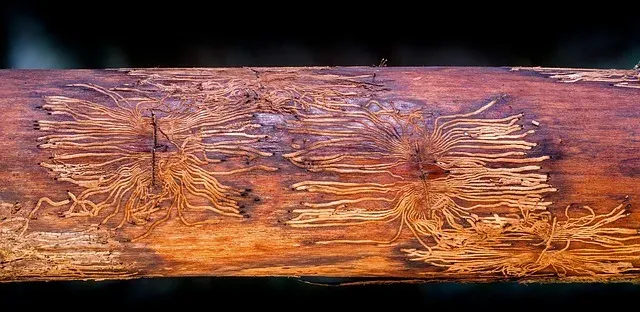
The larvae are legless, cream-colored grubs with a well-defined head capsule. They spend their entire development cycle beneath the bark, creating winding galleries that interfere with the tree's vascular system.
The beetle's life cycle is heavily influenced by regional climate. In warmer climates, it can complete multiple generations in a single year, significantly increasing its pest status.
Due to their cryptic habits, these beetles are often overlooked until the host tree shows advanced symptoms of decline, making early detection difficult but crucial for survival.
What it damages
The primary hosts of Phloeosinus camphoratus are cypress trees (Cupressus), junipers (Juniperus), and arborvitae (Thuja). They are often found in parks, gardens, and forestry plantations.
Damage is twofold: adults may feed on the tender young twigs, leading to flagging or dieback, while the larvae feed on the inner bark, which is far more destructive to the tree’s overall vitality.
By consuming the phloem, the larvae interrupt the translocation of nutrients and water throughout the plant, effectively choking the tree's circulation system.
Trees that are under stress—whether from drought, poor soil quality, or recent transplanting—are the most susceptible to infestation and can die quickly if not treated.
Large infestations can lead to the death of entire branches or the whole tree, creating significant economic and aesthetic losses in residential and commercial landscapes.
Signs of infestation
One of the earliest signs of activity is the presence of "frass" (bore dust), which looks like fine sawdust accumulating at the base of the tree or caught in bark crevices.
Visible dieback or "flagging," where individual branches suddenly turn yellow or brown, indicates that the vascular pathway in that specific section has been compromised.
Small, pin-sized holes in the bark surface are clear evidence of entry points. In healthy trees, these spots may be covered by small beads of exuded resin.
When the bark is carefully peeled back, one can see the galleries — intricate networks of tunnels that show where the larvae have been feeding and growing.
- Flagging or browning of shoot tips.
- Small, circular holes (shot-holes) in the bark.
- Accumulation of fine sawdust (frass) on branches.
- Resin bleeding on the bark surface.
Control measures
Sanitation is the most critical management tool. Infested branches or dying trees should be pruned and immediately destroyed, preferably by burning or chipping, to kill the larvae inside.
Maintaining tree vigor is essential. Proper watering, mulching, and fertilization reduce the risk of successful attack, as stressed trees emit volatile chemicals that attract beetles.
Systemic insecticides can be applied as a preventive or curative measure during the peak flight season, which generally occurs in the spring, to target adults before they bore into the bark.
Pheromone traps serve as an excellent monitoring tool for arborists to track population levels and time chemical interventions precisely to achieve maximum efficacy.
In high-value ornamental trees, professional trunk injections of insecticide may be necessary to protect the tree when infestation pressure is particularly high.
Taxonomy
- Latin name
- Phloeosinus camphoratus
- Order
- Coleoptera (beetles)
- Family
- Curculionidae
- EPPO code
- PHLSCM
Discussion
No discussions yet — be the first.