
Common rough woodlouse
Philoscia muscorum
Description
How to identify
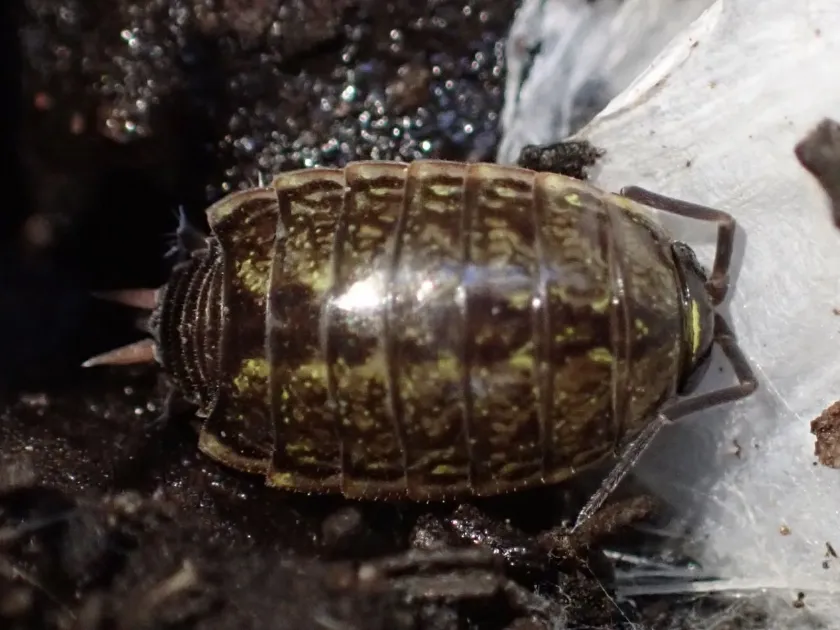
The common rough woodlouse (Philoscia muscorum) is a terrestrial crustacean belonging to the order Isopoda and the family Philosciidae.
It typically measures 8–10 mm in length and possesses a smooth, shiny, segmented body that is usually brown or reddish-brown with a distinct dark pattern along the dorsal side.
Unlike other woodlice, it is highly active and fast-moving, often inhabiting surface litter rather than burrowing deep into the soil.
They possess a pair of long antennae which they use to navigate and sense the environment, which is crucial for finding moisture-rich habitats.
These organisms rely on specialized respiratory organs known as pleopodal lungs, which require a high level of ambient humidity to function effectively.
What it damages
They are known to feed on decaying organic matter, but in high densities, they can cause significant damage to young, succulent vegetable seedlings.
Woodlice often graze on the epidermis of leaves, causing irregular holes and ragged edges, which can weaken young plants and stunt their development.
Greenhouse-grown crops, particularly those with foliage touching the soil, are highly susceptible to damage during the early stages of growth.
Stored fruits or vegetables that are in contact with moist soil are also frequently targeted, leading to cosmetic damage and increased vulnerability to fungal rot.
By consuming tender root tissues or stems at the soil level, they can lead to the wilting and eventual death of young transplants in controlled environments.
When it appears
Activity usually begins in early spring, as temperatures rise and soil moisture levels become adequate for their physiological needs.
The population tends to peak during the summer months, especially in areas with frequent irrigation, high humidity, or dense ground cover.
In greenhouses and indoor growing environments, the common rough woodlouse can remain active and reproductive throughout the entire year.
As the weather cools, they seek out sheltered microhabitats such as deep mulch layers, under stones, or inside decaying wood to undergo winter dormancy.
The lifecycle is closely linked to weather patterns, with dry conditions significantly limiting their activity and overall survival rates within the garden.
Signs of infestation
Typical signs of an infestation include small, irregular holes or missing margins on leaves, often concentrated near the base of the plant.
Visual confirmation is easily achieved by checking under pots, wooden boards, stones, or mulch where these woodlice often hide during daylight hours.
Small, dark, oval-shaped fecal pellets left on the soil surface near damaged plant tissue often indicate an active woodlouse colony nearby.
Plants suddenly wilting despite sufficient soil moisture may indicate that the root collar or stems have been grazed by woodlice at the soil level.
Nighttime observation with a torch will often reveal large numbers of woodlice feeding actively on stems and foliage, confirming the source of damage.
Control measures
The most effective long-term control is to reduce soil surface moisture and improve drainage, making the environment less hospitable for woodlice.
Remove all debris, rotting wood, and excessive mulch from around sensitive plants to eliminate the shelter and breeding grounds they depend on.
Place manual traps using damp burlap or cardboard in the garden; collect the woodlice that gather underneath in the morning and dispose of them.
Keep the area around greenhouses and garden beds free from tall weeds, which maintain the high humidity and cool temperatures woodlice prefer.
In cases of severe infestation, utilize bait stations or insecticides labeled for isopod control, ensuring applications comply with local safety regulations.
Taxonomy
- Latin name
- Philoscia muscorum
- Family
- Philosciidae
- EPPO code
- PLSIMU
Discussion
No discussions yet — be the first.