
Philoscia
Philoscia
Description
How to identify
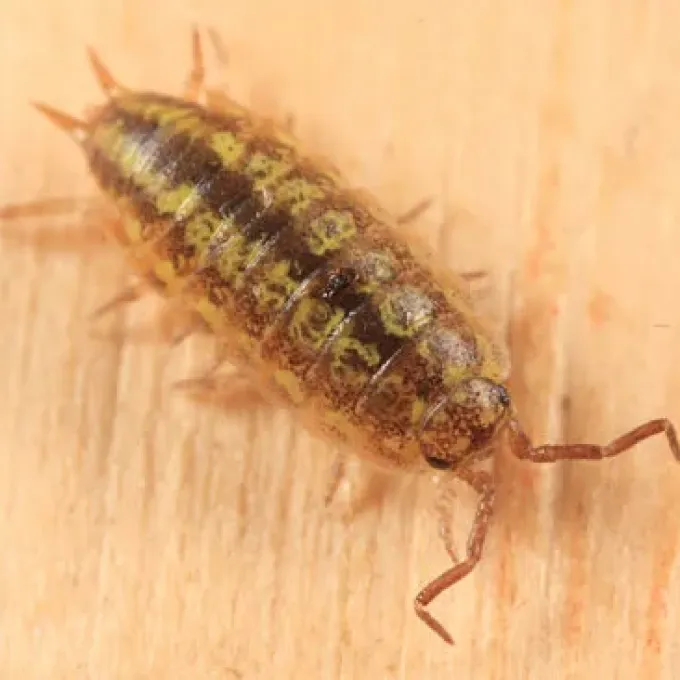
Philoscia is a genus of terrestrial crustaceans belonging to the order Isopoda and the family Philosciidae. They are commonly known as woodlice and are characterized by an elongated, oval body shape and often mottled patterns that provide excellent camouflage within leaf litter.
Adult specimens typically reach 10–12 mm in length, possessing seven pairs of walking legs and two pairs of antennae, with one pair being notably shorter than the other. Their coloration ranges from light brown to greyish tones with dark spots on the exoskeleton.
Unlike many other crustaceans, Philoscia have fully adapted to life on land, yet they remain strictly dependent on high humidity levels. Because they are prone to desiccation, they spend the daylight hours hiding deep within the soil or under organic debris.
Respiration occurs through specialized organs called pseudotracheae, located on their abdominal appendages. This physiological requirement makes them highly sensitive to environments with humidity levels below 70–80 percent.
Reproduction involves the female carrying eggs in a brood pouch called a marsupium on her underside. Young individuals undergo several molting stages, growing progressively in size before reaching sexual maturity.
What it damages
In agricultural and greenhouse environments, Philoscia can shift from consuming decaying organic matter to feeding on the succulent tissues of cultivated plants. Seedlings, young transplants, and plants with existing tissue damage are most vulnerable.
These pests pose a particular threat to vegetable crops grown under greenhouse conditions with excessive irrigation. Cucumbers, tomatoes, and leafy greens are at high risk when their stems maintain prolonged contact with moist soil.
The pests readily feed on the tender tissues of young leaves near the soil surface and can also damage root systems, weakening the plant overall. Consequently, these crops become highly susceptible to subsequent fungal and bacterial infections.
In ornamental horticulture, Philoscia can cause significant damage to potted plants and seedlings in nurseries. Feeding on the root collar often leads to wilting and the eventual death of young plants if the infestation is not addressed promptly.
Furthermore, they cause indirect damage by acting as vectors for pathogenic fungi spores, which they carry on their bodies. This facilitates the rapid spread of rot diseases throughout the greenhouse environment.
When it appears
The activity of Philoscia is directly influenced by moisture availability and moderate temperatures. In outdoor settings, they are most active during spring and autumn, when precipitation is frequent and soil moisture remains high.
In greenhouses and nursery facilities, these pests can reproduce year-round, provided that irrigation systems are consistently active and ventilation is poor. Permanently damp substrate creates an ideal habitat for their population growth.
Individuals often migrate to sheltered areas during periods of extreme temperature fluctuations or drought. Greenhouse environments offer a natural refuge and a constant food source for these migrating populations.
The life cycle of Philoscia accelerates during warmer summer months. Temperatures ranging from 18 to 24 degrees Celsius are optimal, allowing the population to recover quickly following management efforts.
During winter in unheated structures, the pest enters a state of diapause, hiding deep within the substrate or under greenhouse infrastructure, waiting for favorable conditions to resume feeding activity.
Signs of infestation
The primary sign of a Philoscia infestation is the presence of characteristic chewed areas on the leaves of seedlings, typically located at the base of the plant. The edges of the damaged leaves often appear ragged or "nibbled."
Upon inspecting the root system of young plants, one may find superficial lesions or the total destruction of fine root hairs. Affected plants exhibit stunted growth, chlorosis, and periodic wilting during the hottest parts of the day.
These pests can be detected by inspecting under mulch layers or beneath pots immediately after watering. They are highly photophobic and will attempt to scurry into hiding as soon as they are disturbed.
The presence of excrement in the form of small, dark, granular pellets on the surface of the moist substrate or on pot trays is a strong indicator of pest activity. This is frequently accompanied by visible mold growth on the soil surface.
A specific sign includes damage to newly sown seeds in overly wet soil. Philoscia are capable of consuming the embryonic part of the seed, leading to a complete failure of germination in certain areas of the bed.
Control measures
Effective management of Philoscia primarily focuses on cultural control of humidity. Regular ventilation of greenhouse structures and avoiding waterlogging in rows significantly reduces the population size.
It is crucial to remove plant debris, fallen leaves, and organic waste, which serve as shelters and primary food sources for woodlice. Maintaining a clean greenhouse is the foundation of preventing massive infestations.
Biological traps can be used: placing damp wooden boards, pieces of plywood, or burlap in the greenhouse. Pests congregate under these traps during the day, allowing for easy collection and mechanical destruction.
The use of chemical products based on diatomaceous earth or specific insecticides approved for protected cropping is effective for high-density infestations. Strict adherence to application regulations is necessary to ensure crop safety.
- Maintain proper crop rotation.
- Optimize irrigation systems.
- Use mulch materials that prevent moisture accumulation near the stem base.
- Conduct regular disinfection of greenhouse tools and containers.
Taxonomy
- Latin name
- Philoscia
- Family
- Philosciidae
- EPPO code
- PLSISP
Discussion
No discussions yet — be the first.