
Meadow spittlebug
Philonis inermis
Description
How to identify
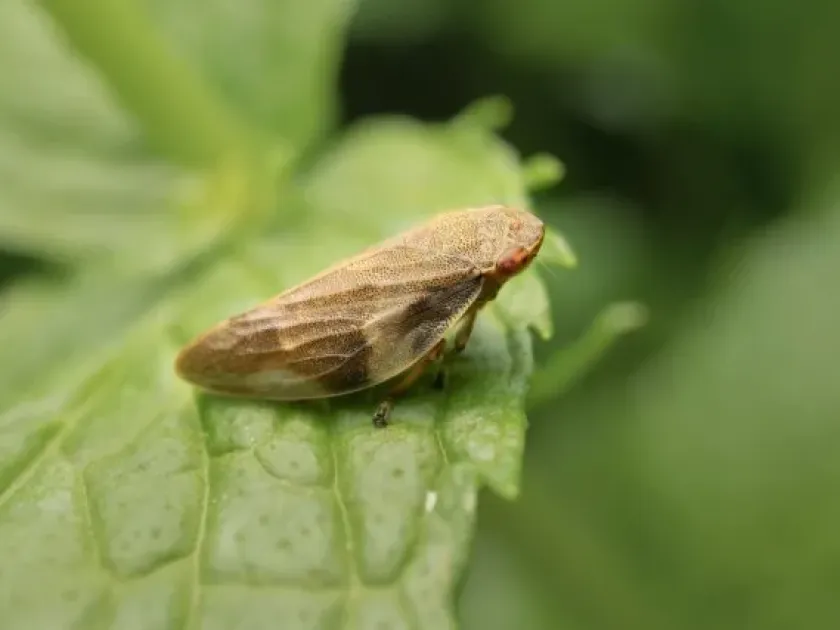
The meadow spittlebug (Philaenus spumarius) is a widespread insect belonging to the family Aphrophoridae. Adults measure approximately 5–7 mm and exhibit highly variable coloration, ranging from pale brown to black with various markings.
The most distinctive stage of its development is the nymphal stage, where the insect produces a protective mass of froth often called cuckoo spit. This foam keeps the nymph moist and hidden from predators.
The life cycle begins with eggs overwintering on plant stems or debris. In spring, nymphs emerge and start feeding on plant xylem, creating their characteristic frothy protective coating within a few hours.
Adults are proficient jumpers, hence their categorization as froghoppers. They move actively throughout the summer, feeding on a wide variety of herbaceous plants and woody shrubs.
Proper identification is crucial for effective management. Finding the characteristic foam masses in early spring is the best way to confirm the presence of this pest in your landscape.
What it damages
The meadow spittlebug is a polyphagous insect, meaning it infests a vast range of hosts including strawberries, legumes, roses, chrysanthemums, and various vegetable crops.
Both nymphs and adults feed by inserting their piercing-sucking mouthparts into plant tissues to consume sap. This feeding process stresses the plant, reducing its overall vitality.
Affected plants often show stunted growth, distorted or curled leaves, and a general loss of vigor. The structural integrity of young shoots can be compromised by persistent feeding.
Beyond direct damage, spittlebugs are known vectors for various plant pathogens. They can transmit phytoplasmas, which lead to systemic diseases like yellowing and plant decline.
Severe infestations can lead to significant economic losses in commercial crops and spoil the aesthetic quality of ornamental garden plants, requiring timely intervention to prevent further spread.
When it appears
The activity of the meadow spittlebug commences in early spring, coinciding with the initial growth of garden plants. Nymphs typically appear in April or May depending on climate conditions.
The peak of the nymphal stage occurs during late spring. During this time, the characteristic foam patches are most visible on stems, leaf axils, and around developing flower buds.
Adults emerge from their foam shelters as temperatures rise in early summer. These mobile insects continue to feed throughout the warmer months, spreading across different hosts.
Late in the season, females lay eggs near the base of host plants or within bark crevices. These eggs remain dormant through the winter, ensuring the survival of the next generation.
Monitoring for foam masses in May is the most effective way to address the infestation before the insects reach the adult stage, when they become harder to manage due to their mobility.
Signs of infestation
The primary sign of infestation is the appearance of white, bubbly froth on stems and foliage. This foam acts as a clear marker of nymphal presence and their feeding activities.
Leaf curling and stunting are common indicators of established spittlebug populations. The plant may appear tired or wilted even when soil moisture is adequate, indicating nutritional stress.
Yellowing or necrosis on the leaf surface at the site of feeding is another sign. This damage interferes with the plant’s ability to conduct photosynthesis effectively.
The presence of jumping insects, when foliage is disturbed, is a clear indicator that the population has transitioned to the adult stage.
In addition to physical damage, the presence of the froth can trap dust and debris, which looks unsightly and can potentially facilitate secondary fungal infections on the leaf surface.
Control measures
For minor infestations, simply washing the foam off with a strong stream of water from a garden hose can dislodge and kill the nymphs effectively.
Good garden sanitation is essential. Removing weeds and clearing away heavy plant debris reduces the overwintering sites for eggs and limits the host range in early spring.
Biological control methods, such as encouraging natural predators or using microbial-based insecticides, can manage populations without harsh chemicals.
If chemical intervention is necessary, apply insecticidal soaps or systemic pesticides labeled for spittlebug control. Always apply treatments during the early morning or evening to protect bees.
- Monitor plants closely during the spring.
- Keep the garden area weed-free.
- Use physical water sprays for localized control.
Taxonomy
- Latin name
- Philonis inermis
- Order
- Coleoptera (beetles)
- Family
- Curculionidae
- EPPO code
- FILOIN
Discussion
No discussions yet — be the first.