
Koala
Phascolarctos
Description
How to identify
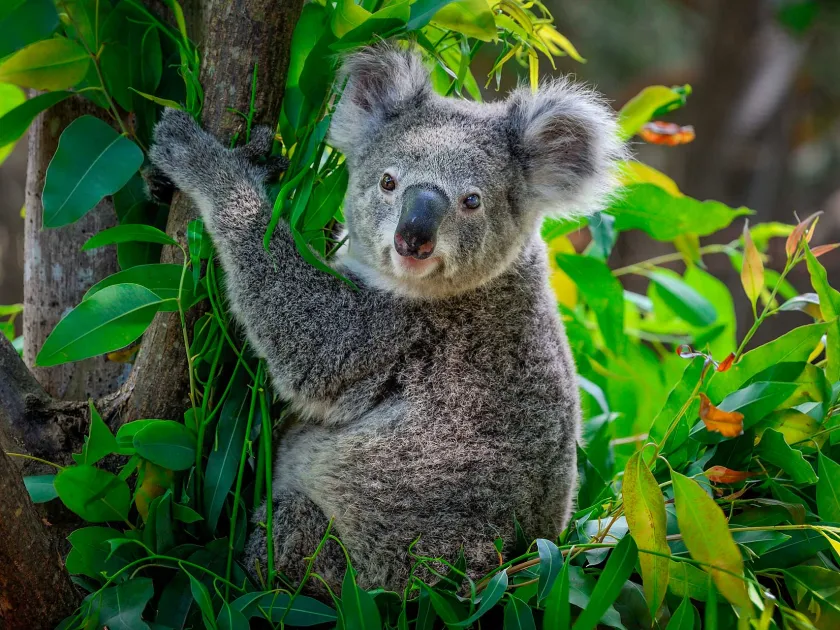
The Koala (Phascolarctos cinereus) is a herbivorous marsupial belonging to the family Phascolarctidae. It is a stout animal with thick grey fur, a large head, and powerful claws adapted for climbing trees.
While often viewed as an iconic animal, in forestry and plantation management, the species is considered an herbivorous consumer capable of causing significant economic damage.
The species possesses a narrow dietary specialization, which makes it a critical factor for the successful cultivation of specific wood-producing tree species in Australia.
Taxonomically, it is a unique marsupial whose biological cycle is inextricably linked to specific forest genera, making it a persistent presence in eucalyptus-dominated landscapes.
Adults exhibit sedentary behavior, leading to localized concentration of feeding pressure on eucalyptus stands and the rapid depletion of available biomass within specific sections.
What it damages
The primary food source for koalas is eucalyptus foliage (Eucalyptus spp.), which renders the species a major consumer in commercial eucalyptus plantation forestry.
Beyond eucalyptus, the diet may include species from the Corymbia, Angophora, and Lophostemon genera, which are frequently grown for timber production.
A single adult koala can consume up to one kilogram of leaves daily, which, at high population densities, leads to severe defoliation of the tree canopy.
Young eucalyptus seedlings are particularly vulnerable, as intensive canopy feeding inhibits growth and can result in the mortality of the plant during the early stages.
Continuous herbivory reduces the overall plantation productivity by slowing biomass accumulation and degrading the timber quality due to irregular canopy development.
When it appears
Koala activity persists year-round, as these animals do not hibernate and require daily consumption of large quantities of forage to meet their metabolic needs.
Peak feeding pressure on plantations occurs during periods of intense vegetative growth, as leaves become more nutritious and palatable for the animals.
The breeding season, occurring throughout spring and summer, triggers migration among males, expanding the impact range across plantation areas.
During drought periods, feeding pressure intensifies as koalas selectively target trees with better hydration, focusing the damage on specific high-value segments of the forest.
The population cycle is closely tied to local climatic conditions, which determine the survival rate of the offspring and the density of occupation within the plantations.
Signs of infestation
The primary sign of koala presence is characteristic damage to the eucalyptus canopy, specifically stripped branches and significant leaf loss in the upper strata.
Fecal pellets found in large quantities around the base of the trees serve as an unmistakable indicator of their feeding activity within the stand.
Deep claw marks are often visible on the bark, left as the animals navigate the trunks and branches in search of the most suitable, non-toxic leaves.
Agronomic assessments often record uneven canopy thinning that progresses downwards from the top of the tree, affecting the overall tree structure.
Visual inspections reveal specific leaf consumption patterns, where the leaf blade is partially eaten, often leaving the central vein or edges untouched.
Control measures
Passive barriers, such as the installation of specialized exclusion fencing around young plantations, are the primary method for protecting tree crops from koalas.
The application of repellents has shown limited success, leading forest managers to focus on integrated landscape management and strategic planning of plantation sites.
In regions with excessive population density, regulated translocation of individuals to natural habitats is implemented to mitigate risk to agricultural and timber resources.
Strategic planting, including the creation of buffer zones consisting of less attractive tree species, helps in managing the feeding behavior of the population.
All population control measures must strictly comply with regional environmental legislation and be executed in coordination with wildlife conservation authorities.
Taxonomy
- Latin name
- Phascolarctos
- Family
- Phascolarctidae
- EPPO code
- PHQSSP
Discussion
No discussions yet — be the first.