
Mint tortrix
Phalonidia manniana
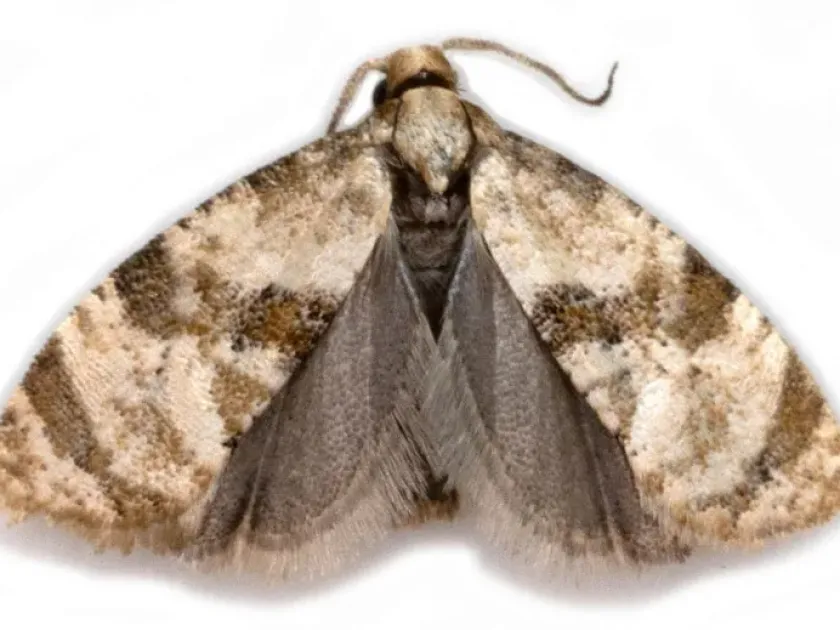
Description
How to identify
The mint tortrix (Phalonidia manniana) belongs to the order Lepidoptera and the family Tortricidae. It is a small moth species that is widely distributed across regions where its host plants grow.
Adult moths typically have a wingspan of about 12–16 mm. Their forewings are decorated with ochre or brownish patterns and dark transverse bands, which serve as excellent camouflage against plant foliage.
Larvae (caterpillars) grow up to 12 mm in length and are characterized by a pale, whitish-yellow body with a dark, sclerotized head capsule, which is typical for the Cochylini tribe.
The life cycle involves complete metamorphosis, consisting of the egg, larval, pupal, and adult stages. The species usually overwinters as a larva in a cocoon hidden in soil or plant debris.
After pupation, the adult moths emerge to mate. Depending on the geographical location and climatic conditions, there can be one or more generations throughout the growing season.
What it damages
The primary host for this pest is peppermint (Mentha piperita) and other species within the Mentha genus. It is considered a significant pest in essential oil and medicinal herb production.
Caterpillars cause damage by feeding on apical buds and young leaves. They spin silk webbing to tie leaves together, creating a protective shelter where they consume the tender green tissue.
By damaging the growing tips, the larvae disrupt the normal development of the plant. This leads to stunted growth and a significant reduction in the total biomass required for harvesting.
Feeding activity also leaves the mint plants susceptible to secondary infections, such as fungal pathogens, which can exacerbate the health decline of the affected plantation.
In high infestation scenarios, the loss of essential oil yield and quality is substantial, making pest management a critical component of commercial mint cultivation.
Signs of infestation
The most distinctive symptom of infestation is the presence of webbed, curled leaves at the tips of the mint plants. These webbed clusters are easily visible upon close inspection.
When the webbed leaves are opened, one can usually find the larva inside, along with frass (larval excrement). Typical feeding patterns include irregular holes in the leaf surface.
Stunted and deformed shoots are common signs of larval feeding in the terminal buds. Healthy mint should have vibrant, open growth, whereas infested plants appear collapsed and damaged.
Adult moths may be detected using light traps during their nocturnal flight periods. Monitoring their activity is essential for timing interventions before the larvae cause irreparable damage.
Browning or yellowing of the shoot tips often indicates that larvae have depleted the nutrients in those areas, signaling a need for immediate pest control measures.
Control measures
Cultural control practices are the first line of defense. Thorough removal and destruction of crop residues immediately after harvest are essential to eliminate overwintering sites.
Deep cultivation of the soil between rows in late autumn can destroy overwintering cocoons, significantly reducing the population density for the following season.
Pheromone traps are highly recommended for monitoring. They help agronomists pinpoint the timing of peak moth flight, allowing for precise application of control agents against young larvae.
Biological control, such as the application of Bacillus thuringiensis, is a preferred method for mint, as it effectively targets larvae while maintaining the organic integrity of the crop.
- Regular weeding to reduce alternative host plants in the field.
- Crop rotation to break the cycle of pest colonization.
- Timely scouting and monitoring of terminal buds for webbed leaves.
Taxonomy
- Latin name
- Phalonidia manniana
- Order
- Lepidoptera (butterflies)
- Family
- Tortricidae
- EPPO code
- PHADMA
Discussion
No discussions yet — be the first.