
Juniper webworm moth
Phalonia rutilana
Description
How to identify
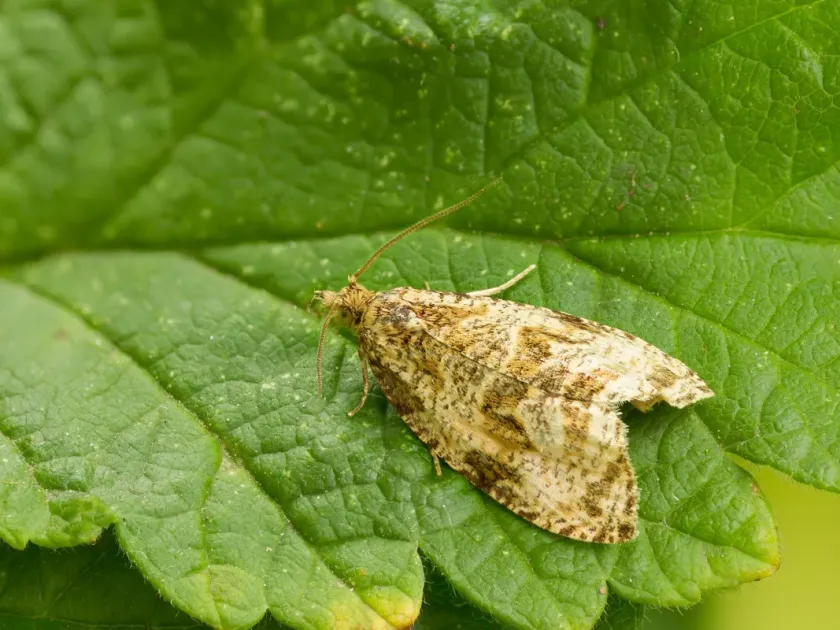
The juniper webworm moth (Phalonia rutilana) is a member of the Tortricidae family. The adult moth has a wingspan of approximately 12–15 mm and is characterized by its golden-yellow forewings featuring distinctive brown bands, providing excellent camouflage against juniper foliage.
The larvae are small caterpillars, growing up to 10-12 mm in length. Their bodies are typically yellowish or dirty-white, while their head capsules and thoracic shields are dark brown or black. This larval stage is the primary phase responsible for damage to host plants.
What it damages
This pest specifically targets various species of juniper. In landscaping and nursery settings, it can cause significant aesthetic damage, making the plants appear unhealthy and unkempt due to the accumulation of brown, webbed foliage.
Caterpillars feed on the needles and tender shoots. By tying the foliage together with silk, they create protected environments where they feed extensively, leading to defoliation, stunted growth, and eventually the death of terminal shoots.
When it appears
The juniper webworm moth generally follows a univoltine life cycle. Larvae overwinter in a state of diapause, often tucked within the webbed silk nests they constructed during the previous growing season on the host plant.
Development resumes in the spring as temperatures rise. Pupation typically occurs in late spring or early summer, followed by the emergence of adult moths. These adults mate and lay eggs on fresh growth, starting the next generation's feeding cycle.
Signs of infestation
The most visible sign of an infestation is the presence of webbed clusters of dry, brown needles clinging to the branches. These nests are often clearly distinguishable from the surrounding healthy, green foliage of the juniper bush.
Upon closer inspection, one may observe the caterpillars or their frass (excrement) within the silken webbing. Damage often appears on the tips of branches, leading to a distorted or withered appearance that worsens as the season progresses.
Control measures
Cultural control is highly effective for small infestations. This involves manual removal and destruction of the webbed nests during the winter or early spring before the caterpillars resume active feeding and reproduction.
Chemical control should be timed to coincide with the period of larval activity. Application of systemic insecticides or contact sprays containing pyrethroids can be effective when applied in late spring. It is crucial to ensure thorough coverage of the canopy to reach hidden larvae.
Taxonomy
- Latin name
- Phalonia rutilana
- Order
- Lepidoptera (butterflies)
- Family
- Tortricidae
- EPPO code
- PHAORU
Discussion
No discussions yet — be the first.