
Brown wheat mite
Petrobia latens
Description
How to identify
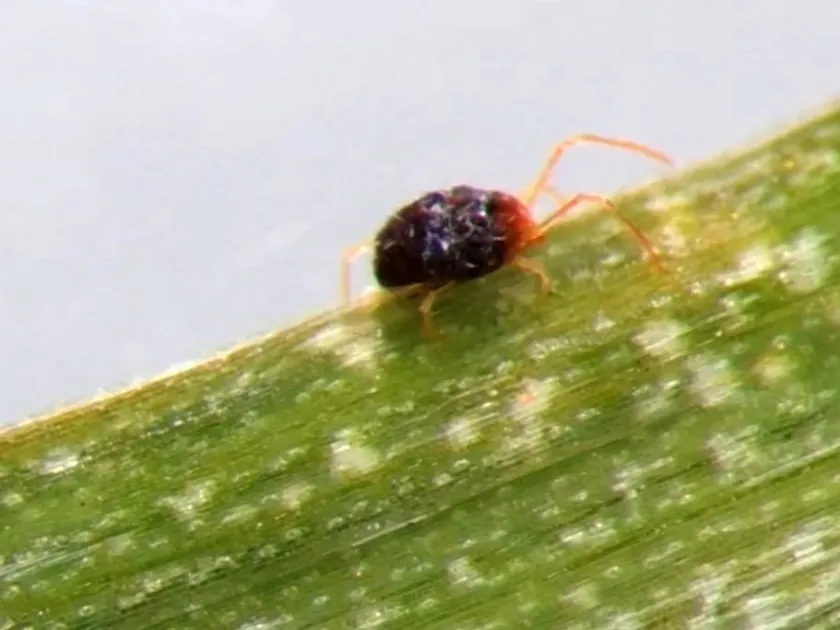
The brown wheat mite (Petrobia latens) belongs to the Tetranychidae family within the Acariformes order. Adult mites are oval-shaped, typically dark brown or reddish in color, with yellowish or pale orange legs.
A distinctive feature of this species is the presence of elongated front legs, which are noticeably longer than the other three pairs. Visually, these pests appear as tiny moving dots, often requiring a magnifying glass for proper field identification.
The life cycle of the mite includes the egg, larva, protonymph, deutonymph, and adult stages. Depending on the local temperature and moisture conditions, the mite can complete several generations throughout the growing season.
These pests primarily overwinter as eggs deposited in the soil or on plant debris. Autumn-laid eggs possess a thicker shell, providing protection against harsh winter temperatures compared to the summer egg batches.
During hot and dry summer months, the mite frequently enters a period of diapause. Biological activity resumes once favorable environmental conditions return, typically favoring the cooler weather of spring or autumn.
What it damages
The brown wheat mite mainly attacks plants within the Poaceae family. Primary hosts include winter and spring wheat, barley, rye, and oats, where significant damage often occurs during the early vegetative growth stages.
In addition to cereal crops, the mite can thrive on various weeds such as quackgrass, wild oats, and brome grasses, which act as secondary hosts and reservoirs. Occasional infestations may also be observed on bulbous plants and some vegetable crops.
The damage is caused by the mite feeding on plant sap by piercing the epidermal tissues of the leaves. This feeding process depletes chlorophyll, which disrupts photosynthesis and severely impacts the plant's overall metabolic functions.
Heavy infestations can lead to stunted plant growth, inhibited development, and reduced tillering capacity. Fields severely affected by these mites often appear thin and patchy, directly correlating with lower grain yields at harvest.
Moisture stress combined with high mite populations can cause premature yellowing and leaf desiccation. Damage occurring in early spring is particularly critical for winter cereals, as it weakens the plants and makes them more susceptible to secondary diseases.
Signs of infestation
The first indicator of an infestation is the appearance of tiny white or yellowish spots on the leaf surface. Over time, these spots coalesce, giving the foliage a characteristic silvered or chlorotic appearance.
Upon closer inspection, the presence of mite excrement and shed skins can be detected on the leaves. Unlike many other spider mite species, the brown wheat mite does not produce noticeable webbing on the host plants.
Leaves often begin to curl, with tips turning brown and dying. Heavily infested plants appear pale and weak, losing their healthy green color, which is most visible along the edges of the field.
Mite activity intensifies during dry weather, leading to rapid spread across the field. Affected areas can mimic drought stress symptoms, but a closer examination will reveal the physical presence of the mites.
- Yellowing or browning of leaf tips;
- Presence of tiny light-colored stippling on leaf blades;
- Loss of leaf turgor and wilting;
- Overall retardation of plant growth and development.
Control measures
Cultural control is fundamental to management: deep plowing during fallow periods helps bury and destroy overwintering eggs. Effective weed control in and around field margins is essential to eliminate alternative host plants.
Implementing a diverse crop rotation cycle reduces the probability of large-scale mite outbreaks. Using certified, high-quality seeds and planting at optimal times ensures crops have the best chance to outgrow early-season pest pressure.
Chemical control involves the application of acaricides when pest thresholds are reached. Treatments are most effective when applied at the first sign of damage, before the population reaches economically damaging levels.
When selecting chemical agents, systemically active insecticides/acaricides are preferred for their lasting residual protection. It is crucial to rotate chemical classes to prevent the development of resistant mite populations.
Regular field scouting in early spring is vital for timely intervention. Monitoring field edges helps detect localized outbreaks early, preventing the spread of the infestation throughout the entire planting area.
Taxonomy
- Latin name
- Petrobia latens
- Order
- Mites
- Family
- Tetranychidae
- EPPO code
- PETRLA
Discussion
No discussions yet — be the first.