
Sugar glider
Petaurus
Description
How to identify
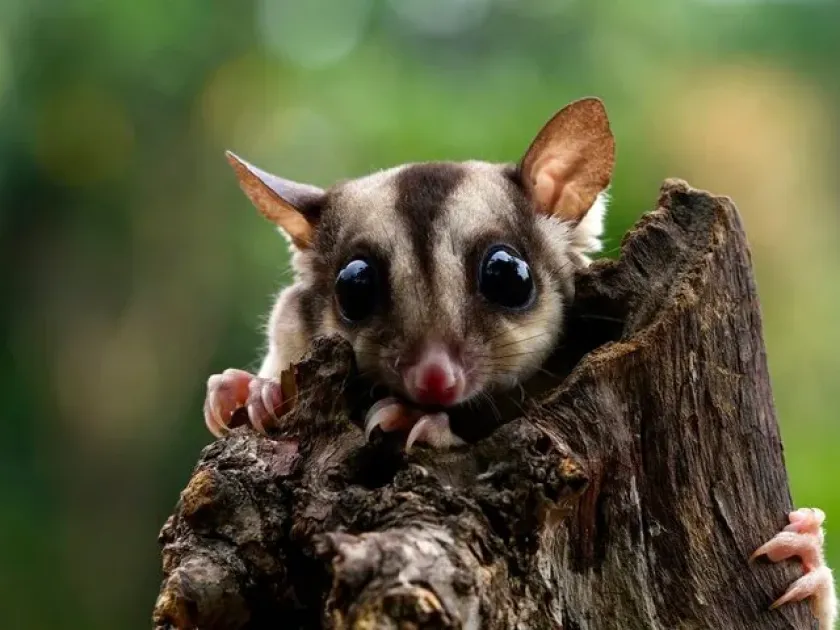
The sugar glider Petaurus breviceps is a small, nocturnal marsupial belonging to the Petauridae family. They are well-known for the patagium, a membrane that allows them to glide between trees.
These animals possess a thick gray-brown coat, a characteristic dark stripe running from the nose to the middle of the back, and large eyes suited for a lifestyle in the canopy.
They are highly social animals that live in communal dens within tree hollows, often maintaining strong territorial bonds within the forested areas they inhabit.
Reproductive success is closely linked to resource availability. Females raise their young within a pouch, ensuring the offspring are protected until they are capable of foraging.
From an agronomic perspective, their ability to adapt to human-modified landscapes often brings them into contact with commercial orchards, where they become pests.
What it damages
The primary damage caused by sugar gliders involves the aggressive stripping of tree bark to feed on the sap. They target both native and cultivated fruit species in search of energy-rich nutrients.
This behavior leads to the weakening of branches and, in severe cases, the death of young saplings due to the interruption of nutrient transport tissues.
During the early spring, gliders frequently feed on developing flower buds. This destruction of buds directly correlates with reduced fruit yield for the growing season.
The open wounds left on the bark serve as entry points for various phytopathogens, including fungi and bacteria, which can cause long-term decline in tree health.
In some instances, they may consume developing fruits, leading to direct economic losses for farmers operating in or near forest fringes.
When it appears
Glider activity in orchards typically peaks during the late winter and early spring. During this period, natural food sources like nectar are scarce, making orchard sap a vital resource.
Activity remains throughout the year, but the specific type of damage shifts. As the season progresses into summer, the focus may move from bark to ripening fruits.
Their nocturnal schedule makes them difficult to observe during the day, which often masks the extent of the damage until it is clearly visible in the morning light.
Breeding cycles influence their foraging behavior, as nutritional demands increase significantly for nursing females, leading to more frequent visits to garden areas.
Unusual weather patterns, such as prolonged drought, can exacerbate damage, as the sugar glider seeks water and nutrients from horticultural plants to survive.
Signs of infestation
Typical signs of a sugar glider presence include small, distinct gouges in the bark, often arranged in vertical or horizontal lines along the trunk or main branches.
Exudation of sap from these wounds, combined with the presence of small, cylindrical droppings on the ground, confirms the animal’s recent activity in the area.
Damaged or missing buds in the upper canopy, accompanied by frayed bark around the stems, are classic indicators of their feeding behavior.
Trees may show localized dieback or wilting of branches above the point of bark removal, which is a symptom of severe structural disturbance.
Nocturnal vocalizations, such as chirping or high-pitched barking, can often be heard in the vicinity, signaling the location of the colony.
Control measures
The installation of physical barriers, such as metal bands wrapped around the base of the tree, effectively prevents sugar gliders from climbing and reaching the canopy.
Protective netting over fruit trees is a highly effective way to prevent access to buds and ripening fruit, especially in high-risk zones.
The use of ultrasonic deterrent devices may help to discourage the presence of gliders, provided that the devices are calibrated to their specific auditory range.
Cultural practices, such as clearing overhanging branches that provide bridge points from nearby trees or structures, can significantly reduce the risk of infestation.
Where feasible, non-lethal trapping and relocation services should be employed to manage population density in agricultural areas without harming the ecosystem.
Taxonomy
- Latin name
- Petaurus
- Family
- Petauridae
- EPPO code
- PTAUSP
Discussion
No discussions yet — be the first.