
Giant dragonfly
Petalura gigantea
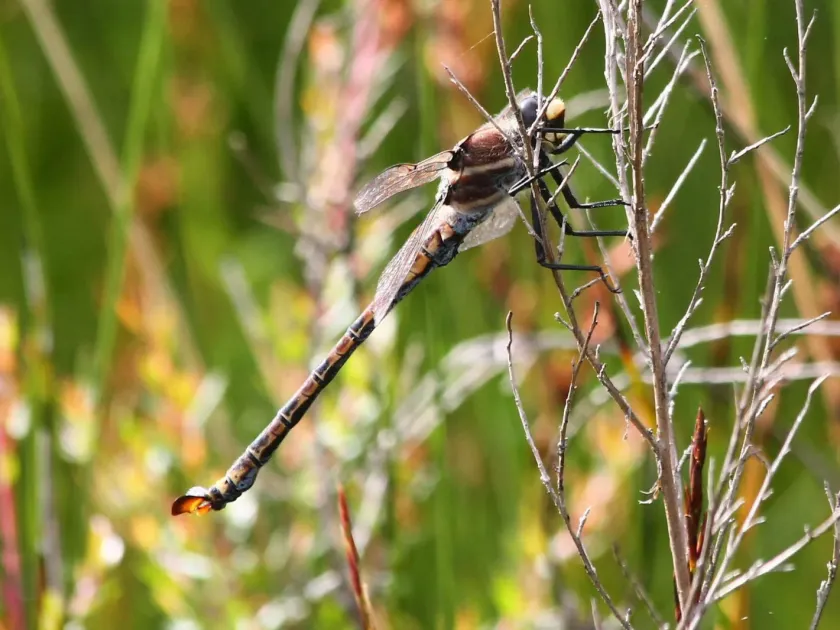
Description
How to identify
The Giant dragonfly (Petalura gigantea) is a member of the Petaluridae family within the order Odonata, known for its significant physical dimensions.
Adults possess a impressive wingspan that can reach up to 12 centimeters, making them one of the largest dragonfly species.
The species is distinguished by its specific wing venation and a dark, patterned abdomen with yellow markings.
Unlike common dragonflies, the larvae of Petalura gigantea construct deep, vertical burrows in moist soil near marshes or swampy areas.
The taxonomic classification places them in an ancient lineage of insects that have preserved unique physiological traits over millions of years.
What it damages
The Giant dragonfly is not considered an agricultural pest, as it feeds exclusively on other flying insects rather than plant matter.
In fact, as an apex predator, it contributes to natural pest control by consuming various smaller insects in its habitat.
There is no evidence of this species damaging crops, grains, fruits, or vegetables in any capacity.
The primary interaction between this species and agriculture is habitat preservation, as farming activities often impact wetlands.
Farmers are encouraged to recognize the species as a non-threatening and ecologically valuable organism.
When it appears
The flight season for adults is generally restricted to the warmer months, specifically during the late spring and summer periods.
The larval stage is unusually long for a dragonfly, often spanning several years as they mature within their soil burrows.
Adult emergence is highly synchronized with weather conditions, requiring adequate moisture and temperature to ensure survival.
Daily activity is primarily observed during daylight hours when individuals are hunting or seeking mates near swampy vegetation.
Environmental fluctuations significantly dictate the success of their breeding season and overall population density.
Control measures
Since the Giant dragonfly is a protected and rare species, control measures are focused on habitat conservation rather than eradication.
Maintaining high water tables and preserving natural wetlands near agricultural fields is the most effective way to protect the species.
The use of broad-spectrum insecticides should be carefully evaluated in areas where the Giant dragonfly is known to reside.
Land management practices should aim to avoid the disturbance of moist soils, which are essential for the survival of their larval burrows.
Sustainable farming practices that respect local biodiversity are recommended to support the continued presence of this unique dragonfly.
Taxonomy
- Latin name
- Petalura gigantea
- Family
- Petaluridae
- EPPO code
- PTALGI
Discussion
No discussions yet — be the first.