
Petalura
Petalura
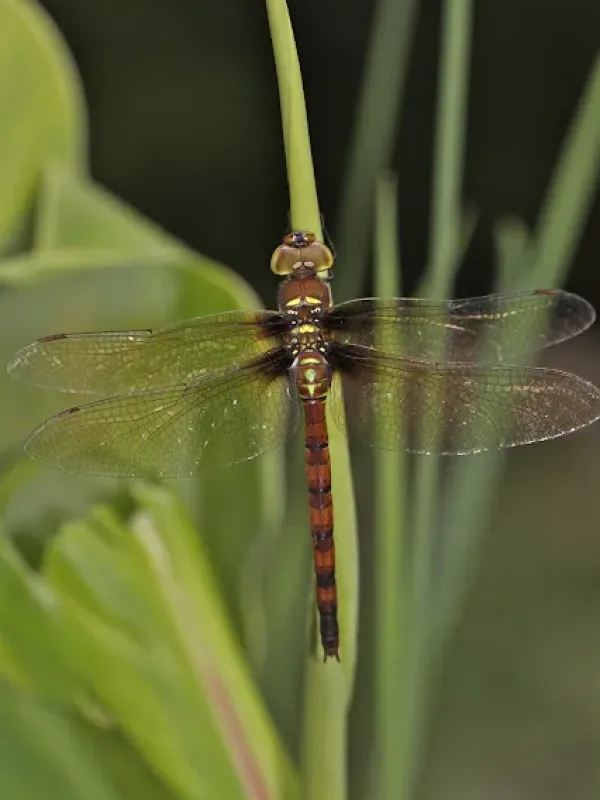
Description
How to identify
The genus Petalura belongs to the order Odonata and the family Petaluridae. These are large and ancient insects with unique larval development patterns.
Adult insects are characterized by a robust body and a significant wingspan, typically found in marshy or swampy ecosystems.
Unlike most dragonflies, Petalura larvae are semi-aquatic or terrestrial, constructing burrows in damp soil.
Identification of the adult stage is based on specific wing venation patterns and abdominal structure.
It is crucial to classify this insect correctly, as it is not a primary pest species in modern agriculture.
What it damages
Petalura does not inflict direct damage on commercial crops, as they are primarily predatory insects.
There is no evidence of significant economic loss caused by these insects in standard cropping systems.
Minor root disturbances may occur only in the immediate vicinity of their burrowing sites near wetlands.
The agricultural importance of Petalura is minimal, and it is generally considered ecologically beneficial.
In most cases, these insects should be treated as part of the natural landscape rather than as agricultural threats.
When it appears
The flight period of adult Petalura occurs during the warmest months of the summer season.
Larvae remain in their soil burrows for several years, making their presence constant in suitable habitats.
Adult activity is highly dependent on ambient temperature and humidity levels near aquatic sites.
Breeding cycles are closely tied to the availability of moist substrates for oviposition.
Seasonal emergence is a short-lived event necessary for mating and population renewal.
Signs of infestation
The presence of Petalura can be identified by the distinct exit holes of their burrows in damp soil.
Adult insects can often be spotted resting on vegetation near their emergence sites.
Exuviae, the discarded larval skins, are often found on plant stalks after the insect transitions to the adult form.
Specific soil patterns created by burrowing activity serve as a diagnostic indicator of their presence.
Regular visual monitoring of wetland borders is sufficient to locate their habitats.
Control measures
No pest control measures are required for Petalura, as it does not pose a threat to agricultural productivity.
Sustainable agricultural practices suggest preserving natural habitats to maintain ecological balance.
Avoid the use of non-selective pesticides in marshy areas to protect these and other beneficial insects.
Agronomic planning should focus on water management rather than insect eradication in these regions.
The best approach to handling these insects is to allow them to maintain their role in the native food web.
Taxonomy
- Latin name
- Petalura
- Family
- Petaluridae
- EPPO code
- PTALSP
Discussion
No discussions yet — be the first.