
Perperus innocuus weevil
Perperus innocuus
Description
How to identify
Perperus innocuus is a species of beetle belonging to the Curculionidae family, commonly known as true weevils, characterized by their elongated rostrum.
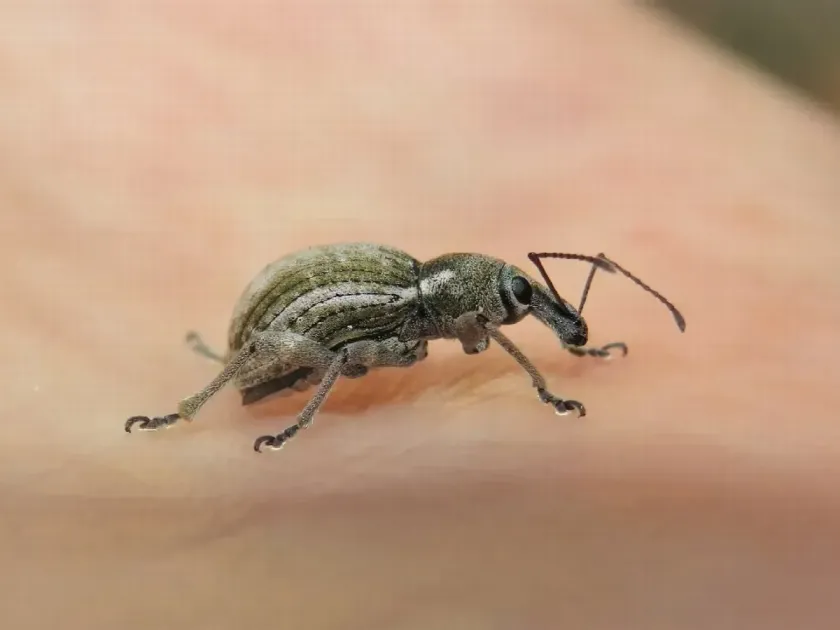
The adult insects are relatively small and possess cryptic coloration, allowing them to blend seamlessly into their natural habitat, making manual detection difficult.
Their bodies are firm and often covered in fine scales, the color of which may vary based on environmental factors, aiding in their camouflage.
The larvae are typically legless, white in color, and feature a robust head capsule, which is specialized for their underground feeding lifestyle.
The life cycle of this species includes a complete metamorphosis, encompassing the egg, larva, pupa, and adult stages, ensuring the population's resilience.
What it damages
This weevil species poses a significant threat to a variety of agricultural crops, particularly affecting grains and legumes during their developmental stages.
Adult weevils consume the leaf tissues, leaving characteristic notched margins along the edges of the leaves, which hinders photosynthesis in the host plant.
The larvae are particularly destructive as they feed on the root systems, which can lead to the stunting or death of young plant sprouts.
Young plants are most vulnerable to damage as their root systems are not yet developed enough to withstand significant feeding pressure from larvae.
Widespread infestations, especially under favorable climatic conditions, can lead to severe crop thinning and substantial reductions in total agricultural yield.
When it appears
Adult Perperus innocuus activity begins early in the spring, triggered by the increase in soil and air temperatures after the winter dormant period.
Peak feeding and mating activity coincide with the early vegetative growth phase of the host plants, ensuring ample nutritional intake for the pests.
During the summer months, females lay their eggs in the soil near the roots of host plants, providing the emerging larvae with immediate access to food.
Larval development continues throughout the summer, with the insects eventually transitioning to the pupal stage within the soil profile by late season.
The species overwinters primarily in the adult stage, hiding within the soil or beneath accumulated plant debris until the following spring season.
Signs of infestation
The first visual sign of an infestation is the presence of uneven, notched leaf margins, indicating feeding activity by adult beetles during the night.
Infected plants may exhibit stunted growth, chlorosis, and general signs of physiological stress due to the damage inflicted upon the root system.
If an infestation is severe, young plants may be easily pulled from the soil, revealing root damage caused by the feeding of the larvae.
A noticeable thinning of plant stands in a field, despite adequate moisture and soil quality, often suggests a subterranean pest presence.
Direct scouting of the fields during dusk or dawn can reveal the presence of adult beetles on the lower stems or leaf surfaces of the crops.
Control measures
Effective management relies on a sound crop rotation strategy to break the life cycle of the weevil and reduce the population density in the soil.
Deep plowing following harvest is an effective mechanical method to disturb the soil and destroy the overwintering adult population.
Chemical control involving systemic or contact insecticides may be applied during the period of adult peak activity to reduce numbers before oviposition.
Seed treatments using protective agents provide a crucial layer of defense, shielding the germinating roots from early larval feeding damage.
- Regular monitoring and field scouting throughout the growing season.
- Elimination of weeds that serve as alternative hosts for the weevils.
- Optimizing planting times to ensure plants quickly grow past the most vulnerable stages.
Taxonomy
- Latin name
- Perperus innocuus
- Order
- Coleoptera (beetles)
- Family
- Curculionidae
- EPPO code
- PRPRIN
Discussion
No discussions yet — be the first.