
White-footed mouse
Peromyscus leucopus
Description
How to identify
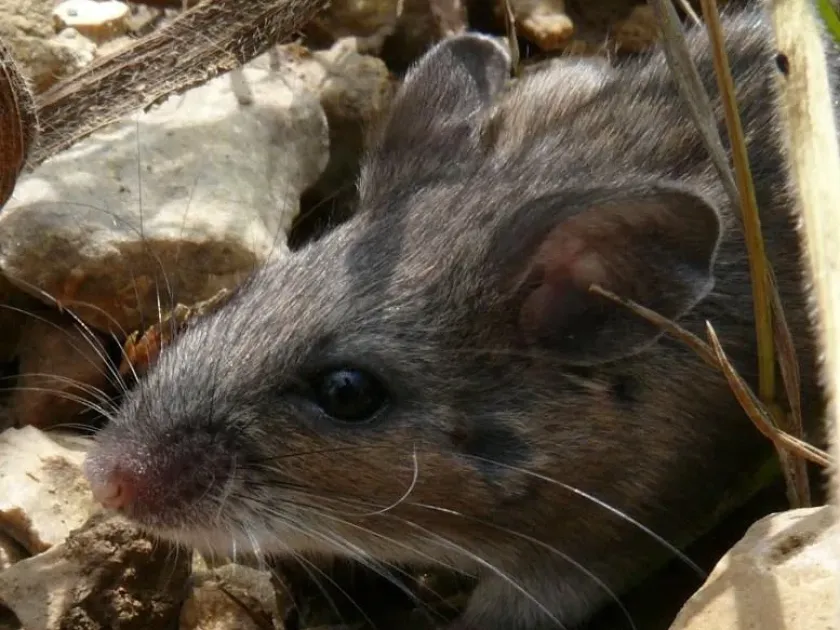
The white-footed mouse (Peromyscus leucopus) is a small rodent species of the Cricetidae family, typically measuring between 8 and 10 cm in body length.
The species is easily recognized by its distinct coloration: the upper body is reddish-brown or tan, while the underside, feet, and lower face are consistently white.
These rodents possess large, dark, bulging eyes which are highly adapted for nocturnal activities, as well as relatively large ears that enhance their hearing.
The tail is long, often about the same length as the head and body, and is covered in fine hair, which helps the animal maintain balance while climbing.
Physically, they are highly agile and demonstrate impressive climbing abilities, often using their sharp claws to traverse bushes and low-hanging tree branches.
What it damages
This species is a significant agricultural pest, frequently feeding on seeds, grains, and developing sprouts, which leads to reduced crop density in fields.
In orchards and nurseries, they cause extensive damage to the bark of saplings and young trees, often girdling them and causing long-term health issues or mortality.
Stored agricultural commodities are particularly vulnerable, as these mice consume large quantities of harvested grains and contaminate stored goods with waste.
Beyond physical consumption, they destroy infrastructure within farms, including gnawing on irrigation tubes, electrical insulation, and structural materials.
They act as vectors for various pathogens, posing a secondary risk to livestock and human health in agricultural settings through contaminated food sources.
When it appears
Activity levels rise significantly in early spring, as the mice emerge from winter shelters to begin their breeding season and expand their foraging range.
Summer marks a period of high population growth, correlating with the peak maturity of field crops, which provides an abundant food source for the growing population.
During the autumn months, these rodents focus on caching seeds and gathering materials for their winter nests, increasing their movement near structures.
Winter does not bring hibernation; instead, they remain active, often seeking refuge in barns, granaries, and heated buildings to survive the colder weather.
With a short gestation period, the population can rebound rapidly, allowing for multiple generations to be produced within a single growing season.
Signs of infestation
Evidence of infestation often includes distinctive gnaw marks on crops and seeds, characterized by parallel grooves left by the rodent's incisors.
The presence of burrow entrances near field edges or building foundations, often marked by small piles of soil or vegetation, is a clear sign of occupancy.
- Droppings of a dark, elongated shape found along travel routes and near feeding sites.
- Well-defined runways through tall grass or vegetation connecting nesting sites to food sources.
- Damage to stored goods such as feed bags or containers, showing signs of teeth marks.
- Nests constructed of shredded paper, plant fibers, or cloth found in secluded, dark locations.
A musky, unpleasant odor in enclosed spaces is often a definitive indicator of a large, established population residing in the area.
Control measures
Effective management begins with sanitation: removing tall weeds and debris from field perimeters eliminates both food supplies and potential nesting habitats.
Exclusion techniques, such as sealing gaps in foundation walls and using steel mesh over vents, are critical to preventing access to indoor facilities.
Integrated Pest Management (IPM) incorporates the use of bait stations with approved rodenticides, placed securely to prevent non-target poisoning.
Encouraging natural predators, such as owls and hawks, by providing nesting boxes and perches can help manage population numbers on larger properties.
Ongoing monitoring and early detection are essential to implement control measures before populations reach levels that cause significant economic losses.
Taxonomy
- Latin name
- Peromyscus leucopus
- Order
- Rodents
- Family
- Muridae
- EPPO code
- PERMLE
Discussion
No discussions yet — be the first.