
Peritelus sphaeroides
Peritelus sphaeroides
Description
How to identify
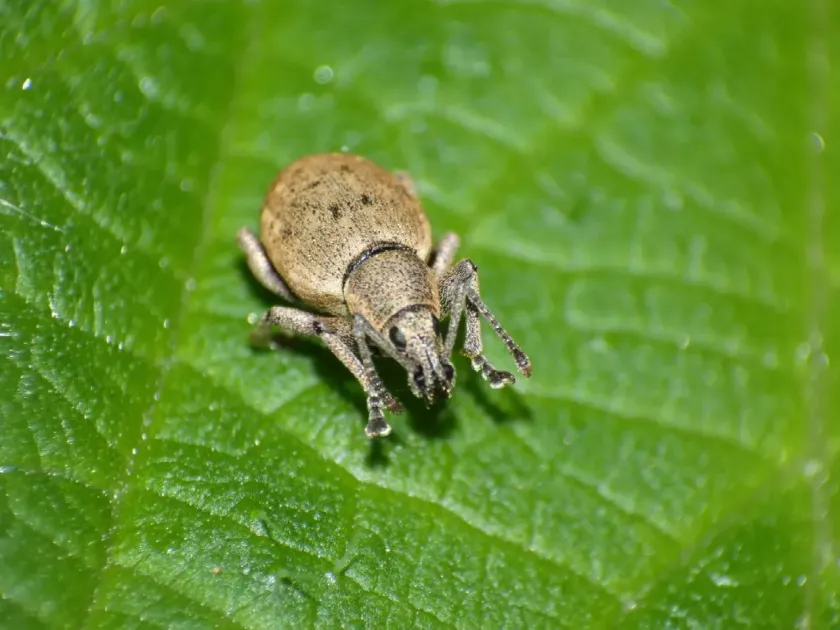
Peritelus sphaeroides is a species of snout beetle (weevil) belonging to the family Curculionidae within the order Coleoptera. This small insect is easily identified by its spherical body shape.
The body is covered with dense scales, ranging in color from greyish-brown to black, which provide excellent camouflage against tree bark and soil surfaces.
Like other weevils, it possesses a characteristic snout (rostrum), though in this species, it is relatively short and broad, which is a key diagnostic feature.
The larvae are white, legless, and C-shaped grubs that reside entirely in the soil, feeding on the roots of various host plants throughout their development phase.
The life cycle involves complete metamorphosis, and in temperate climates, the adults typically overwinter in the soil or under debris to emerge in the spring.
What it damages
This beetle is a significant polyphagous pest that attacks a variety of woody plants, including fruit trees like apple and pear, as well as grapevines and various berry bushes.
The primary damage is caused by the adults, which feed on expanding buds, young leaves, and developing flower clusters during the critical early spring period.
Extensive feeding can lead to the destruction of buds, resulting in poor canopy development and significant reductions in potential fruit yield for the entire season.
Larval feeding on the root system weakens the host plant, making it more susceptible to drought stress, nutrient deficiency, and secondary infections by soil pathogens.
In high population densities, the pest can cause severe defoliation of young nursery stock, sometimes leading to the total loss of the planting material.
When it appears
Adult beetles typically emerge from their overwintering sites in the soil during the early spring, coinciding with the phenological stage of bud break in fruit trees.
The peak activity period for adult beetles, characterized by intensive feeding and mating, occurs from mid-spring to early summer, depending on local weather conditions.
Females lay their eggs in the soil, and the resulting larvae continue to feed on roots throughout the summer months while developing into the next stage.
As autumn approaches and temperatures begin to drop, the adult population decreases as individuals move deeper into the soil layers to hibernate through the winter.
Temperature and soil moisture levels are critical factors influencing the developmental rate and survival of the beetle population from one season to the next.
Signs of infestation
The most recognizable sign of infestation is the presence of irregular, notched feeding patterns along the margins of young leaves, often referred to as "ragging".
Browned or dried-out buds in early spring, which fail to open, are a strong indication that adult weevils have been feeding on the plant tissues during the dormant-to-active transition.
Stunted growth or sudden yellowing of young trees can be a sign of larval root damage, which restricts the plant's ability to absorb water and essential nutrients.
Because the adults are nocturnal or crepuscular, finding them on the foliage requires inspection during late evening or early morning hours.
Monitoring can also be achieved by shaking branches over a white sheet, which effectively dislodges the beetles and allows for accurate population assessment.
Control measures
Cultivation practices such as autumn and spring soil tillage help disrupt the larval life cycle and reduce the number of emerging adults in the following spring.
Targeted chemical applications using appropriate insecticides during the bud-break stage can protect foliage and prevent the initial wave of damage from overwintering adults.
In smaller orchards or organic settings, physical barriers such as sticky bands around tree trunks can limit the movement of adults into the tree canopy.
Managing surrounding vegetation and weed control is essential, as these areas often serve as alternative hosts and reservoirs for the pest population.
- Regular monitoring for early signs of leaf damage.
- Encouraging natural predators such as birds and ground beetles.
- Using biological control agents targeting soil-dwelling larvae.
Taxonomy
- Latin name
- Peritelus sphaeroides
- Order
- Coleoptera (beetles)
- Family
- Curculionidae
- EPPO code
- PERESH
Discussion
No discussions yet — be the first.