
Peritelus senex
Peritelus senex
Description
How to identify
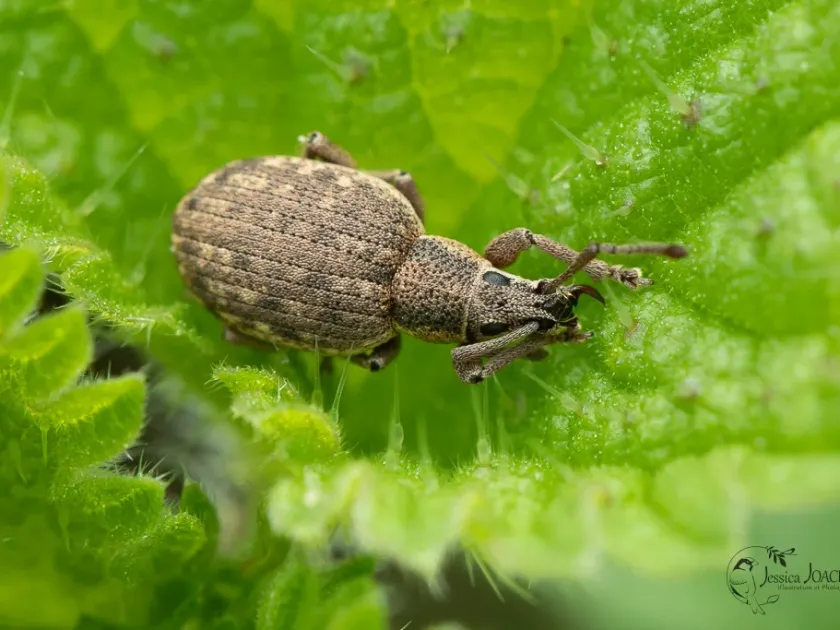
Peritelus senex is a species of broad-nosed weevil belonging to the family Curculionidae. The adult is a small beetle, typically 5–7 mm in length, covered with dense greyish or brownish scales that provide effective camouflage against soil and plant debris.
This beetle is characterized by its short, broad rostrum (snout), which is typical for the Peritelini tribe. The eyes are moderately convex, and the elytra display longitudinal grooves, which are key features for distinguishing this species in the field.
The larvae are legless, C-shaped grubs with a pale body and a yellow-brown head capsule. They spend their entire developmental phase dwelling within the soil profile, often near the root zones of host plants.
Like many other weevil species, P. senex exhibits a thanatosis response; when disturbed, the beetle tucks in its legs and drops from the foliage to the ground, appearing dead to evade predators.
Adults are primarily active during the spring and early summer months, coinciding with the growth cycles of various horticultural and field crops.
What it damages
Peritelus senex is a polyphagous pest capable of damaging a diverse range of crops, posing a significant risk to orchards, vineyards, and leguminous vegetable fields.
The larvae feed on the roots of host plants, including saplings and young perennials. Extensive root feeding can severely stunt plant growth and reduce the plant's ability to absorb water and nutrients.
Adult beetles feed on the aerial parts of plants, specifically targeting the leaves, buds, and young shoots. Their feeding pattern is unmistakable, creating notched edges on the leaf margins.
In cases of high infestation, the beetle can cause significant defoliation, which reduces photosynthetic capacity and eventually weakens the overall vigor of the host plant.
Economic damage is particularly severe in nurseries and young plantations, where the destruction of buds and root systems can lead to the total loss of young stock.
When it appears
The life cycle of P. senex is generally univoltine. The beetles overwinter as adults, finding shelter in the soil or beneath accumulated plant debris during the colder months.
As soil temperatures rise in early spring, the overwintered adults emerge to begin feeding on emerging buds and fresh leaf tissue, which is critical for their reproductive maturation.
Mating occurs throughout the spring, after which females deposit eggs in the soil near the root systems of preferred host plants. This period is the most active phase for adult management.
Larvae hatch after approximately two weeks and move deeper into the soil to begin their feeding cycle on roots, where they remain throughout the summer months.
Pupation takes place within the soil, usually within a prepared cell. Once the adult beetles emerge from the pupal stage, they remain inactive in the soil until the following spring.
Signs of infestation
The primary symptom of a P. senex infestation is the appearance of semi-circular or irregular notches along the margins of leaves, often referred to as "notching".
- Stunted or uneven plant growth in young plantations caused by root damage.
- Presence of greyish-brown beetles on the underside of foliage, especially during early morning or evening.
- Increased incidence of plant wilting during dry periods due to compromised root systems.
- Presence of young plants that can be easily pulled from the soil due to lack of anchorage.
Control measures
Managing Peritelus senex effectively requires an integrated pest management (IPM) approach that targets both the soil-dwelling larval stages and the leaf-feeding adult stage.
Cultural practices, such as deep autumn ploughing, are highly effective in disrupting the overwintering sites of the beetles and exposing the larvae to unfavorable conditions.
Chemical control should be timed to match the adult emergence period in spring, focusing on foliage applications when beetles are actively feeding on buds and leaves.
Maintaining a weed-free environment in and around the plantation reduces alternative food sources and breeding habitats for the pest, thereby lowering the population pressure.
Regular monitoring using soil samples to check for larval density and visual scouting for leaf notching helps in determining the precise timing for intervention to avoid unnecessary pesticide usage.
Taxonomy
- Latin name
- Peritelus senex
- Order
- Coleoptera (beetles)
- Family
- Curculionidae
- EPPO code
- PERESE
Discussion
No discussions yet — be the first.