
Peritelus familiaris
Peritelus familiaris
Description
How to identify
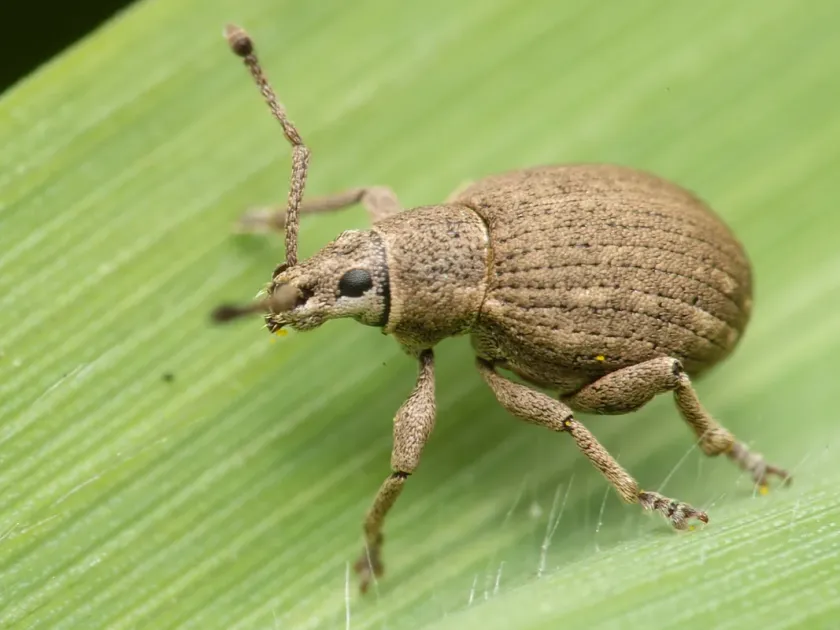
Peritelus familiaris is a species of weevil belonging to the family Curculionidae, order Coleoptera. The adult beetle typically measures between 4 and 6 mm in length and possesses the characteristic short, broad snout common to many weevils.
The insect’s body color ranges from grey to brownish. Its surface is densely covered with tiny scales that act as camouflage, allowing it to blend into the soil and tree bark environments effectively.
The larvae are legless, white in color, with a yellowish-brown head. They live and develop primarily within the soil, feeding on roots, which makes them difficult to detect without careful observation.
The life cycle is closely correlated with seasonal temperature fluctuations. Adults emerge in the spring and are primarily nocturnal, which explains why they are seldom observed during daylight hours.
Reproduction occurs sexually. Overwintering usually takes place in the adult stage within the top layer of soil or under organic debris, where they wait for favorable spring conditions to begin feeding.
What it damages
This pest is highly polyphagous, causing significant damage to various fruit and berry crops. The most affected plants include vineyards, apple trees, pear trees, and various stone fruit species.
The adult beetles cause the most severe damage in early spring, when they intensively feed on budding leaves, flowers, and developing buds, leading to a substantial loss of vegetative mass.
Larvae developing in the soil damage the root system by chewing on fine root hairs. Severe larval infestation results in stunted growth, weakened plant immunity, and potential premature leaf drop.
Damage caused by adults often manifests as irregular or serrated edges on leaves. During years of high population density, these beetles can completely destroy young buds, hindering growth.
Economic damage is observed through reduced yield, poor fruit quality, and the potential death of young nursery saplings that cannot recover from both root and crown damage.
Signs of infestation
The most reliable sign of an infestation is the presence of eaten, jagged leaf edges, often referred to as "notching." This is a classic symptom of weevil activity in an orchard or vineyard.
During night inspections, if a light is shone on the branches, adults can often be found actively feeding. They have a defensive instinct to drop to the ground when touched, feigning death.
A delay in bud development or the total absence of growth on specific branches in early spring often points to the beetle having fed on the buds before they could fully open.
Soil excavations in the root zone up to 10-15 cm deep can reveal the white larvae, confirming their presence and providing a warning to implement control measures.
Sudden wilting of young plants, despite adequate soil moisture, can be an indicator of significant root damage caused by larval feeding, necessitating immediate investigation.
Control measures
Effective management of Peritelus familiaris involves a combination of mechanical and chemical strategies. Autumn plowing or turning the soil in tree circles is an essential practice to destroy overwintering stages.
For adult beetles active in the spring, systemic or contact-stomach insecticides registered for use on specific fruit crops should be applied to minimize population numbers.
Applying sticky bands on tree trunks creates a mechanical barrier, preventing beetles from climbing up from the soil to the foliage, which is particularly effective for young trees.
Maintaining clean orchard floors and eliminating weeds in rows is crucial, as these plants provide alternative food sources that sustain the beetle population.
- Regular monitoring of orchard foliage during early spring.
- Utilizing biological control agents (such as entomopathogenic fungi) when population counts are low.
- Applying fertilizers to stimulate root system regeneration after damage occurs.
Taxonomy
- Latin name
- Peritelus familiaris
- Order
- Coleoptera (beetles)
- Family
- Curculionidae
- EPPO code
- PEREFA
Discussion
No discussions yet — be the first.