
Pentarthrum huttoni
Pentarthrum huttoni
Description
How to identify
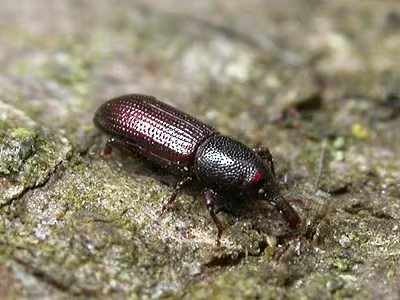
Pentarthrum huttoni is a small species of beetle belonging to the family Curculionidae, specifically the subfamily Cossoninae. These beetles are specialized wood-borers, often found in decaying or damp timber environments.
Adult beetles are typically 2 to 4 millimeters in length, characterized by an elongated, slightly flattened dark brown or black body. They possess a short and broad snout, which is a distinctive feature of this group within the weevil family.
The larvae of Pentarthrum huttoni are legless and have a pale, whitish, C-shaped body. They reside exclusively within the wood, which makes them difficult to observe unless the infested material is broken or dissected.
As members of the order Coleoptera, these insects have a complete life cycle. They are highly adapted to life inside wooden structures, where they rely on the stability and moisture content of the wood for their development.
Identification often relies on the recognition of their distinct boring patterns and the specific type of timber they infest. Because they prefer damp conditions, they are rarely found in structural timber that is kept perfectly dry.
What it damages
This pest mainly affects timber that is already weakened by fungal decay or excessive moisture. It can infest a variety of wood types, including both hardwoods and softwoods stored in unconditioned environments.
Larvae create intricate tunnels within the wood, which progressively reduces the structural integrity of the material. Over time, the internal wood tissue can turn into a powdery substance, leading to structural failures.
In forest ecosystems, Pentarthrum huttoni plays a role in the natural decomposition of fallen logs and branches, facilitating nutrient cycling. However, this ecological behavior makes them a significant risk for stored wood products.
The presence of these beetles often accelerates the damage caused by wood-rotting fungi. The tunnels created by the beetles allow fungal spores to reach deeper into the timber, compounding the overall destruction.
Economic damage is most significant in sawmills and storage facilities where timber is left in damp conditions. Infestation can lead to severe depreciation of quality and, in extreme cases, the total loss of wooden materials.
Signs of infestation
The most common sign of an infestation is the presence of small, circular exit holes approximately 1 millimeter in diameter on the surface of the wood, created by emerging adults.
Piles of fine wood dust, commonly known as frass, found beneath or near wooden items serve as a clear indicator of active larval feeding taking place inside the timber.
A soft or spongy texture when the surface of the wood is pressed can indicate that the internal structure has been hollowed out by larval galleries, even if the exterior appears relatively intact.
In some cases, the sound of subtle rustling or scratching can be heard coming from within the wood, which is caused by the movement and feeding of larvae in relatively quiet environments.
Dark, discolored patches on the surface of wood or visible staining around cracks and crevices are also common indicators that the material is damp enough to support a beetle colony.
Control measures
The most effective strategy for managing Pentarthrum huttoni is maintaining low moisture content in all timber and wood products. Ensuring wood remains dry effectively prevents the beetles from establishing a population.
Application of professional-grade wood preservatives and insecticides can provide a protective barrier. These chemicals should be applied to deeply penetrate the fibers to deter egg-laying and larval survival.
If an infestation is already present, heavily damaged sections of wood should be physically removed and disposed of to prevent the spread of the colony to nearby healthy materials.
In industrial settings, fumigation of storage facilities can be used to eradicate existing populations. This method is highly effective at reaching hidden beetles within the wood structure.
Regular inspections of wooden foundations, joists, and stored lumber are essential. Early detection is key, as it allows for minor treatments before the infestation spreads and compromises structural integrity.
Taxonomy
- Latin name
- Pentarthrum huttoni
- Order
- Coleoptera (beetles)
- Family
- Curculionidae
- EPPO code
- PENRHU
Discussion
No discussions yet — be the first.